.png)
What Is a Dermal Clinician? Explained Clearly
- chevonne stewart
- Jun 18
- 8 min read

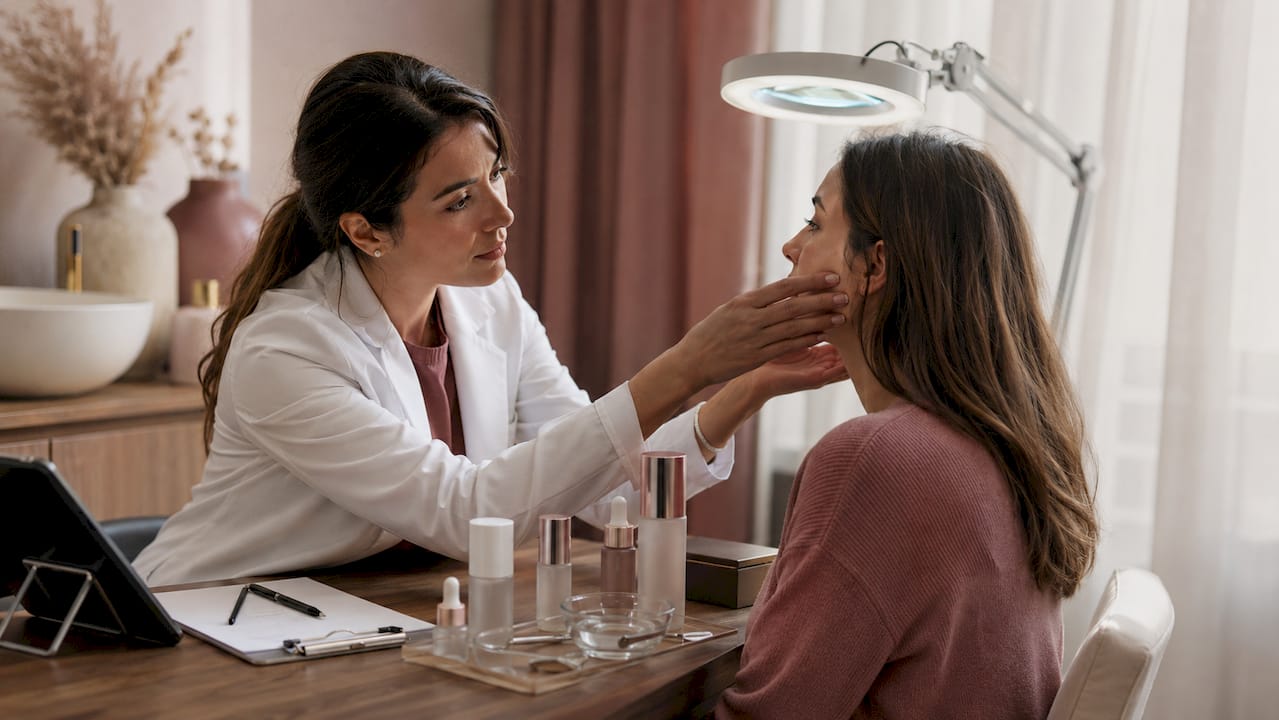
A dermal clinician is a degree-qualified skin health specialist who uses science-based methods and advanced technologies to treat, restore, and maintain skin function. The formal industry term is “dermal therapist” or “dermal clinician,” and both refer to the same regulated profession. This role sits above beauty therapy and below medical dermatology, occupying a precise clinical space where non-invasive treatments deliver real, measurable results. If you have been dealing with pigmentation, aging skin, acne, or persistent redness and feel like standard skincare products are not enough, a dermal clinician is the professional you need to see.
What is a dermal clinician explained: core role and definition
A dermal clinician is defined as a trained skin health professional who assesses, diagnoses, and treats skin conditions using advanced non-surgical techniques including chemical peels, laser therapy, and microneedling. The role is grounded in skin science, anatomy, and clinical practice. Dermal clinicians do not prescribe medication, but they deliver treatments that go far beyond what a standard facial or beauty service can achieve.
The scope of this profession is broader than most people realize. A dermal clinician conducts detailed skin assessments, builds personalized treatment plans, performs advanced procedures, and educates clients on long-term skin maintenance. They treat conditions like acne, rosacea, hyperpigmentation, fine lines, and uneven texture with clinical precision.
Core responsibilities of a dermal clinician
The day-to-day responsibilities of a dermal clinician cover a wide range of clinical and client-facing activities:
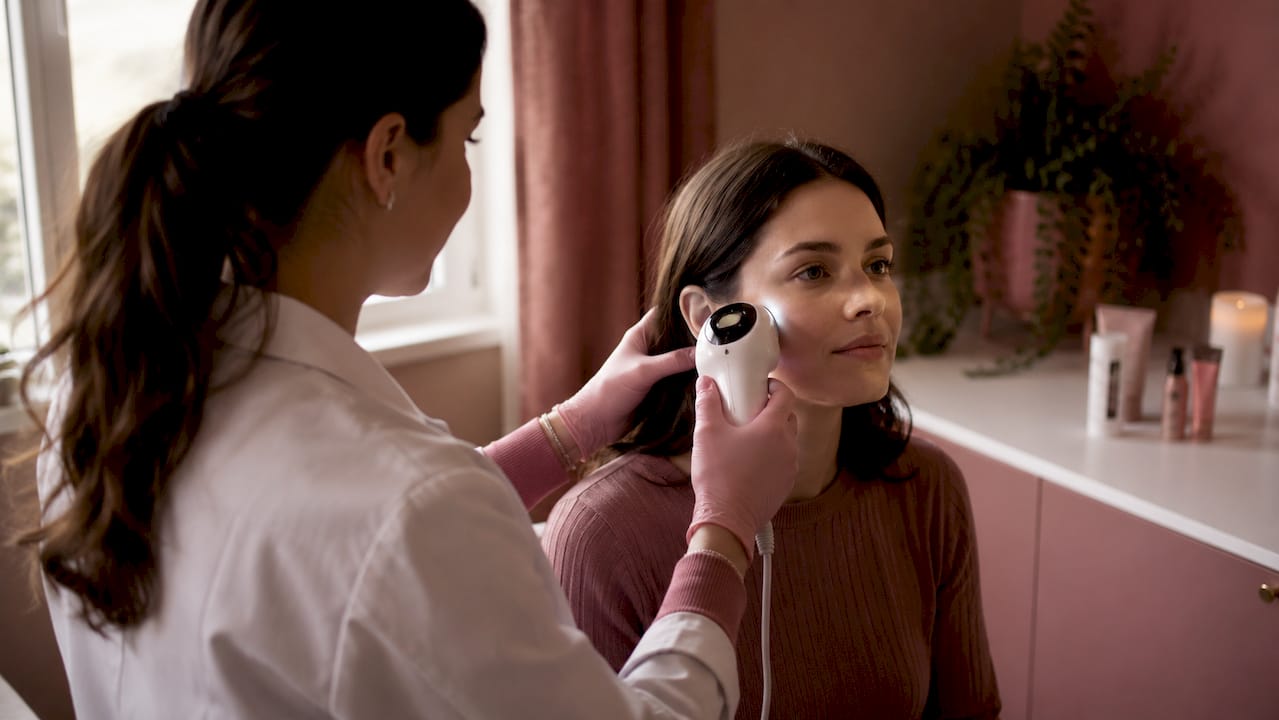
Skin assessments and analysis: Using tools like skin scanners and visual analysis to identify skin type, condition, and underlying concerns.
Personalized treatment planning: Designing a program based on your skin’s specific needs, goals, and health history.
Advanced procedures: Performing chemical peels, microneedling, LED therapy, radiofrequency skin tightening, and laser treatments.
Client education: Teaching you how your skin works, what triggers your concerns, and how to care for it between appointments.
Progress monitoring: Reviewing results at each visit and adjusting the treatment plan as your skin responds and changes.
Pro Tip: Before your first appointment, photograph your skin in natural light. Consistent photos taken over time give both you and your clinician a clear, objective record of progress.
How does a dermal clinician differ from a dermatologist or beauty therapist?
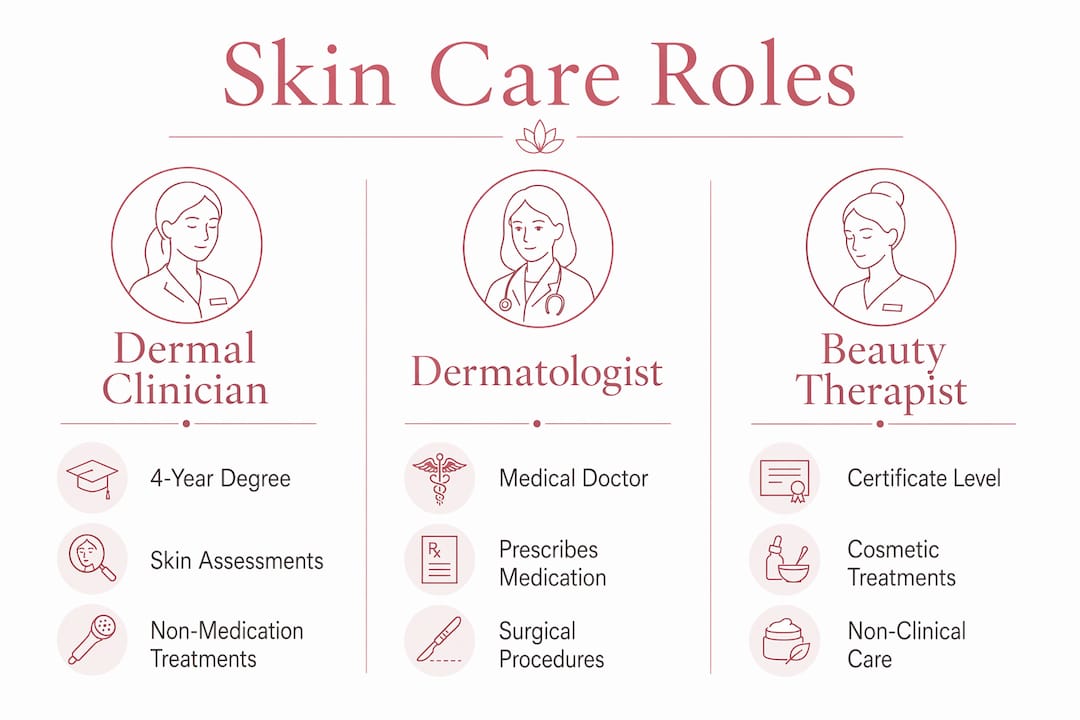
The three roles that most people confuse are dermatologist, dermal clinician, and beauty therapist. Each has a distinct education level, scope of practice, and treatment range. Understanding the difference helps you choose the right professional for your concern.
A dermal clinician’s training typically involves a 4-year degree focused on advanced skin science and clinical skills. This level of education places them well above beauty therapists, who complete shorter diploma-level courses with less medical focus. Dermatologists, by contrast, are medical doctors who complete years of additional medical training and can prescribe medication, perform surgery, and diagnose systemic disease.
Dermal clinicians collaborate with dermatologists and cosmetic doctors when a client’s condition requires medication or injectables. This multidisciplinary approach means you get the right level of care at every stage of treatment.
Professional | Education Level | Scope of Practice | Prescribes Medication? |
Dermatologist | Medical degree + specialty | Medical diagnosis, surgery, prescriptions | Yes |
Dermal Clinician | 4-year degree in dermal therapy | Advanced non-invasive treatments, clinical skin care | No |
Beauty Therapist | Diploma or certificate | Relaxation facials, waxing, basic skin care | No |
Aesthetician | Certificate or diploma | Basic facials, superficial peels, skin care advice | No |
Dermal clinicians work within regulated scopes and refer clients to medical professionals when a condition falls outside their practice. That boundary is a strength, not a limitation. It means you are always in the right hands.
What advanced skin treatments do dermal clinicians perform?
Dermal clinicians perform a range of advanced treatments that target specific skin concerns with clinical accuracy. Each treatment is selected based on your skin assessment and customized to your skin type, sensitivity, and goals.
Here is a breakdown of the most common treatments and what they address:
Chemical peels (including Larimedical Peels and Synergie Peel): These use controlled acids to resurface the skin, reduce pigmentation, smooth texture, and stimulate collagen. The depth and formulation are adjusted to your skin’s tolerance.
Biomimetic Peel with LED therapy: This combines a skin-renewing peel with red or near-infrared light to accelerate healing, reduce inflammation, and boost collagen production simultaneously.
Microneedling: Fine needles create micro-channels in the skin to trigger the body’s natural repair response. The result is firmer, smoother skin with reduced scarring and fine lines.
Radiofrequency (RF) skin tightening: RF energy heats the deeper layers of skin to stimulate collagen and elastin production. This treatment is particularly effective for skin laxity and contouring.
LED therapy: Light-emitting diode therapy uses specific wavelengths to target acne bacteria, reduce redness, and support cellular repair without any downtime.
Pro Tip: Ask your clinician to explain the mechanism behind each treatment they recommend. A qualified dermal clinician will always be able to tell you exactly how a treatment works and why it suits your skin.
Common treatments like Larimedical Peels, Biomimetic Peel with LED therapy, and RF skin tightening address aging, pigmentation, skin texture, and overall skin health. These are not one-size-fits-all services. Each session is calibrated to your skin’s current condition.
Treatment | Primary Concern Addressed | Typical Downtime |
Larimedical Peel | Pigmentation, texture, dullness | Minimal to none |
Biomimetic Peel + LED | Aging, redness, collagen loss | None |
Microneedling | Scarring, fine lines, texture | 24–48 hours |
RF Skin Tightening | Skin laxity, contouring | None |
LED Therapy | Acne, inflammation, repair | None |
How do dermal clinicians approach skin health beyond topical treatments?
Skin health is more than topical care. A holistic, science-driven understanding is essential for sustainable results. Dermal clinicians recognize that your skin reflects what is happening inside your body, not just what you apply to it.
Experienced dermal clinicians incorporate internal health evaluations into treatment planning, especially for chronic conditions like acne and pigmentation. Nutrition, gut health, stress levels, sleep quality, and hormonal patterns all influence how your skin behaves and how well it responds to treatment. A clinician who ignores these factors will deliver incomplete results.
In practice, this means your consultation may include questions about your diet, digestive health, and lifestyle habits. A client dealing with persistent hormonal acne, for example, may need dietary adjustments alongside clinical treatments to see lasting improvement. Dermal clinicians empower clients with knowledge about skin biology so that you understand the “why” behind your skin concerns, not just the “what.”
This approach also shapes the products recommended between appointments. Clinicians trained in skin science select formulations based on ingredient activity and skin barrier function, not marketing claims. That distinction matters when you are investing in your skin’s long-term health.
What to expect when you work with a dermal clinician
Working with a dermal clinician follows a clear, structured process. Knowing what to expect helps you prepare and get the most from every appointment.
A thorough skin consultation is the starting point. This includes a detailed skin assessment, health history review, and discussion of your goals and concerns. Your clinician will analyze your skin type, identify active conditions, and flag any contraindications before recommending any treatment.
Here is what a typical client journey looks like:
Initial consultation: Your clinician assesses your skin, reviews your health history, and discusses your goals. You leave with a clear treatment plan and realistic expectations.
First treatment session: The recommended procedure is performed with full explanation at each step. You are guided on what to expect during and after the session.
Post-treatment care: Your clinician provides specific aftercare instructions and recommends products to support your skin’s recovery and results.
Follow-up appointments: Progress is reviewed at each visit. The treatment plan is adjusted based on how your skin responds.
Long-term maintenance: Once your primary concerns are addressed, your clinician designs a maintenance program to protect and sustain your results.
Before your first appointment, write down your top three skin concerns and any products or medications you currently use. This saves time and helps your clinician build a more accurate picture of your skin from the start. You can also explore what a skin consultation involves to walk in fully prepared.
Key takeaways
A dermal clinician is the most effective professional for non-invasive, science-based skin treatment when your concerns go beyond what standard skincare products can address.
Point | Details |
Dermal clinician definition | A degree-qualified skin specialist who performs advanced non-invasive treatments for clinical skin concerns. |
Distinct from other roles | Dermal clinicians sit between beauty therapists and dermatologists in training, scope, and treatment capability. |
Holistic treatment approach | Internal health factors like nutrition and gut health are assessed alongside topical treatments for lasting results. |
Structured client process | Consultations, personalized plans, and progress reviews are standard practice for every client. |
Advanced treatment range | Treatments include chemical peels, LED therapy, microneedling, and RF skin tightening, each customized to your skin. |
What 15 years in skin has taught me about this profession
Most people arrive at a dermal clinician’s door after years of trying products that did not work. What I have seen consistently over 15 years is that the gap between “skincare” and “skin treatment” is enormous, and most people do not know that gap exists until they experience clinical results firsthand.
The biggest misconception I encounter is that a dermal clinician is just a “fancy facialist.” That framing undersells the profession significantly. The training, the technology, and the clinical reasoning behind every treatment decision are grounded in science, not trend. When I assess a client’s skin, I am thinking about barrier function, cellular turnover, vascular activity, and systemic health, all at once.
What I find most rewarding is the education component. When a client understands why their pigmentation keeps returning after sun exposure, or why their acne flares around their cycle, they stop chasing quick fixes and start making decisions that actually serve their skin. That shift in understanding changes everything.
The profession is also evolving fast. Device technology, ingredient science, and our understanding of the skin microbiome are advancing every year. Staying current is not optional. It is what separates a clinician who delivers real results from one who is simply going through the motions.
If you are considering seeing a dermal clinician, choose someone with a recognized qualification, a clear treatment rationale, and the willingness to explain their recommendations. Your skin deserves that standard of care.
— chevonne
Experience clinical skin care at Fundamentalskin
Fundamentalskin is led by Chevonne, a degree-qualified Dermal Clinician with 15 years of clinical experience, specializing in pigmentation, aging skin, redness, fine lines, and dull texture. Every treatment is personalized, non-invasive, and backed by clinical results you can see.

If you are ready to move beyond products and experience what a qualified dermal clinician can do for your skin, Fundamentalskin offers treatments including the Larimedical Peel, the Biomimetic Peel with LED Therapy, and RF skin tightening. Each service is tailored to your unique skin needs using Australia-sourced, clinically active ingredients. Book your consultation today and start seeing the difference that real clinical expertise makes.
FAQ
What is the dermal clinician definition in simple terms?
A dermal clinician is a degree-qualified skin health professional who performs advanced, non-invasive treatments to address skin conditions like acne, pigmentation, and aging. They are trained in skin science and clinical practice, placing them above beauty therapists in scope and education.
How does a dermal clinician work during a consultation?
A dermal clinician conducts a thorough skin assessment, reviews your health history, and develops a personalized treatment plan based on your specific concerns and goals. The process is structured to ensure every treatment is safe, appropriate, and effective for your skin type.
What are the benefits of seeing a dermal clinician vs. a beauty therapist?
Dermal clinicians hold a 4-year degree and are trained to perform advanced clinical treatments like chemical peels, microneedling, and RF skin tightening, which go well beyond the scope of a beauty therapist. The clinical training means your treatment is grounded in skin science, not just relaxation.
Can a dermal clinician treat pigmentation and aging skin?
Yes. Treatments like Larimedical Peels, Biomimetic Peel with LED therapy, and RF skin tightening are specifically designed to address pigmentation, fine lines, and skin laxity with measurable results and minimal downtime.
Do dermal clinicians work alongside doctors?
Dermal clinicians collaborate with dermatologists and cosmetic doctors when a client’s condition requires medication, injectables, or medical diagnosis. This multidisciplinary approach ensures you receive the right level of care for your specific skin concern.
Recommended
Comments