.png)
Skin Treatment Series Explained: Your Clear Guide


A skin treatment series is defined as a structured set of in-clinic sessions, each with a specific purpose, timed and ordered to progressively improve your skin’s health and appearance. Unlike booking a single facial or purchasing a discounted bundle, a treatment series is a goal-driven protocol where every session builds on the last. Whether you are dealing with pigmentation, aging skin, fine lines, or dull texture, understanding what a skin treatment series means is the first step toward real, lasting results. This guide covers how series work, which treatment modalities are used, how aftercare is structured, and how to choose the right plan for your skin.
What is a skin treatment series, explained?
A treatment series is structured as a set of sessions with intentional timing and progression toward a measurable skin goal. This definition separates a series from a package or membership in a meaningful way. A package offers a discount on quantity with no clinical progression. A membership provides access but no guided outcome. A treatment series, by contrast, maps a specific journey with intentional order, timing, and a defined goal.
The distinction matters because your skin responds to cumulative stimulation. One microneedling session creates a wound-healing response. Three to six sessions, spaced correctly, rebuild collagen architecture over months. The same logic applies to chemical peels, IPL, and radiofrequency treatments. Sporadic visits produce sporadic results. A goal-driven series transforms those visits into a committed, measurable skin journey.
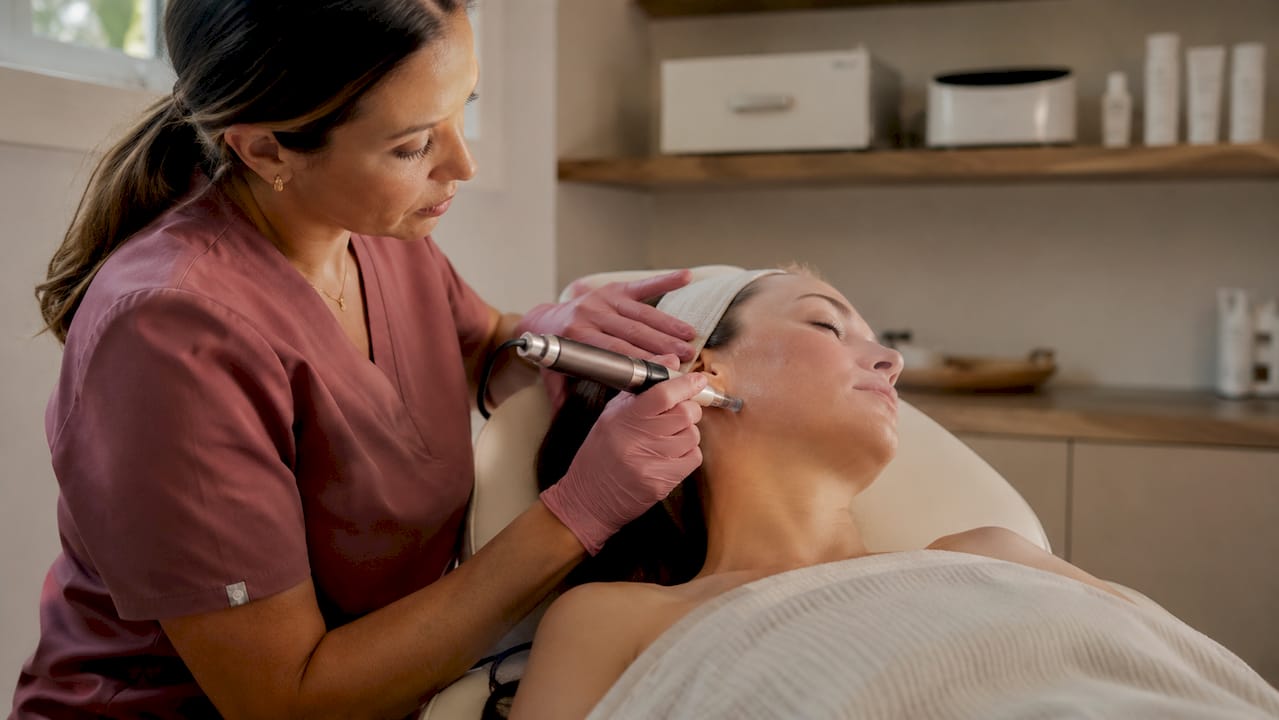
Common goals for a treatment series include reducing melasma or post-inflammatory hyperpigmentation, addressing fine lines and skin laxity, improving overall skin texture and radiance, and managing redness or vascular concerns. Fundamentalskin builds each series around these specific concerns, led by Chevonne, a Dermal Clinician with 15 years of experience in personalized skin treatment planning.
How does a skin treatment series work?
The logic behind a series is sequential progress. Each session prepares the skin for the next level of treatment, and the spacing between sessions allows your skin barrier to recover and respond before the next stimulus is applied.
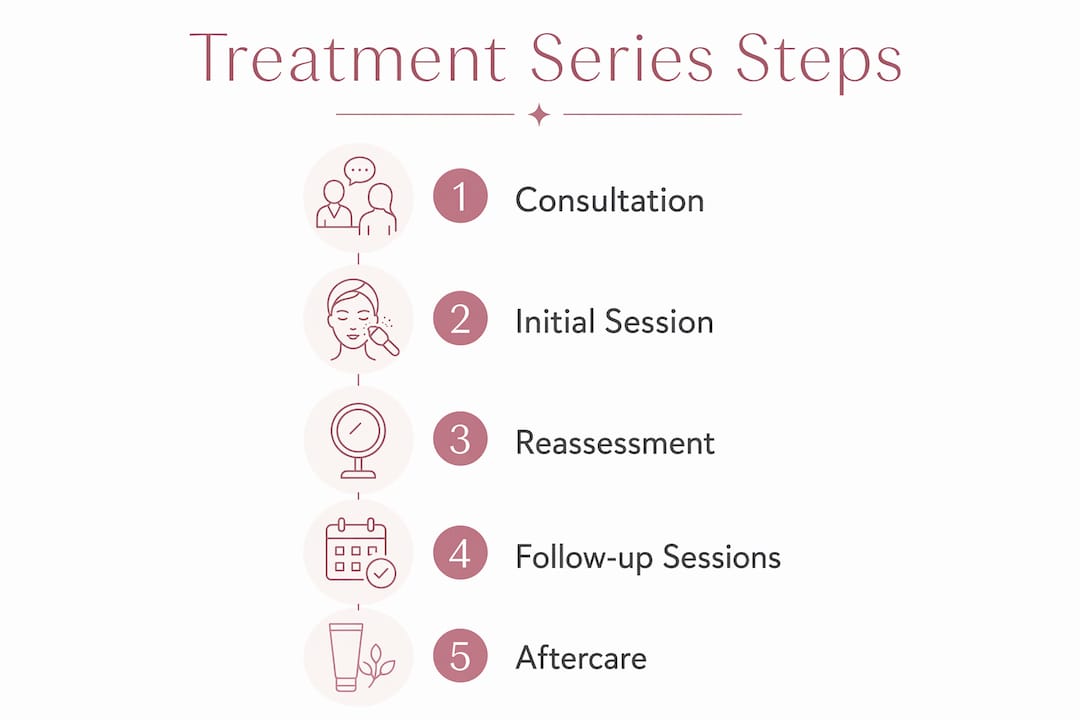
A typical series follows this progression:
Consultation and skin assessment. Your clinician maps your skin type, condition severity, and risk factors like post-inflammatory hyperpigmentation (PIH) before selecting any modality.
Preparation phase. Some series begin with topical cosmeceuticals or barrier-strengthening products for two to four weeks before any procedural treatment starts.
Active treatment sessions. Sessions are spaced weeks apart, not days. Microneedling protocols, for example, map sessions spaced several weeks apart across a series of three to six treatments.
Reassessment checkpoint. After approximately three sessions, your clinician evaluates progress and decides whether to continue the current protocol, adjust intensity, or shift to a maintenance phase.
Maintenance. Once the primary goal is achieved, periodic sessions sustain results and prevent regression.
The reassessment point is one of the most underused tools in skin treatment planning. Clinically, reassessment after three sessions determines whether to continue, change modality, or move to maintenance. Skipping this step means continuing a protocol that may no longer serve your skin’s current state.
Pro Tip: Ask your clinician to document your skin with photos at every reassessment point. Visual progress tracking is one of the strongest motivators for staying consistent through a full series.
What treatment modalities are used for pigmentation and aging?
Treatment modalities for pigmentation and skin rejuvenation include topical cosmeceuticals, medical topical compounds, chemical peels, lasers, IPL, microneedling, and radiofrequency. The choice of modality depends on your specific skin concern, skin type, and the severity of the condition. No single treatment works for every person or every type of pigmentation.
Here is how the major modalities compare:
Modality | Primary concern | Downtime | Best for |
Chemical peels | Pigmentation, texture, dullness | 3–7 days | Melasma, uneven tone, fine lines |
IPL (Intense Pulsed Light) | Vascular redness, sun damage, pigmentation | Minimal | Freckles, sun spots, redness |
Microneedling | Collagen stimulation, texture, scars | 1–3 days | Aging skin, acne scarring, fine lines |
Radiofrequency | Skin laxity, tightening | Minimal | Sagging skin, jawline definition |
Topical cosmeceuticals | Pigmentation, barrier support | None | Preparation and maintenance phases |
LED light therapy | Inflammation, collagen support | None | Adjunct to peels or microneedling |
A few key points about combining modalities within a series:
Effective pigmentation treatment must be tailored to the specific hyperpigmentary disorder and skin type, with photoprotection as the cornerstone of every protocol.
Lasers and peels can worsen certain pigmentation conditions if applied to the wrong skin type or disorder. Matching the right modality to the right condition is not optional. It is the difference between improvement and a setback.
Higher PIH risk patients often begin with topical lightening and barrier preparation before any energy-based or procedural treatment is introduced.
For a detailed breakdown of how these methods compare for pigmentation specifically, the pigmentation treatment options guide at Fundamentalskin covers current protocols and expected outcomes.
Why aftercare is essential and how to time it correctly
Aftercare is not optional maintenance. It is a clinical phase that determines whether your treatment results hold or fade. Post-procedure skincare timelines are organized into four distinct phases, each with specific ingredient guidelines.
The four aftercare phases:
Pretreatment (Day -14 to Day -1): Focus on barrier strengthening. Introduce ceramides, hyaluronic acid, and niacinamide. Discontinue retinoids and strong acids at least one week before treatment.
Treatment day (Day 0): Use only gentle, fragrance-free cleansers and barrier-supportive products. No actives.
Immediate aftercare (Day 1 to Day 7): This is the most critical healing window. Ceramides, cholesterol, hyaluronic acid, niacinamide, and peptides are safe across all procedure phases. Retinoids and acids are avoided entirely during this window.
Follow-up phase (Day 8 to Day 28): Skin barrier recovery is assessed before reintroducing actives. Barrier recovery timelines directly affect when retinoids and acids can safely return to your routine.
One area where aftercare protocols differ significantly is sun protection. For pigmentation-focused series, daily broad-spectrum SPF is not a suggestion. It is the single most important factor in preventing post-treatment hyperpigmentation. The Fundamentalskin guide on protecting skin post-treatment outlines exactly how to layer sun protection into your daily routine between sessions.
Skin of color requires additional consideration. Higher melanin levels increase PIH risk after any procedure that creates inflammation. This means gentler modalities, longer spacing between sessions, and stricter adherence to barrier-supportive aftercare. A one-size-fits-all approach to post-procedure care risks complications that can set your results back by months.
Pro Tip: If you experience unexpected redness or irritation after a session, do not add more products. Strip your routine back to a gentle cleanser, ceramide moisturizer, and SPF until your skin barrier stabilizes. Learn more about why redness occurs after treatment and what it signals.
How to choose the right skin treatment series for your concerns
Choosing a treatment series is not a self-service decision. The most effective series starts with a professional consultation and a thorough skin assessment. Here is how to approach that process with clarity:
Define your primary concern. Pigmentation, aging skin, redness, and texture each respond to different modalities. Knowing your primary goal helps your clinician prioritize the series structure.
Assess your skin type and PIH risk. Fitzpatrick skin types IV through VI carry higher PIH risk, which changes which modalities are appropriate and in what order they are introduced.
Consider your downtime tolerance. Chemical peels and microneedling involve visible recovery days. IPL and LED therapy involve minimal downtime. Your lifestyle affects which series is realistic for you to complete.
Ask about reassessment checkpoints. A credible clinician will build in formal review points, not just continue the same protocol indefinitely. Ask specifically: “When will we review my progress and adjust the plan?”
Plan for maintenance. A series achieves the goal. Maintenance sustains it. Budget and schedule for both phases before you begin.
Skin treatment series are personalized to the individual’s skin type, condition severity, and risk factors. This means the series your friend completed for sun damage may not be the right starting point for your melasma. Resist the urge to replicate someone else’s protocol. Your skin’s history, sensitivity, and goals are unique to you.
For aging skin concerns specifically, the aging skin care best practices resource at Fundamentalskin provides a practical framework for understanding which treatments support collagen, firmness, and glow at different life stages.
Key takeaways
A skin treatment series delivers results because it is built on sequential, timed sessions with clear goals, not random appointments or discounted bundles.
Point | Details |
Series vs. package | A series has intentional progression and a measurable goal; a package is just a quantity discount. |
Modality matching | Treatment type must match the specific skin concern and skin type to avoid worsening conditions like PIH. |
Aftercare phases | Four distinct phases govern which ingredients are safe and when, from pretreatment through Day 28. |
Reassessment checkpoints | Review progress after three sessions to confirm whether to continue, adjust, or move to maintenance. |
Personalization is non-negotiable | Skin type, PIH risk, and lifestyle all determine which series is appropriate for your skin. |
What I have learned from 15 years of planning treatment series
After more than a decade of working with clients on pigmentation, aging skin, and skin rejuvenation, the pattern I see most often is this: people underestimate the power of the series structure and overestimate what a single session can do.
Clients sometimes arrive expecting one peel or one IPL session to resolve years of sun damage or melasma. When results are gradual, they lose confidence. What I have found is that progress measurement, done consistently with photos and skin assessments, is what keeps clients motivated through the full series. Seeing even a 20% improvement after session two is enough to sustain commitment through session five.
The other mistake I see regularly is treating aftercare as optional. Clients invest in quality in-clinic treatments and then go home and use whatever is in their bathroom cabinet. The healing window between sessions is where a significant portion of your results are either protected or lost. Ceramides, hyaluronic acid, and SPF are not glamorous. They are the foundation that makes everything else work.
My honest advice: view your skin health as a long-term commitment, not a quick fix. A well-planned series, followed by a maintenance schedule, produces results that hold. Shortcuts produce results that fade. The clients I see achieve the most confidence in their skin are the ones who trust the process, show up consistently, and take their aftercare as seriously as their in-clinic sessions.
— Chevonne
Start your personalized treatment series at Fundamentalskin
If you are ready to move from curiosity to real results, Fundamentalskin offers carefully planned treatment series for pigmentation, aging skin, and overall skin rejuvenation. Chevonne designs every series around your specific skin type, concern, and goals, with formal reassessment points built into every plan.

Explore the IPL Full Face treatment for vascular and pigmentation concerns, or discover the Larimedical Biomimetic Peel for skin rejuvenation with no downtime. Both are available as part of structured, outcome-focused series. Book your skin consultation today and start building a plan that is designed specifically for you.
FAQ
What is the difference between a skin treatment series and a package?
A skin treatment series is a structured, goal-driven protocol where sessions are timed and ordered to build on each other toward a measurable outcome. A package is a discounted quantity of sessions with no clinical progression or guided outcome.
How many sessions are in a typical skin treatment series?
Most series run between three and six sessions, depending on the modality and concern. Microneedling and chemical peel protocols typically include a formal reassessment after three sessions to evaluate progress and adjust the plan.
Which ingredients are safe to use during a skin treatment series?
Ceramides, hyaluronic acid, niacinamide, cholesterol, and peptides are safe across all phases of a treatment series, including immediately after procedures. Retinoids and acids are avoided on treatment day and during the first seven days of recovery.
Can a skin treatment series worsen pigmentation?
Yes, if the wrong modality is used for the wrong skin type or pigmentation disorder. Patients with higher PIH risk often need to begin with topical lightening and barrier preparation before any energy-based treatments are introduced. Professional assessment before starting any series is critical.
How do I know when my skin treatment series is working?
Progress is best tracked through clinical photos taken at each reassessment point, typically after every three sessions. Visible improvements in tone, texture, or pigmentation confirm the series is effective. If results plateau, your clinician should adjust the modality or intensity.
Recommended
Comments