.png)
Aging Skin Care Best Practices for Glowing Skin

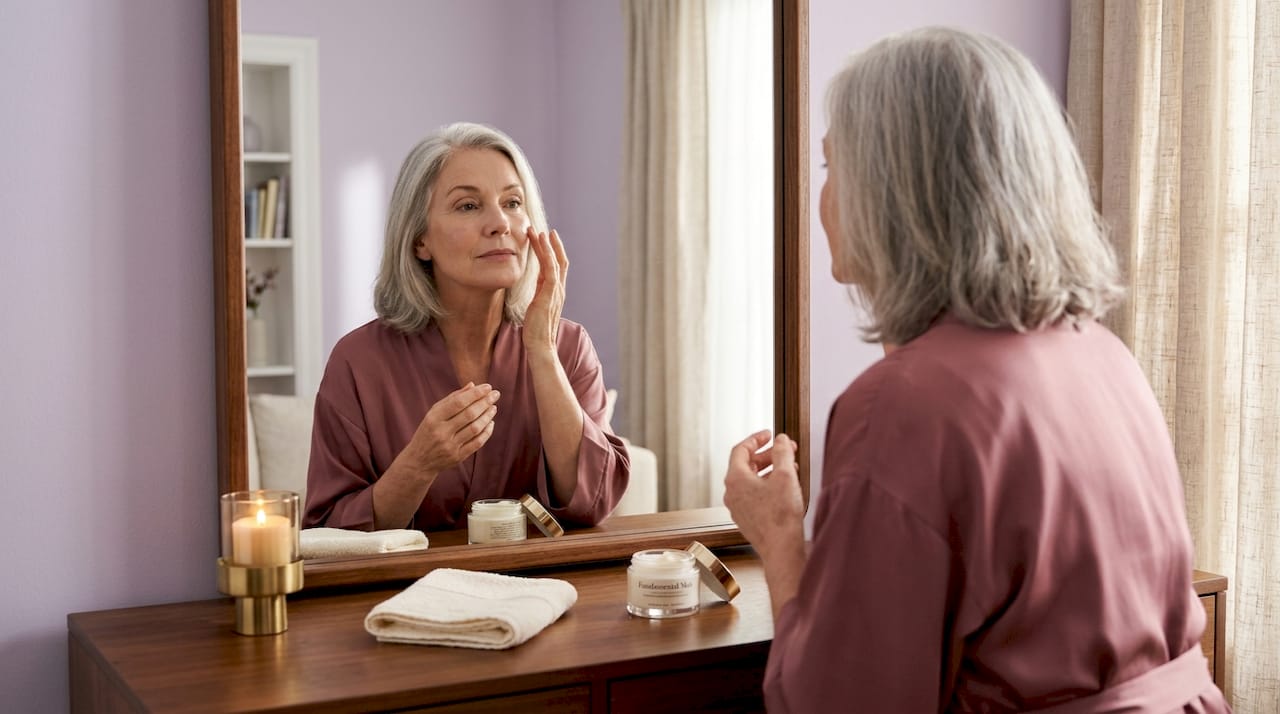
Aging skin care best practices are defined as a consistent, clinically supported regimen of gentle cleansing, barrier moisturization, daily broad-spectrum sun protection, and the strategic use of active ingredients such as retinoids, vitamin C, and peptides. Skin begins losing collagen and elasticity as early as your late twenties, which means the habits you build in your thirties directly shape how your skin looks and functions in your fifties. The good news is that science-backed routines give you real tools to slow visible aging, address pigmentation, and restore a healthier texture. This article breaks down exactly what works, what to skip, and how to build a routine that delivers results you can actually see.
1. Aging skin care best practices start with gentle cleansing
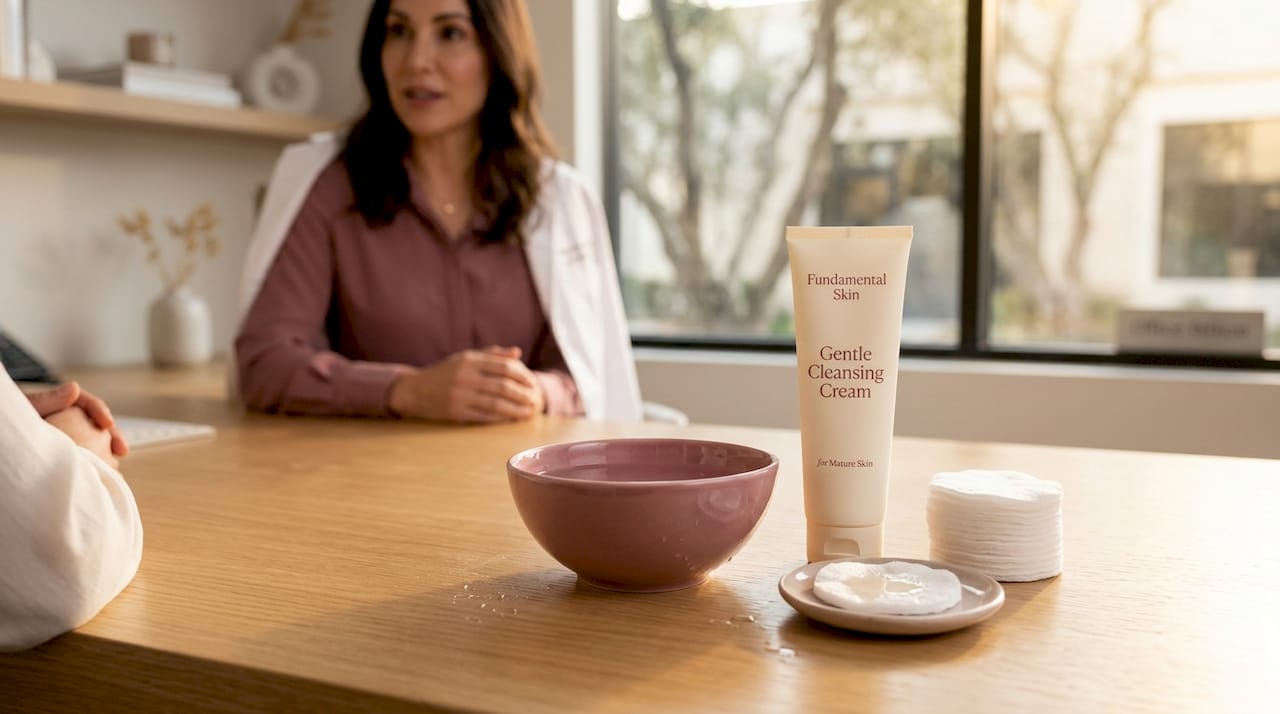
Gentle cleansing is the foundation of every effective aging skin care routine because it preserves the skin’s natural barrier without stripping moisture. Aging skin shows increased dryness, reduced elasticity, and impaired barrier function that worsen without consistent supportive care. This means a harsh foaming cleanser can undo the benefits of every product you apply afterward.
Choose a mild syndet (synthetic detergent) cleanser or a cream-based formula with a pH between 4.5 and 5.5. These products clean effectively without disrupting the microbiome or triggering inflammation. Avoid cleansers containing sodium lauryl sulfate, alcohol, or heavy fragrance, all of which compromise barrier integrity in mature skin.
2. Moisturize strategically with ceramides, humectants, and occlusives
Moisturization is not optional for mature skin. It is the mechanism by which you maintain hydration, support barrier repair, and keep skin supple enough to respond well to active ingredients. A well-formulated moisturizer combines three ingredient categories: humectants like hyaluronic acid and glycerin to draw water in, ceramides to reinforce the lipid barrier, and occlusives like shea butter or squalane to seal moisture in.
Apply moisturizer while your skin is still slightly damp after cleansing. This maximizes absorption and locks in hydration more effectively than applying to dry skin. For daily skin care for seniors and those over 50, a richer cream formula at night is often more beneficial than a lightweight gel.
3. Apply sunscreen SPF 30+ every single morning
Sunscreen is the single most effective anti-aging product available. Daily sunscreen use prevents up to 80% of visible skin aging by blocking UV-induced collagen degradation. That statistic means most of the wrinkles, pigmentation, and texture changes you associate with aging are largely preventable with one daily habit.
Choose a broad-spectrum formula that protects against both UVA and UVB radiation. Mineral sunscreens containing zinc oxide or titanium dioxide are well-tolerated by sensitive and mature skin. Sun exposure depletes collagen and causes pigmentation, making consistent daily application non-negotiable regardless of weather or season.
Pro Tip: Apply sunscreen as the last step in your morning routine, after moisturizer and any serums, and reapply every two hours if you spend time outdoors.
4. Use vitamin C serum every morning before sunscreen
Vitamin C is both an antioxidant and a direct cofactor in collagen synthesis, making it one of the most productive ingredients you can add to a morning routine. Apply vitamin C in the morning before sunscreen to amplify antioxidant protection and brighten uneven skin tone over time. The combination of vitamin C and SPF creates a stronger defense against UV and pollution-induced oxidative damage than either product alone.
Look for L-ascorbic acid at a concentration between 10% and 20% in a stable, low-pH formula. Store it away from light and heat to prevent oxidation. If your skin is sensitive, magnesium ascorbyl phosphate is a gentler derivative that still delivers brightening and antioxidant benefits.
5. Introduce retinoids gradually for collagen stimulation
Retinoids carry the strongest clinical evidence of any topical ingredient for wrinkle reduction and collagen stimulation. Retinoid use two to three times per week at first allows your skin to build tolerance, with visible improvements typically appearing after 8 to 12 weeks. Starting too aggressively is the most common reason people abandon retinoids before they see results.
Begin with a low-concentration retinol (0.025% to 0.05%) applied at night, after moisturizer if your skin is sensitive. Over four to eight weeks, gradually increase frequency to nightly use. Tretinoin, available by prescription, delivers faster and more pronounced results but requires closer management to avoid irritation.
6. Add trans-resveratrol for antioxidant and anti-wrinkle support
Trans-resveratrol is an antioxidant found in grapes and red wine that has moved from wellness supplement to clinically studied skin care ingredient. Topical and oral trans-resveratrol significantly reduced wrinkle scores over an 8-week controlled trial in adults over 40, with the greatest improvement seen in participants using both a 1.5% topical cream and a 75 mg oral capsule daily. That dual approach produced measurably better outcomes than either method alone.
Topical trans-resveratrol pairs well with vitamin C and niacinamide in a morning routine. It is mild enough for sensitive skin and does not require the careful introduction period that retinoids demand. Antioxidant regimens require consistent application over several weeks before wrinkle reduction and improved skin parameters become visible, so patience is part of the protocol.
7. Use peptides and niacinamide to support barrier and tone
Peptides are short chains of amino acids that signal the skin to produce more collagen and elastin. They are mild, well-tolerated, and complement stronger actives like retinoids without increasing irritation risk. Niacinamide (vitamin B3) at concentrations of 5% to 10% reduces pigmentation, minimizes pore appearance, and reinforces the skin barrier, making it one of the most versatile ingredients in skin care for mature skin.
Both ingredients work well in the same routine. Niacinamide can be applied morning or night, and peptide serums are most effective when layered under moisturizer. Neither ingredient requires a break-in period, which makes them ideal starting points if your skin is reactive or you are new to active ingredients.
8. Consider microneedling combined with antioxidant serums
Microneedling creates controlled micro-injuries in the skin that trigger collagen production and improve the absorption of topical actives. Combining antioxidant serum containing vitamins C, E, and ferulic acid with microneedling produced a 39% improvement in skin elasticity compared to just 6.8% with microneedling alone. That difference is significant and demonstrates why the post-treatment protocol matters as much as the procedure itself.
RF (radiofrequency) microneedling goes a step further by delivering heat energy into the dermis, which tightens skin and stimulates deeper collagen remodeling. Fundamentalskin offers RF microneedling treatments that combine this technology with personalized post-treatment care for optimal recovery and results.
9. Explore chemical peels for texture and pigmentation
Chemical peels use acids such as glycolic acid, lactic acid, or trichloroacetic acid (TCA) to remove damaged surface cells and stimulate fresh skin turnover. Glycolic acid peels at concentrations of 20% to 70% are among the top aging skin treatments for improving texture, reducing fine lines, and fading hyperpigmentation. TCA peels penetrate more deeply and address more significant pigmentation and wrinkle concerns.
Professional peels deliver controlled, even exfoliation that at-home products cannot replicate. The Larimedical Biomimetic Peel available at Fundamentalskin is formulated to address pigmentation and aging without the downtime associated with traditional peels. You can explore Larimedical peel options to understand which depth and formulation suits your skin concerns.
10. Try LED and red light therapy for skin repair support
LED therapy uses specific wavelengths of light to stimulate cellular activity without heat or damage. Red light at 630 to 700 nanometers penetrates the dermis and activates mitochondria in skin cells, supporting collagen production and reducing inflammation. Near-infrared light goes deeper and accelerates tissue repair, making it useful after more intensive treatments like microneedling or peels.
LED therapy is one of the few treatments with no downtime and minimal contraindications, which makes it accessible for a wide range of skin types and ages. When combined with a professional peel, the results are amplified. Fundamentalskin’s Biomimetic Peel plus LED therapy pairs both modalities for a treatment that addresses aging, pigmentation, and dullness in a single session.
11. Avoid the most common mistakes that undermine your results
The most damaging mistake in how to care for aging skin is over-exfoliating. Over-exfoliating and combining multiple actives simultaneously damages the skin barrier and causes irritation, dryness, and reduced product efficacy. Mature skin has a slower cell turnover rate and a thinner barrier, which means it tolerates less exfoliation than younger skin.
Other common errors include:
Stacking actives too quickly. Introducing retinoids, AHAs, and vitamin C at the same time overwhelms the skin. Add one new active every four weeks.
Skipping sunscreen on cloudy days. UVA rays penetrate clouds and glass, causing cumulative collagen loss and pigmentation year-round.
Expecting results in days. Most active ingredients require 8 to 12 weeks of consistent use before visible improvement appears.
Misusing at-home dermarollers. Unsterilized or improperly used rollers introduce bacteria and can worsen pigmentation, particularly in darker skin tones.
Pro Tip: If your skin feels tight, red, or flaky after introducing a new product, scale back to every other day use and add a plain ceramide moisturizer before the active to buffer irritation.
Key takeaways
Effective aging skin care is built on barrier protection first, with active ingredients and professional treatments layered on top of a consistent daily foundation.
Point | Details |
Barrier care comes first | Gentle cleansing and ceramide moisturization must precede any active ingredient use. |
Sunscreen is non-negotiable | SPF 30+ daily prevents up to 80% of visible UV-induced skin aging. |
Actives need time | Retinoids and antioxidants require 8 to 12 weeks of consistent use before results appear. |
Combination therapy wins | Microneedling with antioxidant serums produces 39% better elasticity than microneedling alone. |
Avoid overloading your routine | Introducing multiple strong actives simultaneously damages the barrier and reduces efficacy. |
What 15 years of clinical work taught me about aging skin
After more than a decade working with clients on pigmentation, fine lines, and texture concerns, the pattern I see most often is this: people arrive with complicated, expensive routines that are actually making their skin worse. They have layered retinol, glycolic acid, vitamin C, and a prescription active all at once, and their barrier is in crisis. The skin is red, reactive, and no longer responding to anything.
The barrier-first philosophy is not a trend. It is the prerequisite for everything else. When I strip a client’s routine back to a gentle cleanser, a ceramide moisturizer, and SPF, their skin often improves within two weeks before we have added a single active. That tells you everything about where the real work happens.
I also want to be honest about timelines. The antioxidant research is compelling, but it takes weeks of consistent application to see measurable change. Clients who stick with a simplified, well-sequenced routine for three months consistently outperform those who switch products every few weeks chasing faster results. Consistency is the active ingredient that most people overlook.
My honest advice: build a routine you can maintain every single day, then add professional treatments to accelerate what your home care cannot achieve alone. That combination, topical plus clinical, is where the most satisfying transformations happen.
— Chevonne
Take your skin further with Fundamentalskin
If your home routine has plateaued or you are dealing with persistent pigmentation, deeper lines, or uneven texture, professional treatments make a measurable difference. At Fundamentalskin, Chevonne and her team offer advanced skin rejuvenation treatments designed specifically for women navigating the visible signs of aging.

The Larimedical Biomimetic Peel is a standout option for clients who want clinical results without downtime. Paired with LED therapy, it addresses pigmentation, dullness, and fine lines in a single session using organic, Australia-sourced ingredients. Every treatment at Fundamentalskin is personalized to your skin’s specific needs, backed by before-and-after results that speak for themselves. BOOK NOW and start loving the skin you are in.
FAQ
What is the most important step in an aging skin care routine?
Daily broad-spectrum sunscreen SPF 30+ is the single most critical step, as it prevents up to 80% of UV-induced collagen degradation and visible aging. No active ingredient delivers results if photoaging continues unchecked.
When should I start using retinoids?
Retinoids are appropriate from your late twenties onward and deliver the strongest clinical evidence for wrinkle reduction and collagen stimulation. Start two to three times per week at a low concentration and expect visible results after 8 to 12 weeks.
Can I use vitamin C and retinol in the same routine?
Yes, but apply them at different times. Use vitamin C serum in the morning before sunscreen, and apply retinol at night to avoid potential irritation and to let each ingredient work at its optimal time.
How often should mature skin be exfoliated?
Mature skin benefits from exfoliation once or twice per week at most, using a mild AHA like lactic acid. Over-exfoliating damages the barrier and worsens dryness and sensitivity, which are already common concerns in aging skin.
Are professional treatments worth adding to a home routine?
Clinical data confirms that professional treatments like microneedling with antioxidant serums produce significantly better outcomes than topical care alone, including a 39% improvement in skin elasticity. For concerns like pigmentation and deeper wrinkles, professional treatments accelerate results that home care cannot achieve independently.
Recommended
Comments