.png)
Dark Skin Hyperpigmentation: Causes and Real Treatments
- chevonne stewart
- Aug 21
- 18 min read

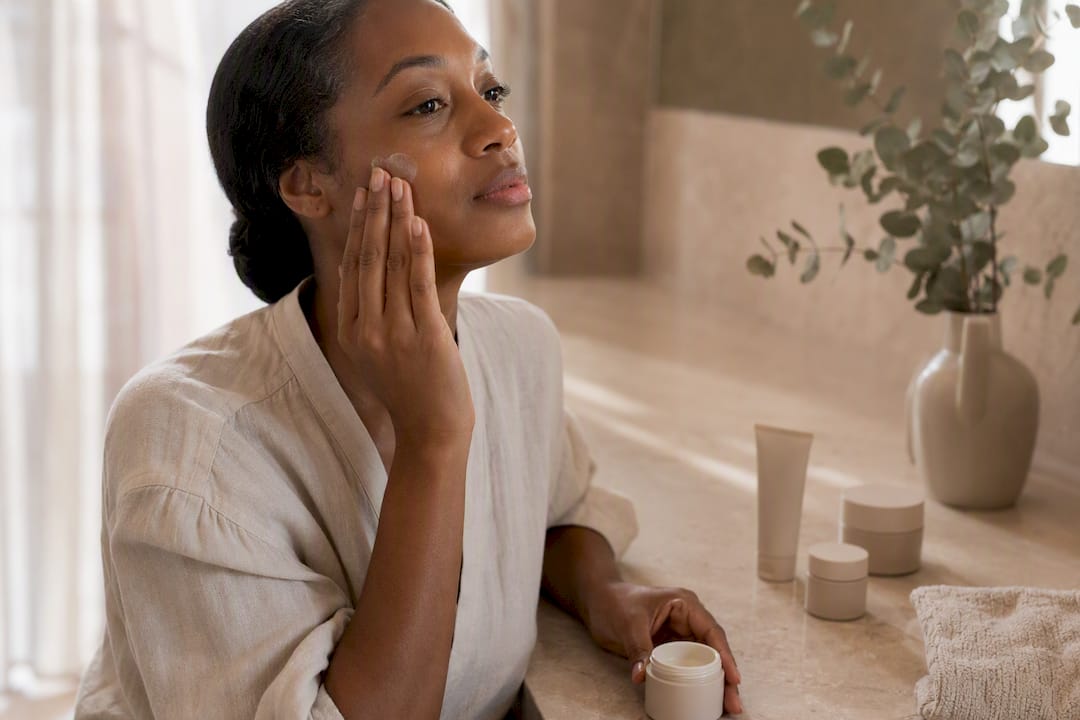
If you have dark spots that won’t fade, start today with three moves: apply a broad-spectrum sunscreen with iron oxide every morning, stop any product that stings or burns, and address whatever is inflaming your skin, whether that’s acne, eczema, or an aggressive scrub. Dark skin hyperpigmentation responds best to a calm, consistent routine, not an aggressive one. Expect gradual fading over months, not days, and know that treating the underlying trigger matters as much as any brightening serum you apply on top of it.
This morning: cleanse gently with a gentle face scrub, apply your active serum if tolerated, then finish with SPF 30+ that lists iron oxide or a tinted mineral filter.
Stop immediately: any product that burns, tingles painfully, or has left your skin drier and more irritated than before.
See a clinician if: spots are spreading, changing color, or you’ve been using a steroid cream for more than two weeks without supervision.
Pro Tip: Patch-test any new active on your inner forearm for three nights before putting it near your face. Darker skin can take up to 72 hours to show an irritation reaction, and reacting early saves you months of setback.
Table of Contents
How Does a Clinician-Led Program Approach Hyperpigmentation?
How Do Cultural Beauty Habits Affect Dark Skin Pigmentation?
How Does Hyperpigmentation Affect Confidence and Mental Health?
What Should You Take Away About Treating Dark Skin Hyperpigmentation?
How Can Fundamentalskin Help You Treat Hyperpigmentation Safely?
Frequently Asked Questions About Dark Skin Hyperpigmentation
What Type of Dark Skin Hyperpigmentation Do You Have?
Not all dark spots are the same condition, and treating the wrong type wastes time and money. Hyperpigmentation happens when melanocytes, the cells that produce pigment, overproduce melanin in a specific area, either from inflammation, sun exposure, or hormonal changes. Identifying which type you have determines whether you need an anti-inflammatory approach, a hormonal one, or patience alone.
Post-inflammatory hyperpigmentation (PIH) is the most common form in darker skin. It shows up as flat, brown to gray-black marks exactly where a pimple, cut, burn, or insect bite once sat. PIH is common and often persistent in Fitzpatrick skin types III through VI, and it can take months to resolve on its own.
Melasma looks different: symmetrical, blotchy brown patches on the cheeks, forehead, and upper lip, often triggered or worsened by hormones, heat, and sun. It tends to be more stubborn and more likely to involve deeper, dermal pigment.
Solar lentigines are small, well-defined brown spots from cumulative sun exposure, usually on the face, hands, and forearms, and they appear later in life rather than right after an injury.
Periorbital hyperpigmentation refers to dark circles under the eyes, driven by a mix of genetics, thin skin, blood vessel visibility, and sometimes rubbing or allergies.
A key distinction across all four: epidermal pigment (in the top skin layer) usually responds faster to topical treatment, while dermal pigment (deeper, often bluish-gray) is slower and sometimes only partially treatable.
PIH: brown to gray-black, matches the shape of the original injury, fades with time and sun protection.
Melasma: symmetrical patches, worsens with heat and hormones, often relapses.
Lentigines: small discrete spots, sun-linked, stable rather than inflamed.
Periorbital: bluish or brown under-eye discoloration, structural as much as pigment-related.
Pro Tip: A clinician’s Wood lamp exam shines UV light on the skin to reveal whether pigment sits in the epidermis (it appears more visible under the lamp) or the dermis (it barely changes). This single five-minute exam can save you from chasing a fading agent that dermal pigment will never fully answer.
Why Does Darker Skin Get More Hyperpigmentation?
Darker skin tones carry more, larger, and more widely distributed melanosomes, the pigment-producing packages inside skin cells, and those melanocytes react more aggressively to injury or irritation. A peer-reviewed review of post-inflammatory hyperpigmentation points to structural and molecular differences in darker skin that amplify this response, meaning even a minor breakout or scrape can trigger a disproportionately dark, long-lasting mark.
The mechanism runs through inflammation. When skin is injured, whether by acne, eczema, a cut, waxing, or a chemical peel, inflammatory signals prompt nearby melanocytes to pump out extra melanin as a protective response. In lighter skin, this reaction is muted. In darker skin, the same injury can trigger a mark that outlasts the original problem by months or years.
This explains why acne-prone individuals with dark skin so often deal with hyperpigmentation as a secondary, sometimes more distressing, condition than the acne itself. It also explains why procedures meant to help, like unsupervised chemical peels or harsh extractions, can backfire and create new dark patches instead of clearing old ones.
Larger, more reactive melanosomes mean a stronger pigment response to any trigger.
Inflammation from acne, eczema, trauma, or procedures directly fuels new melanin production.
Persistence and color variation (brown to gray to blue-black) reflect how deep the pigment settled.
Epidermal pigment fades faster; dermal pigment, driven by deeper inflammation, is the slow, sometimes permanent kind.
Pro Tip: Before reaching for a brightening product, control whatever is causing the inflammation. A dermal clinician’s first move is almost always calming the skin and supporting the barrier, because layering actives onto irritated skin usually creates more pigment, not less.
How Should You Protect Dark Skin from the Sun?
Photoprotection is not optional if you are treating hyperpigmentation. It is the single factor that determines whether your treatment plan works at all. Skip sunscreen and even the best topical regimen will lose ground faster than it gains.
Standard sun protection factor (SPF) alone is not enough for darker skin. High-energy visible light (HEVL), the visible light emitted by the sun (and, to a lesser degree, screens), is a significant driver of pigment darkening in darker phototypes, and conventional chemical sunscreens do little to block it. Iron oxide, an ingredient found in most tinted mineral sunscreens, is what actually filters HEVL.
Many people don’t realize their untinted sunscreen might be doing half the job. Standard sunscreens often lack sufficient iron oxide to meaningfully defend against visible light, which is why clinicians increasingly recommend layering a tinted, iron-oxide-rich product over a broad-spectrum base, or choosing one product that does both.
Your daily photoprotection order:
Cleanse, then apply any treatment serum you’re using (leave five to ten minutes to absorb).
Apply a broad-spectrum SPF 30 or higher, using a full teaspoon for the face and neck.
Layer a tinted mineral sunscreen or tinted moisturizer with iron oxide on top, especially if you’ll be near windows, screens, or outdoors for extended periods.
Reapply every two hours outdoors, or once at midday if you’re mostly indoors.
Reapplication is where most people fail. A sunscreen applied at 7 AM offers little protection by 1 PM if you’ve been outside, sweating, or touching your face throughout the day.
What to look for and avoid when choosing sunscreen:
Look for: SPF 30+, “broad-spectrum” labeling, iron oxide or a tinted formula matched to your undertone, and a texture that doesn’t leave a chalky cast.
Avoid: SPF under 30, sunscreens with no visible-light protection claim, and formulas that leave a persistent white or gray tint on deeper skin tones.
Consider: mineral sunscreens formulated specifically for melanin-rich skin, which have improved considerably in cosmetic elegance over the past few years.
A wide-brimmed hat and UPF clothing add a meaningful layer of protection on days with prolonged sun exposure, particularly during peak UV hours. Fundamentalskin’s guide on choosing sunscreen for pigmented skin breaks down specific formulas and application techniques in more depth, and the connection between sunscreen and pigmentation fading explains why this single habit outperforms most serums on its own.
Pro Tip: If white cast has kept you from wearing sunscreen consistently, look specifically for “tinted mineral sunscreen” rather than “clear” formulas. Tinted versions almost always contain the iron oxide that clear ones lack, so you get better HEVL protection and a better cosmetic finish in one product.
Which Topical Treatments Actually Fade Dark Spots?
A handful of ingredients have real evidence behind them, and the right choice depends on how stubborn your pigmentation is and whether you need prescription strength. Harvard Health’s review of hyperpigmentation treatments lists hydroquinone, retinoids, azelaic acid, and tranexamic acid among the standard first-line topicals, often combined rather than used alone.
Hydroquinone remains the benchmark prescription-strength lightener, working by inhibiting tyrosinase, the enzyme that drives melanin production. It’s available over the counter at low concentrations in some regions and by prescription at higher strengths elsewhere. Continuous use beyond a few months should happen under a clinician’s guidance, since prolonged unsupervised use carries its own risks.
Tretinoin and other topical retinoids (including adapalene and tazarotene) speed up cell turnover, pushing pigmented cells to the surface faster while also improving overall skin texture. They’re a slow burn: expect mild irritation in the first few weeks as your skin adjusts.
Azelaic acid is a gentler option that inhibits abnormal melanocyte activity and doubles as an anti-inflammatory and anti-acne ingredient, making it a smart first move for anyone whose hyperpigmentation stems from active breakouts.
Tranexamic acid, used topically and sometimes orally under medical supervision, reduces the inflammatory signaling that triggers melanin overproduction, and it has gained traction specifically for melasma.
Niacinamide and vitamin C work more subtly, reducing pigment transfer and offering antioxidant support, respectively. They’re well tolerated by most skin types and make a sensible daily-use foundation.
Kojic acid and arbutin are gentler tyrosinase inhibitors, often found in over-the-counter serums, while mequinol, where available by prescription, offers another route for those who don’t tolerate hydroquinone. Cysteamine is a newer option with promising results for melasma, though it has a distinctive smell that some find off-putting.
Start gentle: azelaic acid, niacinamide, or vitamin C for four to six weeks before adding anything stronger.
Escalate carefully: introduce one new active at a time, ideally two weeks apart, so you can identify what’s causing any reaction.
Combination or “triple” therapy (typically hydroquinone, a retinoid, and a mild corticosteroid) is a recognized prescription approach, but the steroid component should be used short-term and only under a clinician’s supervision.
Anything that stings, burns, or leaves lasting redness should be stopped immediately, since irritation itself can worsen hyperpigmentation rather than help it.
Combination therapy exists because pigmentation is rarely a single-mechanism problem. One active calms inflammation, another suppresses new melanin production, and a third accelerates turnover of the pigment already there. Using them together, in the right sequence, often outperforms any single ingredient used at a higher concentration. Fundamentalskin’s guide on natural actives for pigmentation and its breakdown of superficial pigmentation treatment both expand on how to sequence these ingredients for epidermal pigment specifically.
Pro Tip: If a product burns on the first application, that’s not “purging,” it’s irritation. Purging from retinoids looks like small breakouts over two to four weeks, not immediate stinging. Know the difference before you push through pain that’s actually doing damage.
Are Chemical Peels and Lasers Safe for Dark Skin?
Yes, but only with conservative settings and a clinician experienced in treating skin of color. Aggressive procedures carry a real risk of causing the exact problem they’re meant to fix.
Superficial chemical peels, using low concentrations of glycolic acid, mild TCA, or biomimetic formulations, work gently at the skin’s surface and carry lower risk than deeper peels. Microneedling creates controlled micro-injuries to stimulate collagen and can help texture and superficial pigment, though it must be done conservatively to avoid triggering new PIH. Lasers are the most polarizing option: longer-wavelength devices (such as 1064 nm) and picosecond lasers are generally considered lower-risk for darker skin, but a systematic review of PIH treatment across skin-of-color patients found that while lasers were the only modality to produce complete clearance in some patients, they also carried notable rates of adverse events.
The risk-versus-benefit calculation here is straightforward: aggressive settings can clear pigment faster, but they also raise the odds of triggering new, sometimes worse, PIH. A Cureus review of emerging PIH therapies found topical retinoids and combination regimens produce partial improvement in most patients, while laser therapy, though capable of full clearance in a subgroup, comes with meaningfully higher risk. Conservative, stepwise care tends to outperform aggressive single-session fixes for most people.
Before booking any in-office procedure, ask your provider:
How much experience do you have treating this specific procedure on darker skin tones?
What wavelength and settings will you use, and why those specifically for my skin type?
Will I need a preconditioning regimen (topicals to prepare skin) before treatment?
How many sessions are typical, and what’s the realistic downtime?
What are the possible outcomes, and what does the worst-case scenario look like?
The safest sequence follows a ladder: stabilize any active inflammation first, precondition the skin with topical actives for several weeks, then move to a conservative in-office session, followed by strict maintenance photoprotection. Skipping steps in that ladder is where most bad outcomes happen. Fundamentalskin’s guide to protecting skin after a pigmentation treatment covers the aftercare piece of this in detail.
A quick FAQ on procedures: Can microneedling worsen dark spots? It can if done too aggressively or without proper aftercare, but conservative settings with an experienced provider are generally well tolerated. Is one laser session usually enough? Rarely. Most people need multiple sessions spaced weeks apart, with realistic expectations set in advance.
How Long Does It Take to Fade Dark Spots?
Patience is part of the treatment plan, not a failure of it. Epidermal PIH, the kind sitting in the skin’s top layer, typically improves within 6 to 12 months with consistent care. Dermal pigment, sitting deeper, can take years to fade and sometimes never fully resolves.
Several factors decide where you land on that timeline: how deep the pigment sits, whether the original trigger (acne, eczema, injury) is fully controlled, how consistently you wear sunscreen, and how closely you stick to your treatment routine without skipping steps or over-exfoliating out of impatience.
Weeks 1 to 6: skin adjusts to new actives; texture may improve before color visibly changes.
Months 2 to 6: epidermal spots typically begin visibly lightening with consistent use.
Months 6 to 12: most epidermal PIH shows substantial improvement if photoprotection has been consistent.
Beyond 12 months: dermal pigment or melasma may require ongoing maintenance rather than full resolution.
A meaningful signal worth remembering: even in postinflammatory hyperpigmentation cases in Fitzpatrick III through VI skin, treatment is typically described as multimodal and prolonged rather than a quick fix, which sets a more accurate expectation than most product marketing implies.
What Skincare Routine Works Best by Severity?
The right routine depends on how much pigmentation you’re dealing with and how your skin tolerates actives. Here are three starting points to adapt.
Mild PIH (a few faint marks, no active breakouts):
Morning: gentle cleanser, vitamin C serum, moisturizer, broad-spectrum SPF 30+ with iron oxide.
Evening: gentle cleanser, niacinamide serum, moisturizer.
Moderate PIH (multiple visible spots, occasional breakouts):
Morning: gentle cleanser, azelaic acid or vitamin C, moisturizer, tinted mineral SPF.
Evening: gentle cleanser, a low-strength retinoid three nights a week (building up gradually), moisturizer on off-nights.
Severe PIH (widespread, long-standing, or under dermatologist care):
Morning: gentle cleanser, prescribed topical (such as azelaic acid or tranexamic acid), moisturizer, tinted SPF layered with a separate mineral product.
Evening: gentle cleanser, prescription-strength retinoid or a combination formula as directed, moisturizer to buffer irritation.
Introduce any new active by patch-testing on your inner arm for three nights first, then applying to a small facial area every other night for two weeks before going to full use. Stop and reassess at the first sign of persistent redness, burning, or peeling that doesn’t settle within a day. Layer products from thinnest to thickest: cleanser, then treatment actives, then moisturizer, then sunscreen. Keep vitamin C in the morning and retinoids at night, since combining them at the same time increases irritation without added benefit.
Fundamentalskin’s guide on adjusting skincare for pigmentation-prone skin and its rundown of reducing dark spots naturally and safely both offer additional routine-building detail for readers who want more granular guidance.
Pro Tip: If your clinician prescribes a short-term steroid as part of a combination formula, never stop it abruptly after weeks of use. Taper gradually as directed, since sudden discontinuation can trigger rebound redness or a flare of the original inflammation.
What Mistakes Make Hyperpigmentation Worse?
Some of the most common habits people adopt to fix dark spots actually prolong them.
Over-exfoliating with acids or scrubs, which inflames skin and triggers new pigment rather than removing old pigment.
Introducing three or four new actives at once with no patch testing, making it impossible to tell what’s helping or hurting.
Using leftover or borrowed steroid creams without supervision, which can thin skin and cause rebound discoloration.
Skipping sunscreen on cloudy days or when staying “mostly indoors,” which still allows HEVL and incidental UV exposure to undo progress.
Attempting strong DIY peels at home using undiluted acids or high-percentage products meant for clinical use only.
Contact a clinician promptly if you notice: lesions with mixed colors (patches of brown, gray, and black together), pigmentation that keeps spreading rather than staying contained, any new or unusual growth, severe irritation or open skin after a treatment, or sudden dark patches appearing alongside a new medication. These are signals that something beyond routine PIH may be at play, and self-treating through it can delay proper care.
How Does a Clinician-Led Program Approach Hyperpigmentation?
A conservative, stepwise pathway consistently outperforms jumping straight to the most intense option available. That sequence looks like: a full skin assessment, stabilizing any active inflammation and rebuilding barrier health, preconditioning with the right topicals for several weeks, then a conservative in-office treatment, followed by strict maintenance photoprotection.
Fundamentalskin’s approach is led by Chevonne, a Dermal Clinician with 15 years of experience treating pigmentation, aging skin, and redness using non-invasive methods tailored to each client’s skin. That experience matters most in exactly the judgment calls this article has emphasized: knowing which peel strength is conservative enough for a given skin tone, and when topical preconditioning needs more time before any in-office step.
The Larimedical Biomimetic Peel is one of Fundamentalskin’s lower-downtime, in-office options, designed to work with the skin’s own biology rather than force rapid, aggressive exfoliation. It fits within a conservative protocol rather than replacing one: patch-testing, cautious peel strength, and a structured pre- and post-treatment topical regimen all factor into how it’s used. As with any pigmentation procedure, results vary from person to person, and no responsible clinician promises a guaranteed outcome from a single session.
Assessment identifies whether pigment is epidermal, dermal, or mixed before any treatment plan is set.
Preconditioning topicals reduce the skin’s inflammatory load before introducing any procedural step.
Conservative peel strength and experienced technique are the two biggest levers for minimizing new PIH risk.
Maintenance photoprotection afterward protects whatever gains the treatment produced.
Skin of color deserves a treatment plan built around how it actually behaves, not a generic protocol borrowed from lighter skin types. Every step, from the first consultation to the peel strength chosen, should account for how reactive melanocytes in darker skin can be.
Fundamentalskin’s page on successful pigmentation treatment outcomes shows real progress patterns clients have experienced with this stepwise approach.
Does Skin Barrier Health Affect Hyperpigmentation?
A compromised skin barrier is one of the most overlooked contributors to persistent dark spots. The barrier, your skin’s outermost layer of lipids and cells, keeps moisture in and irritants out. When it’s damaged, whether from over-exfoliation, harsh cleansers, or too many actives layered at once, skin becomes more reactive to everything, including the very brightening ingredients meant to help.
A weakened barrier lets irritants penetrate more easily, which triggers exactly the inflammatory cascade that leads to new melanin production in darker skin. This creates a frustrating loop: someone chasing faster results piles on acids and retinoids, damages their barrier, and ends up with more pigmentation than they started with.
Signs of barrier damage include persistent dryness despite moisturizing, a tight or stinging feeling after cleansing, increased sensitivity to products you previously tolerated, and visible flaking or redness. If any of these sound familiar, the right move is to pause active ingredients entirely for one to two weeks and focus purely on gentle cleansing and rich moisturizing.
Barrier support isn’t a detour from treating hyperpigmentation. It’s the foundation that makes every other step work. A retinoid or vitamin C serum applied to compromised, barrier-damaged skin is more likely to cause irritation than improvement, which circles back to producing the exact problem you’re trying to solve. Rebuilding barrier function with ceramide-rich moisturizers and a temporary break from actives often does more for stubborn pigmentation than adding another product to the routine.
How Do Cultural Beauty Habits Affect Dark Skin Pigmentation?
Certain cosmetic habits common within communities with darker skin tones deserve honest discussion, because some carry a higher hyperpigmentation risk than people realize. Skin-lightening creams containing unregulated or high-dose hydroquinone, sometimes sold without proper guidance on duration or concentration, can cause a condition called exogenous ochronosis, a paradoxical darkening and blue-gray discoloration from long-term overuse.
Hair removal practices, including waxing, threading, and shaving, are common triggers for PIH, particularly along the jawline, upper lip, and bikini area, where repeated micro-trauma to the skin invites the same inflammatory pigment response seen with acne. Choosing gentler hair removal methods and applying a soothing, fragrance-free product afterward can reduce how often these areas develop new dark marks.
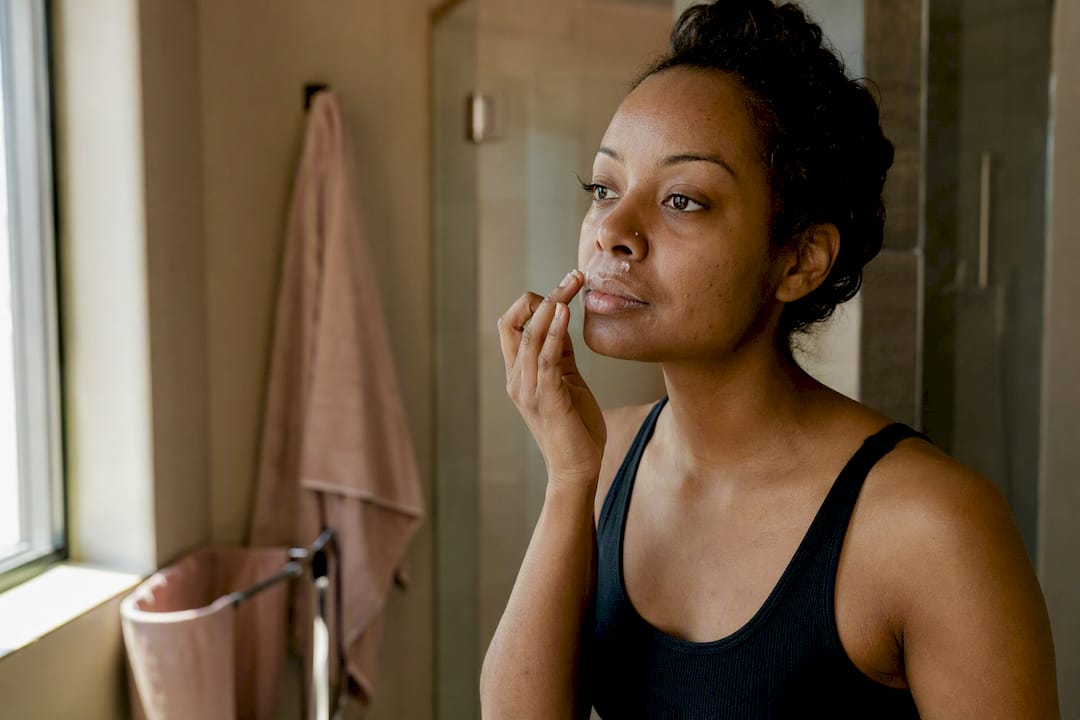
Heavy, occlusive cosmetic products, including some pomades, thick styling creams near the hairline, and certain oil-based makeup formulas, can also contribute to acne along the forehead and jaw, which then leads to its own cycle of PIH. This is worth naming plainly rather than glossing over, since forehead and jawline hyperpigmentation in many dark-skinned individuals traces directly back to product choice rather than internal skin issues.
None of this means avoiding cosmetic routines altogether. It means reading ingredient lists with the same scrutiny you’d apply to a skincare serum, choosing non-comedogenic formulas near the hairline, and being skeptical of any lightening product promising dramatic results without a clear list of active ingredients and usage instructions.
How Does Hyperpigmentation Affect Confidence and Mental Health?
Dark spots on visible skin carry a weight that goes beyond the physical mark. For many people with darker skin, hyperpigmentation shows up during formative years, whether from teenage acne or an early injury, and the resulting marks can linger long enough to shape how someone sees themselves in photos, in mirrors, and in social situations.
This isn’t a trivial cosmetic complaint. Visible skin concerns are consistently linked to lower self-esteem and increased self-consciousness in social and professional settings, and the frustration compounds when years of trying different products yield only partial results. The slow timeline of PIH treatment, often six months to a year for meaningful change, can feel discouraging when someone wants results now.
A few things help make that waiting period more bearable. Tracking progress with monthly photos in consistent lighting reveals gradual change that’s easy to miss day to day in the mirror. Setting realistic milestones, rather than expecting complete clearance, helps measure real progress instead of chasing an all-or-nothing outcome. Talking with a knowledgeable clinician about what’s realistically achievable, rather than relying on marketing promises, also reduces the frustration that comes from mismatched expectations.
Color-correcting concealers and tinted sunscreens can offer confidence in the interim without worsening pigmentation, provided they’re non-comedogenic and don’t require harsh removal. Skin concerns are common enough that you’re never dealing with this alone, and a consistent, evidence-based routine paired with patience tends to serve people better, both practically and emotionally, than chasing the next product that promises overnight results.
What Should You Take Away About Treating Dark Skin Hyperpigmentation?
Effective treatment for dark skin hyperpigmentation combines daily broad-spectrum photoprotection, anti-inflammatory topicals, and a conservative, stepwise escalation toward prescription or in-office options.
Point | Details |
Sunscreen is foundational | Use broad-spectrum SPF 30+ with iron oxide daily to block both UV and HEVL, which drives pigment darkening in darker skin. |
Treat the trigger first | Control acne, eczema, or irritation before or alongside using brightening actives, or new pigment keeps forming. |
Introduce actives slowly | Patch-test each new ingredient and add one at a time to avoid irritation that worsens pigmentation. |
Timelines run long | Epidermal PIH often takes 6 to 12 months to fade; dermal pigment can take years or persist longer. |
Escalate conservatively | Move from gentle topicals to prescription combinations to in-office procedures only as needed, favoring lower-risk settings. |
Fundamentalskin offers a stepwise option | Chevonne’s clinician-led assessments and the low-downtime Larimedical Biomimetic Peel fit within a conservative, photoprotection-first treatment plan. |
What Does the Evidence Actually Tell Us to Prioritize?
Most advice on dark skin hyperpigmentation leads with the fading agent, hydroquinone, a serum, a peel, when the evidence points somewhere less exciting: prevention and inflammation control do more heavy lifting than any single brightening ingredient. That’s not the message that sells products, but it’s the one backed by how melanocytes in darker skin actually behave.
The conventional advice also underplays HEVL. Most people assume any sunscreen protects them fully, but without iron oxide, visible light keeps darkening pigment that topicals are simultaneously trying to fade. That gap between “wearing sunscreen” and “wearing the right sunscreen” explains a lot of stalled progress I see discussed in patient forums and clinical literature alike.
If you take one thing from this guide, let it be sequencing. Calm inflammation, protect from HEVL and UV, then layer in actives gradually. Reach for lasers or aggressive peels only after that foundation holds, and only with a provider who treats darker skin routinely. Patience paired with the right order of operations beats intensity every time.
How Can Fundamentalskin Help You Treat Hyperpigmentation Safely?
If you’ve read this far, you already know that fading dark spots safely takes more than a serum from a drugstore shelf, and that’s exactly where a clinician-led approach earns its place. Fundamentalskin gives you what a self-directed routine can’t: a trained eye that tells epidermal from dermal pigment, adjusts your plan as your skin responds, and chooses peel strength based on your actual skin tone rather than a one-size-fits-all protocol.

Chevonne’s consultations start with assessing your specific pigmentation pattern, then build toward treatments like the Biomimetic Peel and LED Therapy, a low-downtime option designed to work with your skin rather than force it into recovery mode. For those already on a topical routine and ready for a conservative in-office step, the Larimedical Peels page outlines what a first session looks like and what to expect afterward. Book a consultation to get a plan built around your skin’s actual behavior, not a generic routine pulled from a product label.
Frequently Asked Questions About Dark Skin Hyperpigmentation
Can dark skin hyperpigmentation go away on its own? Mild post-inflammatory hyperpigmentation can fade without treatment over 6 to 12 months if you stop the original irritant and protect skin from sun and visible light. Deeper or dermal pigment often needs active treatment to improve meaningfully.
Is hydroquinone safe for dark skin? Hydroquinone is effective and widely used for dark skin hyperpigmentation, but it works best at appropriate concentrations for a limited duration under guidance, since prolonged unsupervised use carries risks including a rare condition called ochronosis.
What is the fastest way to fade dark spots on brown skin? There is no truly fast fix; consistent daily sunscreen with iron oxide combined with a tolerated active like azelaic acid or a retinoid, used for several months, produces the most reliable results with the lowest risk of making pigmentation worse.
Can natural remedies treat hyperpigmentation effectively? Some natural ingredients, like niacinamide derivatives and certain plant extracts, offer mild brightening and anti-inflammatory benefits, but they generally work more slowly than prescription actives and work best as a complement to sunscreen rather than a replacement for it.
Why do dark spots keep coming back after they fade? Recurrence usually means the underlying trigger, whether acne, sun exposure, or an unaddressed skin condition, is still active. Consistent photoprotection and treating the root cause matter more for preventing recurrence than any single fading product.
This article is general information, not a substitute for advice from a qualified doctor. Consult a qualified healthcare professional about your own circumstances before acting on anything here.
Sources
Management of melanin hyperpigmentation disorders: guideline (Medscape)
How to fade dark spots in darker skin tones (American Academy of Dermatology)
Postinflammatory Hyperpigmentation - StatPearls (NCBI Bookshelf)
Post-inflammatory hyperpigmentation: molecular signatures and treatment considerations — PMC review
Recommended
Comments