.png)
How Natural Actives Treat Pigmentation: 2026 Guide
- chevonne stewart
- Jun 19
- 8 min read


Hyperpigmentation is defined as an overproduction of melanin that creates dark spots, uneven skin tone, and patches of discoloration across the face and body. Understanding how natural actives treat pigmentation gives you a real path forward without resorting to harsh synthetics or invasive procedures. Ingredients like niacinamide, azelaic acid, and vitamin C each target distinct points in the melanin production cycle, and clinical research now confirms they work. This guide breaks down the science, the evidence, and the practical steps to build a routine that actually delivers results for your skin.
How do natural actives inhibit melanin production and transfer?
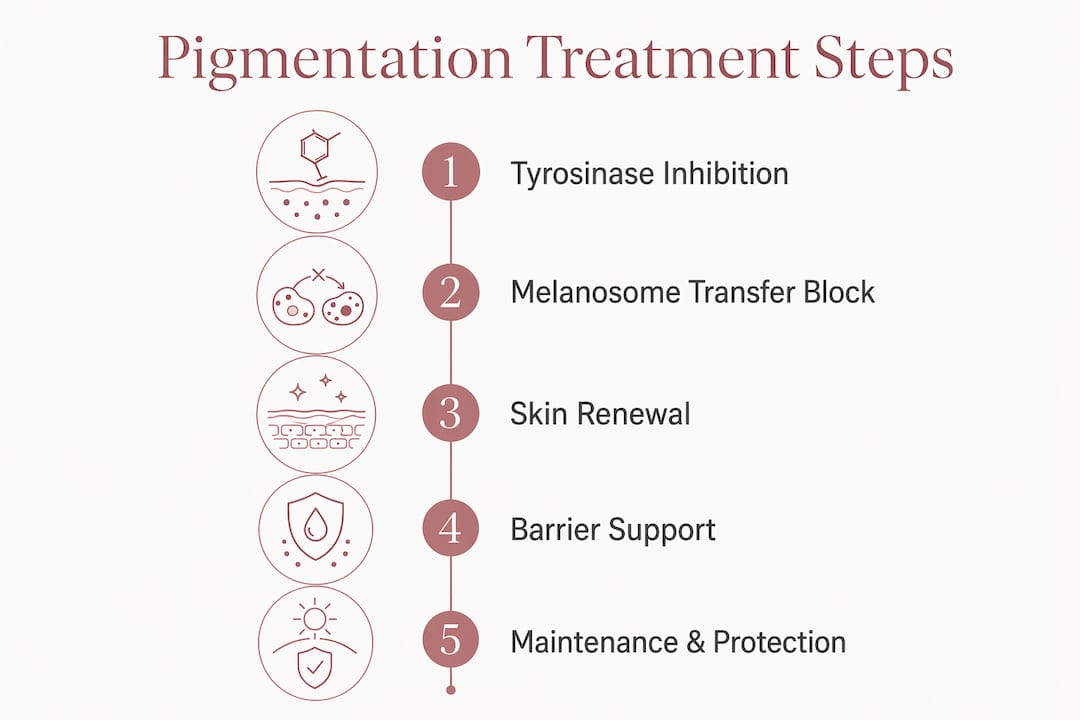
Natural actives address pigmentation through three primary biological mechanisms: tyrosinase inhibition, melanosome transfer blockade, and anti-inflammatory action. Each mechanism targets a different stage of the melanin pathway, which is why understanding them helps you choose the right ingredients rather than guessing.

The tyrosinase enzyme and why it matters
Tyrosinase is the enzyme that controls the first and most critical steps in melanin synthesis. When UV exposure, hormones, or inflammation trigger melanocytes, tyrosinase converts the amino acid tyrosine into melanin precursors. Block tyrosinase, and you interrupt the entire production chain before dark pigment forms.
Several natural actives are proven tyrosinase inhibitors:
Azelaic acid combines tyrosinase inhibition with anti-inflammatory action, making it especially effective for post-inflammatory hyperpigmentation (PIH) where both melanin overproduction and skin inflammation are driving the discoloration.
Vitamin C inhibits tyrosinase at multiple enzymatic steps and also reduces dopaquinone oxidation, cutting off melanin precursors at two points simultaneously. Its antioxidant activity adds a layer of protection against UV-triggered melanocyte activation.
Kojic acid, derived from fungi, chelates copper ions that tyrosinase needs to function. Without copper, the enzyme cannot catalyze melanin production effectively.
Niacinamide’s unique mechanism
Niacinamide works differently from tyrosinase inhibitors. It does not interfere with melanin production at all. Instead, it blocks melanosome transfer from melanocytes to surrounding keratinocytes, the skin cells that carry pigment to the surface. At 4–5% concentration, niacinamide inhibits 35–68% of melanosome transfer in coculture models without causing irritation. That figure matters because it means niacinamide can significantly reduce visible pigmentation even when melanin is still being produced.
Pro Tip: Because niacinamide and tyrosinase inhibitors work at completely different points in the pigmentation pathway, combining them produces a synergistic effect that neither ingredient achieves alone.
What clinical evidence supports key natural actives?
The clinical case for natural ingredients in pigmentation treatment is stronger than most people realize. Research updated in 2026 confirms that several natural actives match or approach the efficacy of prescription-strength synthetics, with significantly better safety profiles.
Azelaic acid vs. hydroquinone
15–20% azelaic acid is clinically equivalent to 4% hydroquinone for treating melasma, with lower irritation and a confirmed safety record for daily use on darker skin tones. Hydroquinone has long been the gold standard for pigmentation, but it carries risks including ochronosis (a bluish-black skin discoloration) with prolonged use. Azelaic acid delivers comparable results without those risks, making it a genuine clinical alternative rather than a compromise.
Treatment timelines and realistic expectations
Active Ingredient | Primary Mechanism | Typical Visible Improvement | Safety for Darker Skin |
Azelaic acid (15–20%) | Tyrosinase inhibition + anti-inflammatory | 4–8 weeks | Excellent |
Niacinamide (4–5%) | Melanosome transfer blockade | 4–8 weeks | Excellent |
Vitamin C (10–20%) | Multi-step tyrosinase inhibition + antioxidant | 4–8 weeks | Good (can oxidize) |
Kojic acid (1–4%) | Copper chelation / tyrosinase inhibition | 6–10 weeks | Moderate (patch test advised) |
Daily application of natural actives typically shows visible pigment improvement within 4–8 weeks. That timeline reflects consistent, daily use. Skipping applications or inconsistent routines extend the timeline considerably.
“Successful pigmentation treatment focuses on skin barrier repair and inflammation management rather than just skin lightening.” — Dermatologist consensus
This perspective shifts the goal from bleaching to healing. When your skin barrier is compromised, inflammation drives more melanocyte activity, which creates more pigmentation. Repairing the barrier is not a secondary step. It is part of the treatment itself.
How do natural pigmentation treatments compare and combine?
Treating dark spots with natural remedies works best when you understand which ingredients complement each other and which combinations create unnecessary irritation risk. The most effective treatments for pigmentation issues use multiple actives targeting different pathway points simultaneously.
Why combination therapy outperforms single ingredients
Combining multiple natural actives targeting different points in the pigmentation pathway is more effective than relying on a single ingredient. Think of it this way: if azelaic acid reduces melanin production but some melanin still forms, niacinamide intercepts the transfer of that melanin to skin cells. The two ingredients cover each other’s gaps.
The most clinically supported pairings include:
Niacinamide + azelaic acid: Covers both melanin synthesis and transfer. Both ingredients are well-tolerated, making this pairing suitable for sensitive skin and darker skin tones prone to PIH.
Vitamin C + niacinamide: Vitamin C addresses tyrosinase while niacinamide handles transfer. Some older sources suggested these two cancel each other out, but current research does not support that concern at standard concentrations.
Azelaic acid + kojic acid: Both inhibit tyrosinase through different mechanisms, creating a stronger combined inhibitory effect. Use with caution if your skin is reactive.
Risks of moving too fast
The biggest mistake people make with natural ways to improve skin discoloration is layering too many actives at once. Strong actives introduced simultaneously can trigger irritation, and irritation on skin prone to pigmentation often causes PIH. That means the treatment itself creates new dark spots. The risk is real and worth taking seriously.
Pro Tip: Introduce one new active at a time and give your skin two to three weeks to adjust before adding another. This pacing protects your barrier and lets you identify exactly which ingredient is causing any reaction.
Niacinamide blocks melanosome transfer but has no direct effect on tyrosinase, so pairing it with a tyrosinase inhibitor like thiamidol or azelaic acid creates genuine synergy rather than redundancy. Understanding this distinction helps you build a routine with purpose rather than stacking ingredients that duplicate each other’s work.
What practical tips improve results from natural actives?
Getting the best results from natural ingredients for pigmentation comes down to consistency, patience, and a few non-negotiable habits. Here is a practical framework for building a routine that works.
Start with one active. Choose your primary active based on your pigmentation type. PIH responds well to azelaic acid. Melasma responds to a combination of vitamin C and niacinamide. Sun-induced spots respond to vitamin C and kojic acid.
Introduce new ingredients every 2–3 weeks. Introducing one active every 2–3 weeks improves tolerance monitoring and reduces the risk of irritation-induced pigmentation. This is not slow progress. It is smart progress.
Apply sunscreen every single morning. UV exposure reverses progress from natural actives by re-triggering melanocyte activity. SPF 30 or higher is the baseline. SPF 50 is better if you spend time outdoors. No active ingredient can outwork daily UV damage.
Add gentle exfoliation once or twice a week. Chemical exfoliants like lactic acid or mandelic acid accelerate cell turnover, helping pigmented cells shed faster. This amplifies the effect of your brightening actives without adding irritation risk when used at low concentrations.
Support your skin barrier. Use a ceramide-rich or fatty acid-based moisturizer alongside your actives. A healthy barrier reduces inflammation, and reduced inflammation means fewer triggers for melanocyte overactivation.
Address lifestyle factors. Hydration, quality sleep, and stress management all influence cortisol levels, which in turn affect inflammatory pathways in the skin. These are not soft recommendations. They directly impact how well your actives perform.
You can explore real-world treatment results to see how these principles translate into visible skin improvements across different pigmentation types and skin tones.
Key Takeaways
Natural actives treat pigmentation most effectively when they target multiple points in the melanin pathway simultaneously, supported by daily sun protection and a healthy skin barrier.
Point | Details |
Mechanism diversity matters | Pair tyrosinase inhibitors like azelaic acid with transfer blockers like niacinamide for stronger results. |
Azelaic acid matches hydroquinone | At 15–20%, azelaic acid equals 4% hydroquinone efficacy with a safer profile for all skin tones. |
Results take 4–8 weeks | Consistent daily use is required before visible improvement appears. Patience is part of the protocol. |
Introduce actives gradually | Add one new ingredient every 2–3 weeks to avoid irritation-triggered pigmentation. |
Sunscreen is non-negotiable | UV exposure reverses gains from any natural active, making SPF the foundation of every pigmentation routine. |
What I’ve learned after 15 years treating pigmentation
The most common misconception I see is that “natural” means “gentle enough to use freely.” That belief leads people to over-layer actives, skip patch testing, and then wonder why their skin looks worse after a month of trying to improve it.
Azelaic acid is a perfect example. It is derived from grains, it is natural, and it is clinically equivalent to prescription hydroquinone. That is not a gentle, low-stakes ingredient. It is a potent active that deserves the same respect you would give a medical-grade treatment. The natural origin does not change the biochemistry.
What I have also found is that clients who focus only on “lightening” often miss the bigger picture. Pigmentation is frequently a symptom of inflammation or barrier dysfunction. When I address those underlying issues alongside the brightening actives, results come faster and last longer. A niacinamide serum paired with a ceramide moisturizer and consistent SPF will outperform an aggressive brightening stack applied to a compromised, irritated skin barrier every time.
My honest advice: start simple, stay consistent, and protect your progress with sunscreen every day without exception. The best practices for pigmented skin are not complicated. They just require follow-through.
— chevonne
How Fundamentalskin’s Biomimetic Peel + LED Therapy supports your results
Natural actives do powerful work, but pairing them with a professional treatment accelerates and deepens those results. At Fundamentalskin, the Biomimetic Peel + LED Therapy is designed to complement your at-home brightening routine by addressing pigmentation at a clinical level with zero downtime.

The Biomimetic Peel works by supporting skin renewal and reducing melanin overactivity, while LED Therapy calms inflammation that drives pigmentation in the first place. Together, they reinforce exactly what your natural actives are doing at home. The treatment is suitable for diverse skin tones and is led by Chevonne, a Dermal Clinician with 15 years of experience. If you are ready to see real, measurable improvement in your skin tone and clarity, this is the professional step that makes your routine work harder.
BOOK NOW and take the next step toward healthier, more confident skin.
FAQ
How long does it take for natural actives to fade dark spots?
Most natural actives show visible pigment improvement within 4–8 weeks of consistent daily use. Results vary depending on the type of pigmentation, the active used, and whether sunscreen is applied every morning.
Can you combine niacinamide and vitamin C for pigmentation?
Yes. Niacinamide and vitamin C target different points in the melanin pathway and work well together at standard concentrations. Current research does not support the older concern that they cancel each other out.
Is azelaic acid safe for darker skin tones?
Azelaic acid at 15–20% is clinically confirmed as safe for daily use on darker skin tones and is less irritating than hydroquinone. It is one of the most recommended options for skin prone to post-inflammatory hyperpigmentation.
What is the biggest mistake people make with natural pigmentation treatments?
Layering too many actives at once is the most common error. Irritation from over-stacking triggers PIH, which creates new dark spots. Introduce one new ingredient every 2–3 weeks to avoid this outcome.
Does sunscreen really affect how well natural actives work?
Sunscreen is the foundation of any pigmentation treatment. UV exposure re-triggers melanocyte activity and reverses the progress made by brightening actives, making daily SPF 30 or higher non-negotiable for lasting results.
Recommended
Comments