.png)
Sunscreen Benefits for Pigmentation: What You Need to Know
- chevonne stewart
- Aug 1
- 12 min read

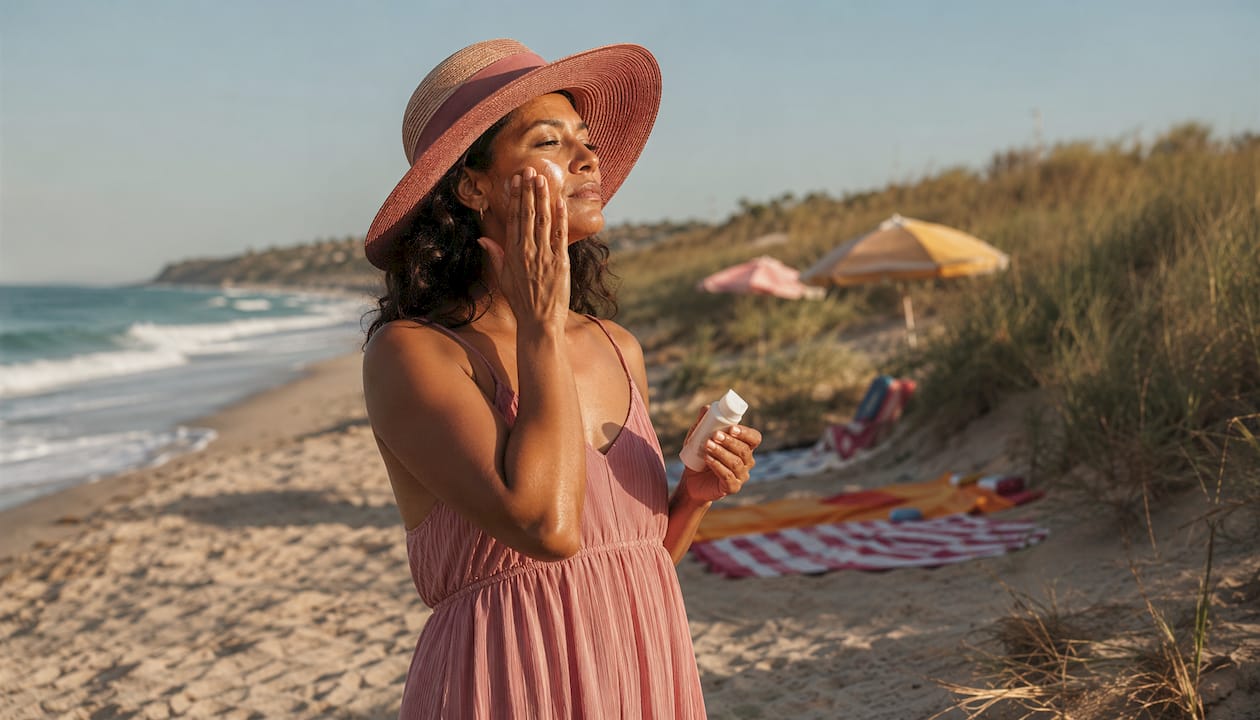
Daily broad-spectrum sunscreen, ideally tinted with iron oxide, is the single most important step you can take for pigmentation control. It prevents new dark spots from forming, stops existing ones from deepening, and creates the stable environment your skin needs for any fading treatment to actually work. Sunscreen does not chemically erase pigment on its own, but without it, every topical and clinical treatment you invest in is working against an open window of ongoing UV and visible light stimulation. Here is where to start:
Apply a broad-spectrum SPF 30+ every morning, rain or shine, indoors or out.
Choose a tinted formula containing iron oxide for visible-light (VL) protection, especially if you have melasma, post-inflammatory hyperpigmentation (PIH), or a medium-to-deep skin tone.
Reapply every two hours when outdoors, and use a tinted stick or compact for midday touch-ups without disturbing makeup.
If you have stubborn melasma or PIH that is not responding to over-the-counter products, the most practical next step is a clinical assessment. A dermal clinician can map your pigment triggers, confirm your skin type, and build a protocol where sunscreen and in-clinic treatments work together.
Table of Contents
How does UV and visible light actually trigger pigmentation?
What does the clinical evidence show about sunscreen and pigmentation?
Which sunscreen features actually protect against dark spots?
How should you apply sunscreen to get the most pigment protection?
Why is sunscreen essential before and after clinical pigmentation treatments?
How Fundamentalskin integrates sunscreen into pigmentation protocols
How does UV and visible light actually trigger pigmentation?
Most people know UV rays cause sunburn. Fewer realize that the full light spectrum, including the visible light you cannot feel, drives melanogenesis in ways that SPF alone does not fully address.
UVB (290–320 nm) causes direct DNA damage in keratinocytes and melanocytes, triggering an inflammatory cascade that signals melanocytes to ramp up melanin production. It is the primary driver of acute tanning and sunburn-related pigmentation. UVA (320–400 nm), particularly long-wave UVA1 (340–400 nm), penetrates deeper into the dermis, generating reactive oxygen species (ROS) and activating melanocyte tyrosinase through oxidative pathways. UVA1 is also a key trigger for melasma relapse, even on overcast days.
Here is where the science gets clinically significant: visible light accounts for approximately 50% of the total oxidative burden on the skin, compared to roughly 46% for UVA and just 4% for UVB. High-energy visible light (HEVL), often called blue light, activates opsin-3 receptors in melanocytes and triggers a distinct oxidative signaling pathway that is largely independent of UV. This matters because standard SPF testing measures only UV protection. A sunscreen with SPF 50 can score zero on visible-light protection.
The biological effects break down like this:
UVB: DNA strand breaks, p53 activation, inflammatory cytokine release, acute melanin synthesis
UVA/UVA1: Oxidative stress, lipid peroxidation, dermal matrix degradation, persistent melanocyte stimulation
HEVL/blue light: Opsin-3 pathway activation, ROS generation, prolonged post-inflammatory melanin deposition
Inflammation (any cause): Keratinocyte-melanocyte signaling via prostaglandins and endothelin-1, the core mechanism behind PIH
Why darker skin tones face a different risk profile. Fitzpatrick skin types III and above are more reactive to visible light and HEVL than to UVB. Melanocytes in deeper skin tones produce more melanin in response to oxidative stress, meaning a cloudy day indoors near a window can trigger pigment activity. This is precisely why shifting the message from “sunscreen” to “light protection” improves both accuracy and adherence for pigment-prone patients.
Pro Tip: If you work near windows or spend time on screens, your skin is still receiving visible light and HEVL. A tinted iron-oxide sunscreen worn indoors is not overcautious — it is clinically appropriate for anyone managing melasma or PIH.
What does the clinical evidence show about sunscreen and pigmentation?
The research base here is solid, and it has grown meaningfully in the past few years. Multiple peer-reviewed studies and reviews confirm that broad-spectrum sunscreens prevent pigmentation from worsening, and that adding visible-light blocking pigments, specifically iron oxide, produces measurably better outcomes in both melasma and PIH.

Key study findings
A 12-week clinical trial published in the Journal of Drugs in Dermatology compared SPF 50 with iron oxide against SPF 50 alone in participants with melasma. Among the melasma subgroup, 36% of those using the iron oxide formulation showed measurable improvement in skin radiance (L* measurements), compared to 0% in the SPF-50-only group. That gap is not subtle. It directly demonstrates that UV protection alone is insufficient for melasma management when visible light is a co-trigger.
A separate formulation study measuring Pigmentation Protection Factor (PPF) across 33 sunscreen products found that products containing iron oxide pigments achieved PPF values above 7, while non-pigmented products scored below 5. The same research confirmed that PF-VIS values for pigmented sunscreens were significantly higher than non-pigmented equivalents, with PPF and PF-VIS strongly correlated (rp = 0.9081). This means SPF is a poor proxy for pigmentation protection. A high-SPF product without iron oxide can still leave your skin largely undefended against the visible-light triggers most relevant to melasma.
A PubMed-indexed review on melasma management confirmed that broad-spectrum SPF with VL protection reduces melasma severity and lowers relapse rates, particularly when used consistently before, during, and after depigmenting treatments. The Photochemical & Photobiological Sciences review went further, calling for clinical messaging to explicitly include UVA1 and visible-light protection as core components of any pigment management plan.
Study | Design / Population | Intervention | Key Result |
JDD iron oxide trial | 12-week RCT, melasma participants | SPF 50 + iron oxide vs. SPF 50 alone | 36% radiance improvement (iron oxide group) vs. 0% (SPF-only group) |
PPF / PF-VIS formulation study | 33-product lab analysis | Pigmented vs. non-pigmented sunscreens | PPF >7 (pigmented) vs. <5 (non-pigmented); rp = 0.9081 |
Melasma photoprotection review | Systematic review | Broad-spectrum + VL protection | Reduced severity and relapse in melasma patients |
Photochem & Photobiol Sciences review | Literature review | Messaging and formulation analysis | Recommends VL + UVA1 inclusion in pigment disorder protocols |
Evidence strength note. The iron oxide trial data and PPF formulation research are strong and directly applicable. The review-level evidence on VL protection in melasma is moderate-to-strong, with open questions remaining around optimal shade matching for tinted products, standardization of PF-VIS measurement across brands, and long-term durability data beyond 12 weeks.
Which sunscreen features actually protect against dark spots?
Choosing a sunscreen for pigmentation is not the same as choosing one for general sun protection. The label criteria that matter most are different, and a few ingredients do most of the heavy lifting.
The non-negotiables
Broad-spectrum SPF 30+ (minimum): Covers both UVA and UVB. SPF 50 is preferable for anyone actively treating melasma or PIH.
Iron oxide (tinted formula): The most clinically supported visible-light blocker available in consumer sunscreens. Look for “tinted,” “contains iron oxide,” or a color-correcting tint on the label. This is the ingredient that raises PPF above 7 and separates pigmentation-specific protection from standard UV coverage.
Zinc oxide and/or titanium dioxide (mineral filters): Provide physical UV reflection, are photostable, and are well-tolerated on sensitive and acne-prone skin. Zinc oxide also has mild anti-inflammatory properties, which is relevant for PIH-prone skin. You can read a detailed breakdown of mineral vs. chemical filter differences if you are weighing your options.
UVA1 protection: Not always labeled explicitly in the U.S., but products with higher zinc oxide concentrations and PA+++ or PA++++ ratings (an Asian grading system increasingly appearing on U.S. imports) offer stronger UVA1 coverage.
Label language to look for
Label Claim | What It Means for Pigmentation |
Broad-spectrum | Covers both UVA and UVB — the baseline requirement |
SPF 30 / SPF 50 | Higher SPF = more UVB protection; SPF 50 preferred for active treatment |
Tinted / contains iron oxide | Adds visible-light and HEVL blocking; raises PPF |
PA+++ / PA++++ | Indicates strong UVA protection (Asian grading, increasingly on U.S. products) |
Non-comedogenic | Reduces risk of breakout-triggered PIH on acne-prone skin |
Mineral / physical | Zinc oxide and/or titanium dioxide; photostable, gentle on reactive skin |
For acne-prone or sensitive skin. Breakouts are a direct PIH trigger, so the formula matters as much as the filters. Lightweight mineral tints, gel-based tinted SPFs, and non-comedogenic fluid formulas are the practical choices here. Avoid heavy occlusive bases that can clog pores and worsen the cycle of breakout-to-PIH. A sunscreen label guide can help you decode ingredient lists before you buy.
On shade matching for tinted products. Tinted sunscreens come in a limited range of shades. A tint that is too light on deeper skin tones can leave a white cast; too dark and it reads as foundation. Look for “universal tint” or “adaptive tint” formulas, or choose a lightly tinted mineral SPF and layer a color-correcting product on top. The protection is in the iron oxide content, not the depth of the tint.
How should you apply sunscreen to get the most pigment protection?
The right product applied incorrectly still underperforms. These steps reflect clinic-grade application practice.
Your morning routine
Cleanse your face and neck thoroughly.
Apply any active topicals (vitamin C serum, niacinamide, retinoids at night only) and allow them to absorb for 60–90 seconds.
Apply sunscreen generously: for the face, a full teaspoon (approximately 1/4 to 1/3 of a standard 50 ml tube per application) is the clinical standard. Include your neck, décolletage, and the backs of your hands if they are exposed.
Layer tinted sunscreen or a tinted moisturizer with SPF on top if you want color correction. Tinted sunscreens used this way serve double duty: they protect and cosmetically mask hyperpigmentation, which improves daily adherence while treatments are working.
Apply makeup over the top if desired. Powder SPF products can supplement but should not replace your base sunscreen layer.
Reapplication and midday habits
Reapply every two hours when outdoors, or after swimming or sweating.
Indoors, reapplication every four hours is a reasonable minimum for pigment-prone skin, given ongoing VL exposure from windows and screens.
Use a tinted SPF stick or pressed powder SPF compact for midday touch-ups over makeup. These are practical, non-disruptive, and clinically meaningful.
Dos and don’ts
Do layer an antioxidant serum (vitamin C, niacinamide) under your sunscreen. Antioxidants neutralize ROS that sunscreen does not fully block, adding a second line of defense against oxidative melanogenesis.
Do apply sunscreen on overcast days and indoors near windows. Visible light and UVA pass through glass and cloud cover.
Don’t mix active ingredients directly into your sunscreen. It destabilizes both products and reduces efficacy.
Don’t treat a single morning application as sufficient for a full day outdoors.
Don’t skip sunscreen because you are using a pigment-fading treatment. The two work together, not as substitutes. For more on adjusting your skincare routine for pigmentation-prone skin, the layering sequence matters more than most people realize.
Pro Tip: A tinted iron-oxide sunscreen doubles as a light-coverage cosmetic, which means you are more likely to wear it consistently. Adherence is the single biggest predictor of pigmentation outcomes, and a product you enjoy using every day outperforms a clinically superior one you skip.
Why is sunscreen essential before and after clinical pigmentation treatments?
Sunscreen does not just support clinical treatments. Without it, many procedures actively increase the risk of PIH rather than reducing it.
The pre-procedure window
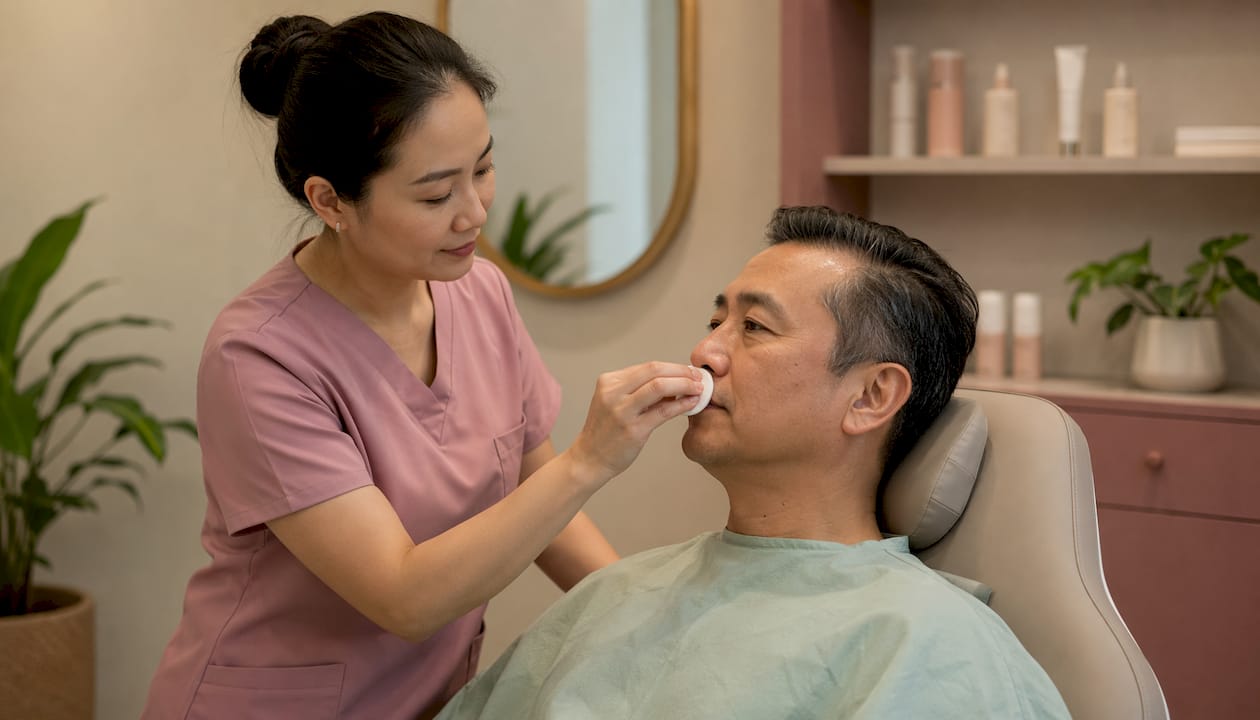
Most clinical protocols recommend strict photoprotection for two to four weeks before any peel, laser, or light-based treatment. This pre-conditioning phase reduces baseline melanocyte activity, so the skin enters the procedure in a calmer, less reactive state. Skipping this step means treating already-stimulated melanocytes, which raises the risk of post-procedure darkening.
During and after treatment
Procedures that remove or disrupt the epidermis, including chemical peels and laser resurfacing, temporarily compromise the skin’s natural UV barrier. The newly exposed skin is significantly more vulnerable to pigment stimulation. Strict daily reapplication of a broad-spectrum tinted SPF is non-negotiable during the healing phase, and most clinicians recommend maintaining it for at least eight to twelve weeks post-procedure.
Sunscreen creates the permissive environment for depigmenting treatments to work. It does not chemically remove existing pigment, but it prevents re-stimulation so topicals and procedures can actually be effective. Without consistent photoprotection, treatments like hydroquinone, retinoids, and peels are working against an ongoing trigger — and relapse is almost inevitable.
Depigmenting actives such as hydroquinone, retinoids, azelaic acid, and kojic acid all work by interrupting melanin synthesis pathways. Every UV and VL exposure event partially overrides that interruption. Sunscreen limits those override events, which is why tailored photoprotection improves clinical outcomes in melasma management and reduces long-term relapse rates.
Key points for the treatment phase:
Apply tinted SPF 50 every morning, even on days you are not leaving the house.
Reapply after any outdoor exposure, regardless of duration.
Avoid peak UV hours (10 AM to 4 PM) when possible, wear a wide-brim hat, and use UPF-rated clothing as physical barriers alongside sunscreen.
Do not use retinoids in the morning. They increase photosensitivity and belong in a nighttime routine only.
For post-procedure care guidance, protecting your skin after pigmentation treatment covers the specific reapplication protocols your clinician will likely recommend.
How Fundamentalskin integrates sunscreen into pigmentation protocols
At Fundamentalskin, photoprotection is not an afterthought. It is the foundation every treatment plan is built on, and Chevonne’s clinical approach reflects that from the first assessment onward.
What a clinical protocol looks like
Skin assessment: Every client begins with a thorough evaluation of skin type (Fitzpatrick scale), pigmentation pattern (melasma vs. PIH vs. solar lentigines), and severity. Tools like MASI scoring help track progress objectively. How dermal clinicians assess pigmentation explains what that process involves in practice.
Daily photoprotection recommendation: Clients are guided toward a tinted broad-spectrum SPF 30+ or SPF 50 with iron oxide as their daily baseline. Mineral formulas (zinc oxide/titanium dioxide) are recommended for sensitive or reactive skin types.
In-clinic adjuncts: Treatments like the Biomimetic Peel and LED Therapy are sequenced alongside a strict sunscreen protocol. The peel addresses existing pigment; the LED supports skin recovery and reduces inflammation; the sunscreen prevents re-stimulation between sessions.
Realistic timelines: Most clients see measurable improvement in pigmentation tone and texture within 8–12 weeks of consistent sunscreen use combined with in-clinic treatments. Melasma, which is hormonally driven, requires longer management and ongoing photoprotection even after visible improvement.
Adherence strategies that actually work
Compliance is where most pigmentation plans break down. Clinics that see the best outcomes are the ones that make sunscreen use as frictionless as possible for their clients.
Recommending a tinted SPF that clients genuinely enjoy wearing (texture, finish, shade) dramatically improves daily use.
Providing a clear written routine, including when and how much to apply, removes guesswork.
Follow-up appointments every four to six weeks create accountability and allow protocol adjustments based on visible progress.
Pro Tip: Before-and-after photography at each appointment is one of the most motivating tools in a pigmentation protocol. Seeing objective improvement in skin tone, even subtle changes, reinforces the daily sunscreen habit better than any instruction alone.
Key Takeaways
Broad-spectrum tinted sunscreen with iron oxide is the most evidence-supported daily step for preventing pigmentation, reducing relapse, and enabling clinical treatments to deliver lasting results.
Point | Details |
Sunscreen prevents, not erases | Daily SPF stops new pigmentation and prevents existing spots from deepening, but does not remove pigment on its own. |
Iron oxide raises protection | Tinted sunscreens with iron oxide achieve PPF above 7, compared to below 5 for non-pigmented formulas. |
Visible light matters indoors | VL accounts for approximately 50% of skin’s oxidative burden; tinted SPF is recommended even when working near windows. |
Sunscreen enables treatments | Without consistent photoprotection, topicals and peels work against ongoing UV/VL stimulation and relapse is likely. |
Fundamentalskin builds it in | Chevonne’s clinical protocols at Fundamentalskin pair tinted daily SPF with in-clinic peels and LED Therapy for measurable, lasting pigmentation improvement. |
The part most sunscreen advice gets wrong
There is a gap between what the research says and what most people are actually told about sunscreen and pigmentation. The standard message, “wear SPF 30 and reapply,” is not wrong. It is just incomplete in a way that matters enormously for anyone dealing with melasma or PIH.
The research on visible light has been building for years, and the clinical community is now clear: for pigment-prone skin, especially in Fitzpatrick types III and above, UV protection alone is not sufficient. The opsin-3 pathway activated by blue light and HEVL operates independently of UV. A person who wears SPF 50 religiously but skips iron oxide is still leaving a significant melanogenic trigger unblocked. That is not a minor gap. It explains why so many people do everything “right” with sunscreen and still see their melasma worsen or plateau.
The second thing most advice misses is the behavioral piece. Tinted sunscreens are not just a cosmetic upgrade. They are a clinical adherence tool. When a product also corrects redness, evens tone, and gives you a polished finish, you wear it every single day. Daily wear, not occasional wear, is what the evidence is built on. The 36% radiance improvement seen in the iron oxide trial was achieved through consistent daily use over 12 weeks. That outcome does not happen with a product you reach for only on beach days.
If your pigmentation is persistent or worsening despite sunscreen use, the honest answer is that you likely need a clinical assessment to identify your specific triggers and build a protocol that addresses them directly.
Personalized pigmentation care at Fundamentalskin
Persistent pigmentation responds best when sunscreen is paired with targeted clinical treatment, and that is exactly what Fundamentalskin offers. Chevonne’s approach combines a thorough skin assessment with treatments designed to address the root causes of melasma and PIH, not just the surface appearance.

The Biomimetic Peel + LED Therapy ($249) is one of the clinic’s most effective pigmentation protocols. The peel works to resurface and brighten, while LED Therapy supports skin recovery and reduces the inflammation that drives PIH. Both are performed with a strict photoprotection protocol before and after, so your results are protected from the moment treatment begins. For clients considering a peel-based approach, Larimedical peels are also available, with options tailored to your skin type and pigmentation pattern.
Every client at Fundamentalskin receives a personalized sunscreen recommendation as part of their treatment plan, including guidance on tinted formulas, application amounts, and reapplication habits that fit their daily life. Ready to see what a clinical protocol can do for your skin? Book your assessment with Fundamentalskin and get a clear, honest plan built around your specific pigmentation concerns.
Useful sources
The claims in this article are grounded in peer-reviewed research and authoritative clinical resources. The primary sources are listed below for verification and further reading.
A novel method for evaluating sun visible light protection factor and pigmentation protection factor of sunscreens (PubMed) — PPF and PF-VIS methodology; iron oxide pigment data across 33 formulations.
PF-VIS / PPF formulation study (PMC full text) — Quantitative correlation between pigmented sunscreens and visible-light pigmentation protection.
Melasma: The need for tailored photoprotection to improve clinical outcomes (PubMed) — Review supporting broad-spectrum + VL protection in melasma management and relapse reduction.
Photoprotection Efficacy of SPF and Iron Oxide Formulations in Diverse Skin With Melasma and Photodamage (JDDonline) — 12-week clinical trial; 36% radiance improvement in melasma group using iron oxide vs. 0% with SPF alone.
Sunscreens in pigmentary disorders: time to revise the message (Photochemical & Photobiological Sciences) — Calls for VL and UVA1 inclusion in pigment disorder messaging; recommendations for tinted SPF in FST III+.
Blue Light and the Skin (Karger) — Visible light oxidative burden data; HEVL melanogenesis pathways.
Tinted sunscreens: Benefits beyond an attractive glow (Harvard Health) — Consumer-accessible overview of tinted mineral sunscreen benefits for hyperpigmentation.
Recommended
Comments