.png)
Why Antioxidants Matter for Aging Skin: A Clinical Guide
- chevonne stewart
- Jul 27
- 12 min read

Yes, antioxidants matter for aging skin, and the evidence is clear. A comprehensive review spanning in vivo and in vitro studies from 1997 through 2024 confirms that topical antioxidants protect against reactive oxygen species (ROS) and UV-induced damage. A systematic review and meta-analysis further found measurable improvements in skin hydration and wrinkle outcomes in clinical trials of antioxidant-rich interventions. The bottom line: antioxidants play a valuable role in an aging skin routine.
Three things you can do right now:
Pair a topical antioxidant serum with broad-spectrum SPF every morning for layered protection against UV and pollution.
Add a targeted antioxidant serum to your evening routine to support overnight repair.
Eat a wide variety of colorful fruits and vegetables daily to supply systemic antioxidant support from the inside out.
Table of Contents
Why antioxidants matter for aging skin: the cellular mechanism
Which antioxidants does research actually recommend for aging skin?
Topical vs. dietary antioxidants: what does the evidence actually show?
Clinician perspective: practical tips from 15 years of dermal clinical experience
Personalized skin treatments that complement your antioxidant routine
Why antioxidants matter for aging skin: the cellular mechanism
Antioxidants neutralize reactive oxygen species (ROS) that damage DNA, proteins, and lipids in skin cells. That single action sits at the root of why they matter so much for aging skin.
ROS are unstable molecules produced by UV exposure, pollution, cellular metabolism, and even normal breathing. When ROS levels outpace the skin’s own defenses, oxidative stress sets in. The cascade that follows is well-documented: ROS activate matrix metalloproteinases (MMPs), enzymes that break down collagen and elastin. Lipid peroxidation weakens the skin barrier. Chronic low-grade inflammation drives pigmentation. DNA damage accumulates in keratinocytes and fibroblasts, compounding structural decline over time.
“Oxidative stress plays a key role in driving both extrinsic and intrinsic aging. Sunlight exposure is a major contributor to extrinsic photoaging as its oxidizing components disrupt both redox- and iron-homeostasis, promoting oxidative damage to skin cells and tissue constituents.”PMC, Shedding a New Light on Skin Aging
Intrinsic aging is the biological clock, the gradual slowdown in collagen synthesis and cell turnover that happens regardless of sun exposure. Photoaging is the accelerated, externally driven version, caused primarily by UV radiation and visible light. Both processes involve oxidative stress, but photoaging is far more preventable. Topical antioxidants address both pathways by replenishing the skin’s depleted defenses and intercepting ROS before they trigger downstream damage.
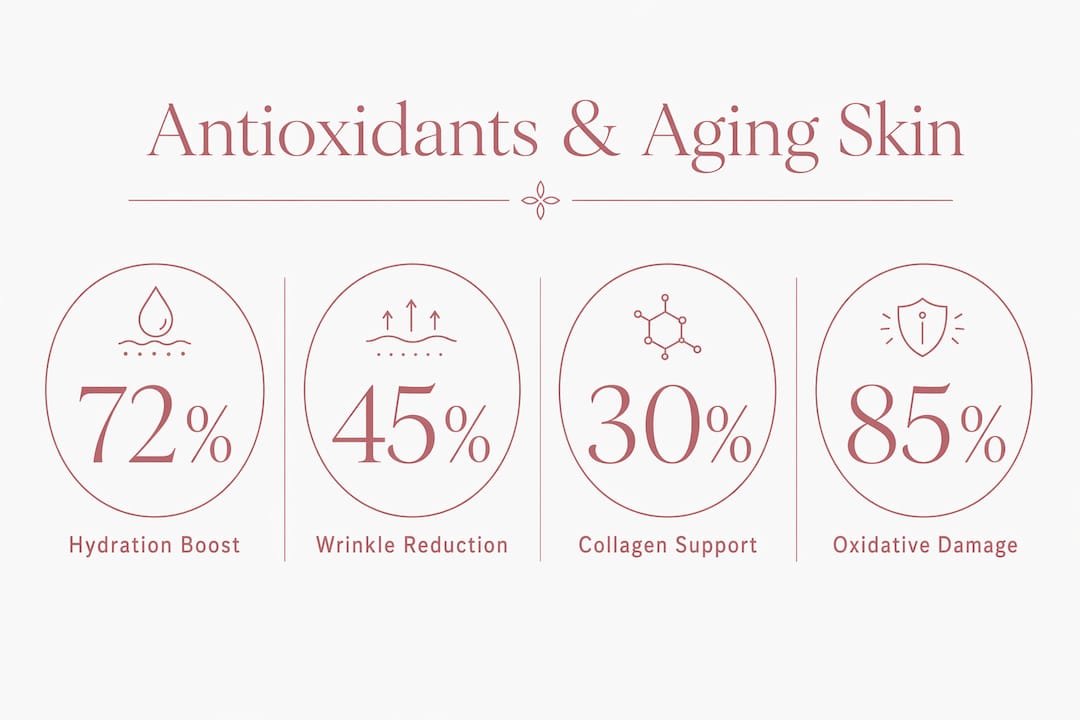
The MDPI meta-analysis reported significant effect-size improvements in skin hydration and wrinkle measures across preclinical and clinical studies, with Hedges’ g values indicating meaningful clinical differences for several antioxidant compounds. That level of measurable change is what separates antioxidants from many other anti-aging marketing claims.
Which antioxidants does research actually recommend for aging skin?
Five antioxidants consistently appear across peer-reviewed reviews, clinical explainers, and dermal clinician recommendations. Each has a distinct mechanism, preferred delivery route, and formulation profile worth understanding before you buy.
Vitamin C (L-ascorbic acid)
Vitamin C is the most studied topical antioxidant for aging skin. It neutralizes ROS directly, supports collagen synthesis by acting as a cofactor for prolyl and lysyl hydroxylase enzymes, and inhibits melanin production, which makes it effective for both wrinkle reduction and brightening. Topical vitamin C is preferred over oral supplementation for direct skin benefit because high-dose oral vitamin C is poorly delivered to skin tissue by supplements alone. Stability is the main challenge: L-ascorbic acid oxidizes quickly on exposure to air and light, turning yellow-orange as it degrades. Look for formulations at pH 3.5 or below, stored in opaque or amber airless packaging.
Vitamin E (tocopherol)
Vitamin E protects cell membranes from lipid peroxidation, a form of oxidative damage that weakens the skin barrier. Its most important role in formulations may be synergistic: vitamin E regenerates oxidized vitamin C, effectively recycling it back to its active form. This is why the vitamin C + E + ferulic acid combination is so widely cited in clinical skincare. Vitamin E is fat-soluble and generally well-tolerated, though very high concentrations can cause congestion in oily or acne-prone skin.
Niacinamide
Niacinamide (vitamin B3) works differently from classic free-radical scavengers. It supports the skin barrier by increasing ceramide production, reduces inflammation, and interrupts the transfer of melanin to skin cells, which visibly fades dark spots over time. It is one of the most compatible actives in a routine, pairing well with vitamin C, retinoids, and most acids. Tolerability is high across skin types, including sensitive and redness-prone skin, making it a reliable daily option.
Resveratrol
Resveratrol is a polyphenol found in grape skins and red wine. It activates sirtuin pathways associated with cellular longevity, scavenges ROS, and has demonstrated anti-inflammatory properties in preclinical studies. Topical delivery is preferred for skin-specific benefits, and formulation stability matters: resveratrol degrades with light and air exposure, so opaque packaging is non-negotiable. It pairs well with vitamin E and ferulic acid in stabilized formulations.
Green tea / EGCG
Epigallocatechin gallate (EGCG), the primary active catechin in green tea, is a potent anti-inflammatory and ROS scavenger. It has shown protective effects against UV-induced DNA damage and MMP activation in cell studies. Both topical and dietary green tea intake have shown skin benefits in clinical trials, including improved hydration and reduced roughness after 30 days of use. EGCG is generally well-tolerated and suits most skin types.
Antioxidant comparison at a glance
Antioxidant | Primary mechanism | Best delivery | Stability notes | Tolerability |
Vitamin C (L-ascorbic acid) | ROS scavenging, collagen support, brightening | Topical | Unstable; needs pH ≤3.5, airless/opaque packaging | Moderate; may sting on sensitive skin |
Vitamin E (tocopherol) | Membrane protection, lipid peroxidation defense | Topical (often combined) | Stable when paired with vitamin C + ferulic | High; may congest oily skin at high doses |
Niacinamide | Barrier support, anti-inflammatory, melanin transfer inhibition | Topical | Stable across most formulations | Very high; suits sensitive and redness-prone skin |
Resveratrol | Sirtuin activation, ROS scavenging, anti-inflammatory | Topical | Light/air sensitive; opaque packaging required | High; generally well-tolerated |
Green tea / EGCG | ROS scavenging, UV-damage protection, anti-inflammatory | Topical and dietary | Moderate; benefits from stabilized formulations | High; suits most skin types |
Pro Tip: Vitamin C serums stored in clear glass dropper bottles lose potency faster than you think. Choose products in amber or fully opaque airless pumps, and refrigerate after opening to extend active concentration.
Topical vs. dietary antioxidants: what does the evidence actually show?
Topical antioxidants deliver active molecules directly to skin for visible improvements. Dietary antioxidants support systemic health and long-term skin resilience, but supplements are not a guaranteed shortcut to younger-looking skin.
The distinction matters because the evidence behind each route is genuinely different. Whole-food antioxidant intake correlates with meaningful health benefits in large observational studies, but randomized controlled trials have not robustly supported high-dose isolated supplements for preventing chronic aging diseases. Some supplements carry real risk: beta-carotene supplementation increased lung cancer risk in smokers in multiple trials, a finding that underscores why “more antioxidants” is not always better.
The MDPI meta-analysis found that antioxidant-rich whole foods and some dietary supplements improved skin hydration, barrier function, and wrinkle measures in clinical settings, but the strength of evidence varied considerably by compound and formulation. Polyphenol-rich supplements showed more consistent results than isolated vitamins at high doses.
Key safety points to know before reaching for supplements:
Beta-carotene supplements are contraindicated for smokers due to demonstrated increased cancer risk in clinical trials.
High-dose vitamin E supplements may interact with blood-thinning medications; always disclose to your prescribing clinician.
Supplement regulation in the U.S. is limited — products are not required to prove efficacy before sale, so quality varies widely.
Drug interactions are real: antioxidant supplements can interfere with certain chemotherapy agents and other prescription medications.
When to consult a clinician before supplementing: if you take prescription medications, have a chronic condition, or are considering doses above standard dietary reference intakes.
The clearest, safest strategy is a dual-action approach: eat a varied, colorful whole-food diet for systemic support, and use stabilized topical antioxidants for targeted skin benefits.
How to use antioxidants in your daily skin routine
Use antioxidants in the morning for protection and in the evening for repair, always paired with SPF in the AM. Sequencing matters more than most people realize, and getting it right means your actives actually reach the skin in their active form.
For routine sequencing that works, follow these steps:
Morning routine:
Cleanse with a gentle, pH-balanced cleanser.
Apply your antioxidant serum (vitamin C, niacinamide, or a combined formula) to clean, dry skin.
Follow with a lightweight moisturizer to seal the serum in.
Finish with broad-spectrum SPF 30 or higher. Topical antioxidants complement sunscreen by neutralizing radicals from HEV light and pollution that filters miss.
Evening routine:
Double-cleanse if you wear SPF or makeup.
Apply any targeted actives (retinoids, exfoliating acids) at this stage if they are part of your plan.
Layer your antioxidant or repair serum over or under actives, depending on formulation instructions.
Finish with a nourishing moisturizer to support overnight barrier repair.
Pairing rules that matter:
Vitamin C + E + ferulic acid is the gold-standard combination: each ingredient stabilizes and amplifies the others.
Niacinamide is broadly compatible and can be used alongside vitamin C, retinoids, and most acids without issue.
High-strength vitamin C (L-ascorbic acid at low pH) with strong exfoliating acids in the same step can cause irritation; use them at separate times of day or on alternate days if your skin is sensitive.
Resveratrol and EGCG generally layer well with other antioxidants and moisturizers.
Pro Tip: Store your vitamin C serum in the refrigerator and away from direct light. Patch-test any new antioxidant active on your inner forearm for 48 hours before applying it to your face, especially if your skin is reactive or compromised.
What are the real limits of antioxidants for aging skin?
Antioxidants help, but they are not a cure-all. Misuse or megadosing can be ineffective or, in some cases, harmful.
The most important concept here is the antioxidant paradox. ROS are not purely destructive; they also serve as signaling molecules in healthy cell function, including immune defense and wound healing. A Nature review on antioxidant biology highlights that indiscriminate suppression of ROS can interfere with these physiological processes. This is why targeted, stabilized topical applications are preferred over megadosing, whether topical or oral.
Common tolerability and safety issues to watch for:
Low-pH vitamin C serums can cause stinging, redness, or peeling, particularly on sensitized or barrier-compromised skin.
Photosensitivity is a risk with certain actives if used incorrectly; always follow with SPF when using vitamin C in the morning.
Oral supplement interactions with prescription medications are underreported and underappreciated.
Antioxidant-only routines without SPF will not adequately protect against photoaging; antioxidants are a second layer of defense, not a replacement for sunscreen.
When to consult a dermal clinician:
Worsening inflammation or redness after introducing a new antioxidant active.
Suspected photosensitivity reaction.
Combining topical antioxidants with prescription retinoids, hydroquinone, or other prescription actives.
Considering high-dose oral antioxidant supplements alongside any medication.
How to choose an antioxidant product for aging skin
Choose products that list proven actives by name, use stable formulations, and come in clinic-appropriate packaging. Marketing language like “antioxidant complex” without naming the specific ingredients is a red flag, not a selling point.
What to look for:
Active form clearly listed: L-ascorbic acid for vitamin C, tocopherol or tocopheryl acetate for vitamin E, resveratrol by name.
Concentration guidance: clinical formulations typically use vitamin C in ranges that balance efficacy with tolerability; very low concentrations may not deliver measurable results.
pH and stability: vitamin C serums should be formulated at pH 3.5 or below for optimal absorption.
Packaging: airless pumps or opaque bottles for any oxidation-prone active. Open-jar packaging for vitamin C or resveratrol is a formulation failure, regardless of the brand.
Evidence behind the claims: peer-reviewed citations or published clinical data carry more weight than before-and-after photos alone.
Patch-test and return policy: a brand confident in its formulation will support a trial period.
For natural skin actives and ingredient sourcing, look for brands that are transparent about their ingredient origins and formulation philosophy.
Evaluation criterion | What good looks like |
Active ingredient naming | Specific INCI name listed (e.g., L-ascorbic acid, not “vitamin C blend”) |
Packaging | Airless pump or opaque bottle; no open-jar for unstable actives |
pH / stability | pH ≤3.5 for L-ascorbic acid; ferulic acid or vitamin E as stabilizers |
Evidence claims | Peer-reviewed or clinical data cited; not marketing copy only |
Tolerability support | Patch-test guidance provided; return policy available |
Red flags to avoid:
Vague “antioxidant complex” with no named actives.
Clear or transparent packaging for vitamin C or resveratrol products.
Megadose oral supplements marketed as “anti-aging” without clinician oversight or published evidence.
How long does it take to see results from antioxidants?
Visible improvements usually appear over weeks to months, depending on what you are targeting. Hydration and brightness can shift in weeks; pigmentation and wrinkle reduction take longer.
A realistic timeline based on clinical trial data:
2–4 weeks: improved skin hydration, reduced dullness, and a more even surface texture are often the first changes people notice.
8–12 weeks: collagen-supporting changes begin to accumulate; skin may feel firmer and fine lines appear softer.
3–6+ months: measurable wrinkle reduction and visible remodeling become more apparent, particularly when antioxidants are paired consistently with SPF and, where appropriate, in-clinic treatments.
Several factors influence how quickly you see results: age and baseline level of sun damage, consistency of use, product potency and formulation quality, and whether you are pairing antioxidants with other evidence-backed actives like retinoids and daily SPF. Concurrent professional treatments, such as peels or LED therapy, can accelerate surface repair and collagen remodeling.
For dietary and oral antioxidants, systemic changes are slower and more variable than topical results. Whole-food dietary improvements support long-term skin resilience, but do not expect the same timeline as a well-formulated topical serum.
Clinician perspective: practical tips from 15 years of dermal clinical experience
Combining daily topical antioxidants with regular professional treatments accelerates visible improvements for aging skin. That is not a marketing claim; it is a pattern seen consistently in clinical practice.
In a clinical setting, antioxidant serums work best when the skin barrier is healthy enough to absorb them. This is why preparation matters. Before layering in high-strength actives, addressing barrier integrity, whether through a gentle peel, targeted hydration, or LED therapy, creates a better foundation for antioxidant penetration and efficacy.
Practical tips from clinical experience:
Start with one antioxidant active and build from there. Introducing vitamin C, niacinamide, and resveratrol simultaneously makes it impossible to identify what is working or what is causing a reaction.
Pair every morning antioxidant with SPF without exception. Antioxidants enhance photoprotection but do not replace it.
In-clinic peels and LED therapy are particularly useful when topical antioxidants alone are not moving stubborn pigmentation or advanced photoaging. Professional treatments accelerate cell turnover and collagen remodeling in ways that at-home products cannot replicate.
Clients with significant laxity, deep pigmentation, or years of unprotected sun exposure typically see faster, more dramatic improvements when combining a consistent home antioxidant routine with periodic professional treatments.
Pro Tip: When integrating antioxidant serums with in-clinic peels, pause high-strength vitamin C for 48–72 hours pre- and post-treatment to avoid over-sensitizing the skin. Resume once the barrier has settled.
For readers building a professional-grade skincare routine, the sequence of actives matters as much as the actives themselves.
Key Takeaways
Antioxidants protect aging skin by neutralizing ROS that drive collagen breakdown, pigmentation, and barrier loss, with topical application delivering the most direct and measurable skin benefits.
Point | Details |
Topical antioxidants are foundational | Peer-reviewed reviews confirm topical antioxidants protect against ROS and UV-induced damage across in vivo and in vitro studies. |
Vitamin C + E + ferulic is the gold standard | This combination stabilizes each ingredient and amplifies antioxidant activity; use in opaque, airless packaging. |
Diet supports; supplements need caution | Whole-food antioxidants correlate with skin resilience; high-dose isolated supplements lack robust evidence and carry safety risks. |
Results take weeks to months | Hydration improves in 2–4 weeks; wrinkle and pigmentation changes typically require 3–6+ months of consistent use. |
Fundamentalskin combines topical and clinical care | Chevonne’s clinic pairs targeted antioxidant routines with professional treatments to accelerate visible results for aging skin. |
The priority most people get backwards
Most people focus on finding the “best” antioxidant serum and overlook the two things that determine whether any antioxidant actually works: formulation stability and daily SPF. A beautifully marketed vitamin C serum in a clear glass bottle, stored on a sunny bathroom shelf, is largely inactive within weeks. And an antioxidant routine without sunscreen is like patching a roof while leaving a window open.
When I talk through antioxidant routines with clients, I always start with what they are already doing for sun protection, because that is the multiplier. A stabilized, well-packaged antioxidant serum paired with consistent SPF will outperform an expensive, poorly stored product every time. The science is clear, and the clinical results confirm it. For anyone considering in-clinic support to complement their home routine, that conversation is always worth having.
Personalized skin treatments that complement your antioxidant routine
If your topical antioxidant routine is solid but you are still seeing stubborn pigmentation, fine lines that are not shifting, or dull texture that home products cannot fully address, a professional treatment can close that gap.

At Fundamentalskin, Chevonne combines the Biomimetic Peel + LED Therapy with personalized antioxidant guidance to accelerate the repair and remodeling that topical serums support but cannot always complete on their own. The Biomimetic Peel targets pigmentation, fine lines, and dull texture without downtime, making it a practical option for women who want clinical results without disrupting their week. LED therapy works alongside the peel to reduce inflammation and support collagen pathways, the same pathways your antioxidant serums are working to protect every day.
This approach suits women dealing with photoaging, uneven skin tone, or skin that has not responded fully to at-home actives alone. The Synergie Peel is another option for those seeking a more targeted surface renewal treatment. Treatments are available at Fundamentalskin’s clinic, with before-and-after results that reflect real, measurable improvements in skin tone and texture. Book a consultation with Chevonne to find the right combination for your skin.
Authoritative sources and further reading
Role of antioxidants in skin aging and the molecular mechanism of ROS (ScienceDirect): Comprehensive peer-reviewed review covering ROS mechanisms and topical antioxidant evidence from 1997–2024; the primary mechanistic anchor for this guide.
Impact of Antioxidant-Rich Whole Foods or Supplements on Skin Health (MDPI): Systematic review and meta-analysis reporting effect-size data for hydration, barrier, and wrinkle outcomes; essential for understanding clinical evidence strength.
Antioxidant supplements: what you need to know (NCCIH): U.S. government guidance on supplement safety, including beta-carotene risk data and the limits of randomized trial evidence.
Understanding antioxidants (Harvard Health): Accessible, evidence-based overview of how antioxidants neutralize free radicals and why whole-food sources outperform isolated supplements.
Antioxidants for skin: Benefits, drawbacks, and sources (Medical News Today): Consumer-facing summary of topical vitamin C’s role in brightening, collagen support, and photoprotection.
Benefits of Antioxidants for Skin (skinbetter science): Clinical explainer covering vitamin C, E, ferulic acid, resveratrol, niacinamide, CoQ10, and EGCG with mechanism and synergy notes.
Antioxidants in skin care (Dermstore): Practical formulation and packaging guidance; covers stability, airless packaging, and synergistic blends.
Nature review on antioxidant biology and the antioxidant paradox: Explains why ROS have necessary signaling roles and why targeted antioxidant use is preferable to indiscriminate megadosing.
Recommended
Comments