.png)
How Dermal Clinicians Evaluate Aging Skin: 2026 Guide

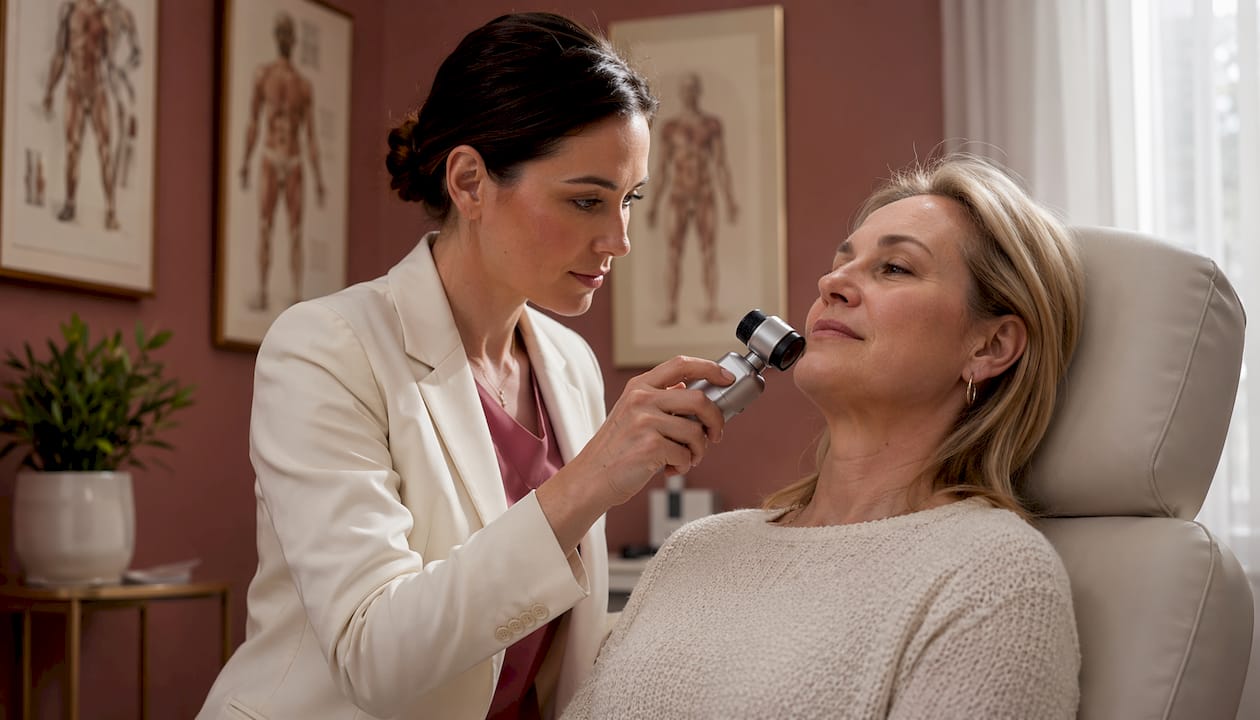
Aging skin evaluation is defined as a structured clinical process combining objective scoring, structural imaging, and lifestyle analysis to measure how skin changes over time. Dermal clinicians, the specialists trained in skin health and non-invasive treatment, use this process to move well beyond a simple visual check. Tools like the Dermoscopic Photoaging Scale (DPAS) and the ScoreAge system now give clinicians quantifiable data on wrinkles, sagging, pigmentation, and environmental damage. Understanding how dermal clinicians evaluate aging skin helps you ask better questions, set realistic expectations, and get treatments that actually match your skin’s biological reality.
What clinical scales do dermal clinicians use to assess aging skin?
Standardized scoring systems are the backbone of objective aging skin assessment. Without them, two clinicians looking at the same face could reach very different conclusions.
The Dermoscopic Photoaging Scale (DPAS)
The DPAS quantifies facial aging using 11 dermoscopic features, including telangiectasia, solar lentigines, follicular plugging, and skin texture changes. Each feature receives a score, and the total reflects overall photoaging severity. In a 2026 study of 172 patients, males averaged a DPAS score of 8.33 while females averaged 7.3. That gap shows that biological sex influences how photoaging presents, which means a clinician cannot apply a one-size-fits-all grading approach.
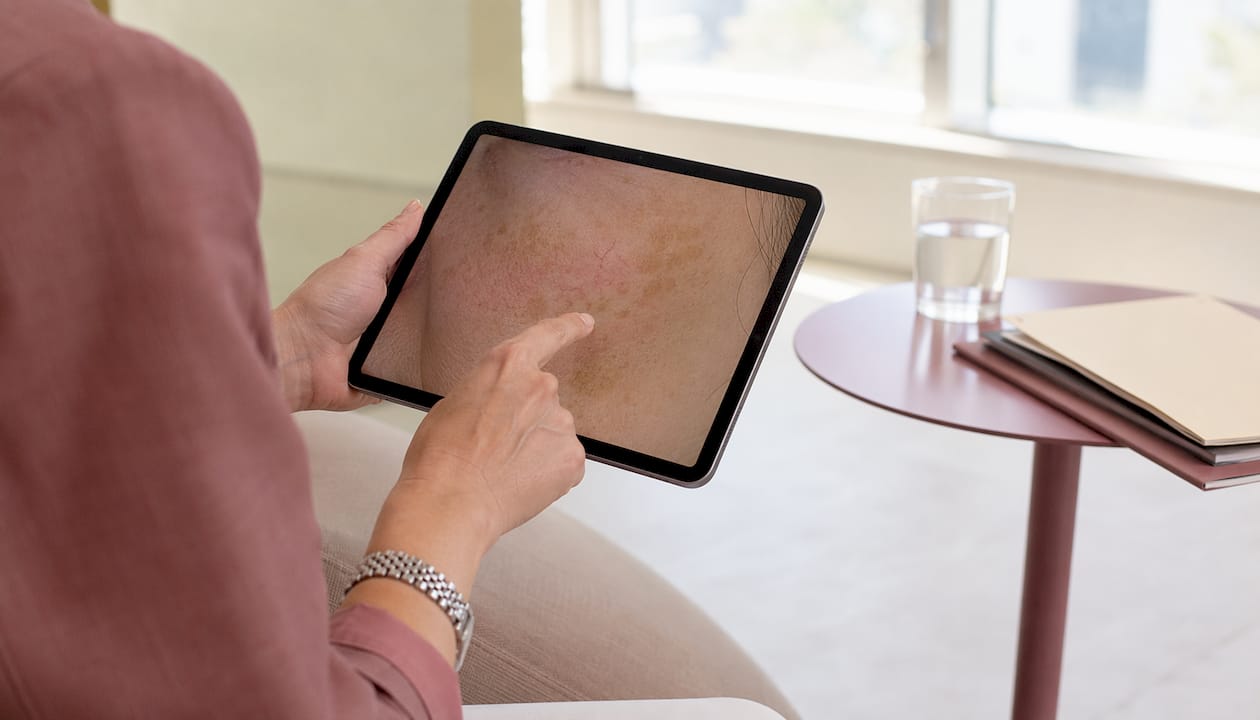
The DPAS gives clinicians a repeatable, visual record they can compare across appointments. That consistency is what separates clinical evaluation from a mirror check.
The ScoreAge system
The ScoreAge system produces a severity score from 1 to 30 by multiplying clinical signs with environmental and lifestyle modifiers. Clinicians first grade wrinkle depth, hyperpigmentation, and sagging on a standard scale. They then multiply those scores by factors including skin phototype, sun exposure index (SEPI), pollution level, and tobacco use. The result reflects real-world aging severity, not just what appears on the surface on a given day.
This multiplicative approach is a significant advance over traditional visual grading. A person with moderate wrinkles but heavy sun exposure and a history of smoking will score higher than someone with identical wrinkles and a low-exposure lifestyle. That difference matters when planning treatment.
Clinical parameter | Scoring method | What it reflects |
Wrinkle depth | Graded 1–4 | Dermal collagen loss |
Hyperpigmentation | Graded 1–4 | Cumulative UV and oxidative damage |
Sagging severity | Graded 1–4 | Fat, muscle, and dermal changes |
Skin phototype | Fitzpatrick I–VI | Intrinsic UV sensitivity |
SEPI (sun exposure) | Multiplier | Lifetime UV dose |
Tobacco use (pack-years) | Multiplier | Oxidative stress accumulation |
Pro Tip: Ask your clinician which scoring system they use. If the answer is “I just look at it,” that is a sign the assessment may lack the objectivity needed for precise treatment planning.
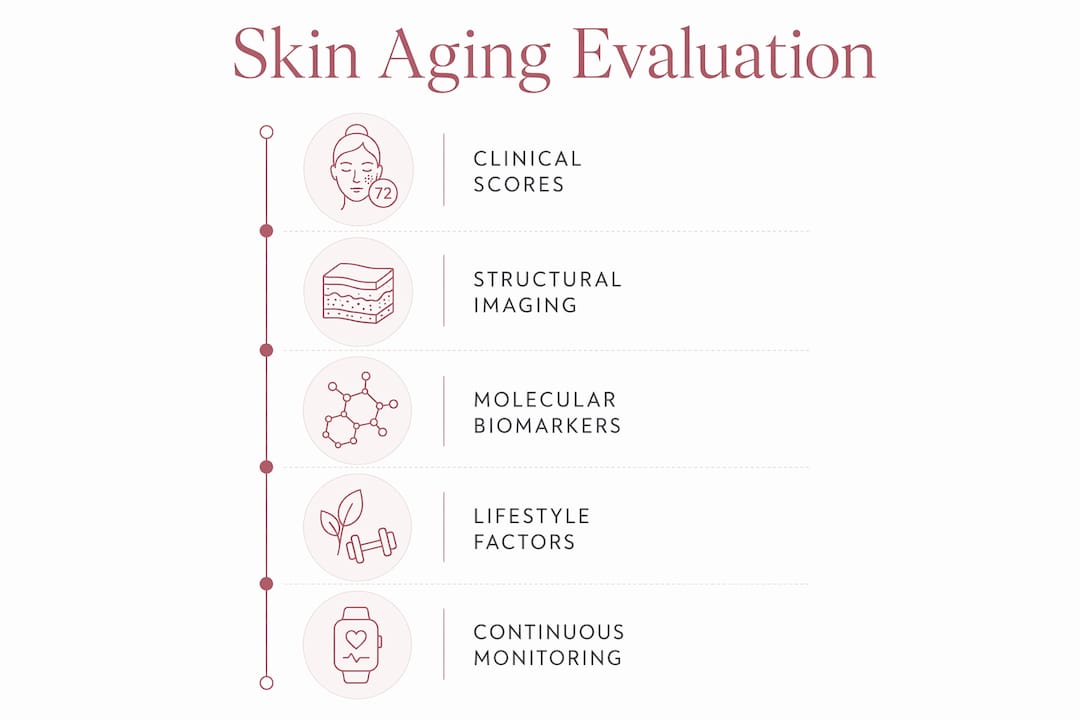
How do dermal clinicians evaluate skin aging beyond surface appearance?
Surface grading captures only part of the picture. Clinicians trained in multi-layer skin evaluation assess the dermis, subcutaneous fat, and muscle layers together, because isolated surface treatments often fail without addressing underlying structural changes.
Structural imaging technologies
Ultrasound imaging measures dermal thickness and viscoelasticity in real time. High-resolution ultrasound can show how fat pads have shifted and whether the zygomaticus major muscle has thinned, both of which contribute to facial sagging. Confocal microscopy goes deeper, imaging collagen fiber architecture at a cellular level without a biopsy. These tools give clinicians data that no visual exam can provide.
3D facial scanning captures surface geometry with precision, tracking volume loss and contour changes across appointments. Thermal imaging and video-based apparent-age estimation add physiological data, measuring skin temperature distribution and estimating biological age from facial video analysis.
Molecular biomarkers
Advanced glycation end-products (AGEs) accumulate in the dermal matrix over time, stiffening collagen fibers and contributing to the yellowish discoloration seen in older skin. Skin autofluorescence (SAF) imaging measures AGE levels non-invasively. That reading correlates with cumulative metabolic damage, giving clinicians a biological age marker that goes far beyond what a calendar says.
DNA methylation clocks represent another frontier. These biological age clocks use epigenetic data to predict skin age with high accuracy, allowing clinicians to identify people whose skin is aging faster than their chronological age would suggest. That insight changes treatment priorities entirely.
The full list of structural and functional parameters a thorough evaluation covers includes:
Dermal thickness and collagen density
Subcutaneous fat volume and distribution
Muscle thickness and tone
Skin elasticity and viscoelasticity
Barrier recovery time
AGE accumulation via SAF imaging
Pigmentation evenness and distribution
Vascular changes including telangiectasia
Pro Tip: If you are considering a treatment for sagging, ask whether your clinician has assessed your fat and muscle layers, not just your skin surface. Sagging driven by fat loss responds very differently than sagging driven by dermal thinning.
What role do lifestyle and environmental factors play in aging skin assessment?
Lifestyle history predicts aging skin severity better than a single visual exam alone. Clinicians call this process “lifestyle anamnesis,” a detailed patient history covering sun habits, smoking, sleep quality, diet, and pollution exposure.
How environmental factors get quantified
The ScoreAge system uses three specific tools to turn lifestyle data into numbers:
SEPI (Sun Exposure and Phototype Index): Combines skin phototype with lifetime sun exposure to produce a UV damage multiplier.
Air Quality Index (AQI): Measures local pollution levels, which accelerate oxidative stress and collagen breakdown.
Pack-years: Quantifies cumulative tobacco exposure, since smoking accelerates skin aging by reducing blood flow and generating free radicals.
These multipliers adjust the base clinical score upward, reflecting the real burden of extrinsic damage. A person living in a high-pollution city who smokes and has a history of sun exposure may have a ScoreAge result that looks far more severe than their wrinkles alone would suggest.
Sleep quality and chronic stress are increasingly included in thorough assessments as well. Poor sleep elevates cortisol, which degrades collagen. Chronic stress accelerates telomere shortening, a measurable marker of cellular aging. Clinicians who ask about your sleep are not making small talk. They are building a more accurate picture of your skin’s biological state.
Understanding how age affects skincare needs across different life stages helps explain why two people of the same age can have dramatically different clinical scores.
Pro Tip: Before your next skin consultation, write down your average weekly sun exposure, any history of smoking, and your typical sleep hours. Bringing that information saves time and gives your clinician the data they need to score your skin accurately.
How do continuous monitoring and advanced technologies improve aging skin evaluation?
Clinical practice is shifting from a reactive model to a skin fitness framework, where skin health is tracked continuously, much like cardiovascular fitness. A single appointment snapshot is no longer considered sufficient for precise treatment planning.
What continuous monitoring tracks
Objective parameters measured over time include:
Elasticity scores using cutometry
Barrier recovery time after controlled disruption
Hydration levels via corneometry
Pigmentation evenness tracked with spectrophotometry
Sebum production rates
Tracking these metrics across multiple appointments reveals trends that a single visit cannot. A clinician who sees your barrier recovery time worsening over six months knows your skin is under stress, even if it looks fine to the naked eye. That early signal allows for intervention before visible damage appears.
AI and machine learning in skin aging profiles
Artificial intelligence now assists clinicians in building personalized aging profiles from imaging data. Machine learning models trained on thousands of skin images can estimate biological skin age from a photo, flag early signs of photoaging, and predict how a person’s skin will respond to specific treatments. Video-based apparent-age estimation adds a dynamic layer, analyzing how skin moves and recovers during facial expressions.
Baseline imaging is captured at the first appointment.
AI analysis generates a biological age estimate and flags key aging markers.
Treatment is selected based on the combined clinical score and imaging data.
Follow-up imaging tracks changes in elasticity, pigmentation, and barrier function.
The protocol adjusts based on measured outcomes, not assumptions.
This approach improves treatment adherence because clients can see measurable progress. It also gives clinicians the evidence they need to refine protocols over time. A personalized skin consultation that incorporates these tracking methods produces far more reliable outcomes than a one-time assessment.
The shift to skin fitness monitoring also changes how clinicians communicate with clients. Instead of describing what is wrong, they show what is improving. That shift in framing builds confidence and keeps clients engaged in their long-term skin health.
For a practical look at how these evaluations connect to daily care, the 2026 skincare routine guide for aging skin outlines how clinical findings translate into at-home practice.
Key takeaways
Dermal clinicians evaluate aging skin most accurately by combining standardized clinical scores, multi-layer structural imaging, and detailed lifestyle history into a single integrated assessment.
Point | Details |
Clinical scoring systems | DPAS and ScoreAge provide objective, repeatable aging severity scores beyond visual grading. |
Multi-layer structural evaluation | Assessing dermis, fat, and muscle together reveals sagging causes that surface exams miss. |
Biological age markers | AGEs and DNA methylation clocks measure true skin age, not just chronological age. |
Lifestyle anamnesis | Sun exposure, smoking history, and sleep quality multiply clinical scores and change treatment priorities. |
Continuous monitoring | Tracking elasticity, barrier recovery, and pigmentation over time enables early intervention. |
What 15 years in clinic taught me about aging skin assessments
Clients come in expecting me to look at their face and tell them what is wrong. What surprises them is how much of the assessment happens before I even examine their skin. The lifestyle history, the sun exposure questions, the sleep habits. That conversation is not filler. It is often the most diagnostic part of the appointment.
The biggest misconception I see is that chronological age predicts skin condition. It does not. I have assessed women in their late 30s with skin that scores like someone a decade older, purely because of unprotected sun exposure and disrupted sleep. I have also seen women in their 50s with genuinely healthy barrier function and strong elasticity scores. Biological skin age and calendar age are two different numbers.
What I find most clinicians underuse is dynamic assessment. Evaluating skin during facial movement, not just at rest, reveals how fat has redistributed and how muscle tone has changed. A static photo misses that entirely. When I assess sagging, I always ask clients to smile, raise their brows, and speak naturally. The movement tells me more than the resting face.
My advice to anyone preparing for a skin evaluation: do not just show up. Write down your sun history, your sleep patterns, and any lifestyle changes over the past five years. That information turns a surface-level appointment into a genuinely useful clinical assessment. And if your clinician does not ask for it, ask them why.
— chevonne
Fundamentalskin’s approach to aging skin evaluation and care
Fundamentalskin was built on the belief that every skin assessment should be as individual as the person sitting in the chair. Chevonne brings 15 years of clinical experience to every consultation, combining structured evaluation methods with treatments matched to your skin’s actual biological state.

For clients dealing with pigmentation, fine lines, and loss of firmness, the Larimedical Biomimetic Peel addresses aging skin concerns at a cellular level, with no downtime and results backed by before-and-after imaging. Every treatment at Fundamentalskin starts with a thorough assessment, because the right protocol depends entirely on what your skin actually needs. Book your consultation and find out where your skin really stands.
FAQ
What is the Dermoscopic Photoaging Scale (DPAS)?
The DPAS is a clinical tool that scores facial aging using 11 dermoscopic features, including solar lentigines, telangiectasia, and skin texture. It produces a quantifiable severity score that clinicians use to track photoaging over time.
How does biological skin age differ from chronological age?
Biological skin age reflects actual tissue condition, measured through markers like AGEs and DNA methylation, while chronological age is simply how many years you have lived. The two numbers often differ significantly based on lifestyle and genetics.
What lifestyle factors do dermal clinicians assess during a skin evaluation?
Clinicians assess sun exposure history, tobacco use, sleep quality, diet, and pollution exposure. These factors are quantified using tools like the SEPI scale and Air Quality Index, then applied as multipliers in scoring systems like ScoreAge.
Why do clinicians evaluate skin during facial movement?
Dynamic assessment during expressions like smiling or raising the brows reveals how fat has shifted and how muscle tone has changed. Static assessments at rest miss these structural changes, which are critical for accurate sagging evaluation and treatment planning.
How often should aging skin be professionally evaluated?
Continuous monitoring frameworks recommend tracking key parameters, including elasticity, barrier recovery, and pigmentation, across multiple appointments rather than relying on a single assessment. The frequency depends on your treatment plan and skin condition.
Recommended
Comments