.png)
Natural Ingredients Brightening Skin Tone: In-Clinic Guide

Updated: Sep 11
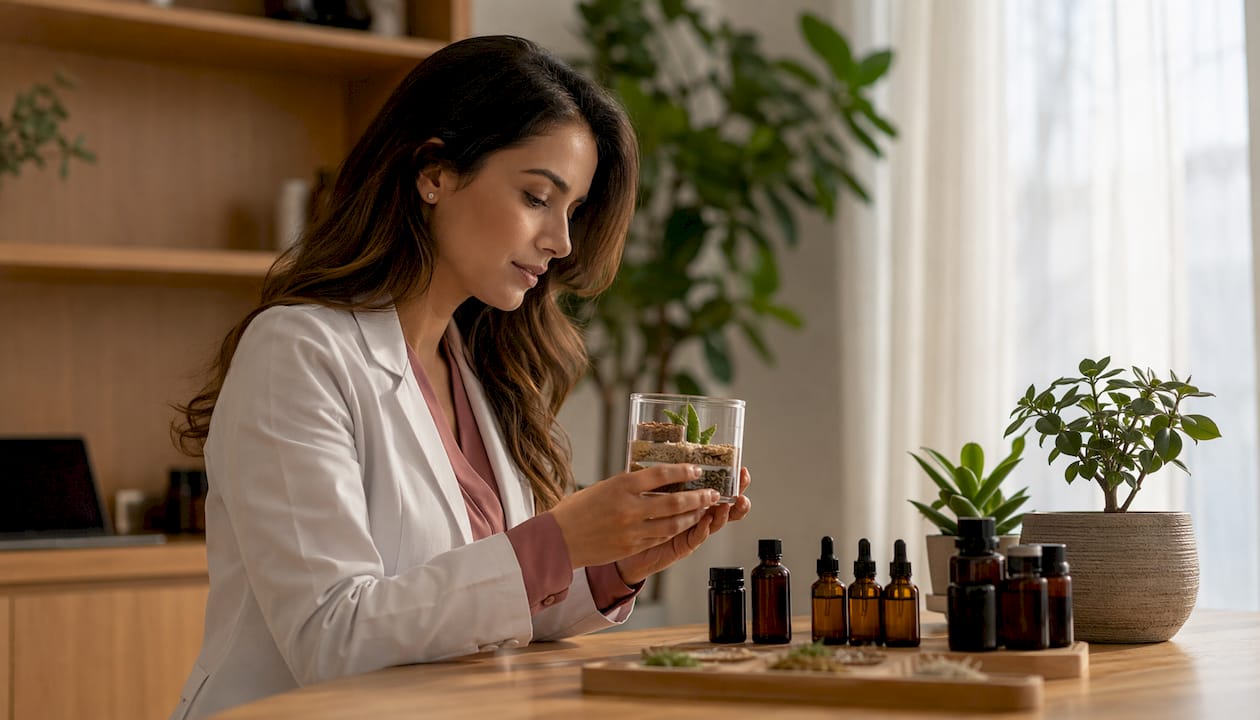
The most reliable natural ingredients for brightening skin tone are kojic acid, arbutin, azelaic acid, glycolic acid, α-mangostin, and Grammatophyllum speciosum. Each works through a distinct biological pathway, and a 2022 randomized placebo-controlled study confirmed that a G. speciosum hydrogel reduced melanin over several weeks compared to placebo. Kojic acid is typically formulated at clinical concentrations between 1% and 4%, while glycolic acid and azelaic acid each have well-documented concentration ranges used in professional peels and topical programs.
You can expect early visible change within weeks and measurable improvement after a couple of months, with optimal results requiring consistent treatment and maintenance.
When to book an in-clinic consult rather than starting at home:
Hormonal melasma or mixed-depth pigmentation that hasn’t responded to over-the-counter products
Rapid or unexplained change in pigmentation
Fitzpatrick skin types III–VI with a history of post-inflammatory hyperpigmentation (PIH)
Prior adverse reactions to active ingredients or patch-test failures
Scarring, deep dermal pigment, or pigmentation triggered by medication
Table of Contents
Which natural brightening ingredients actually work?
Six actives consistently appear across clinical reviews and published trials. Here is what the evidence says about each and the concentrations that matter in a professional setting.
Active | Mechanism | Typical Clinical Range | Key Evidence Note |
Kojic acid | Tyrosinase inhibition; NF-κB modulation | clinically relevant low single-digit percentages | Well-reviewed; stability challenges require careful formulation |
Arbutin (α- and β-) | Tyrosinase inhibition; melanosome transfer inhibition | typically low single-digit percentages | Preferred over hydroquinone for long-term use |
Azelaic acid | Tyrosinase inhibition; anti-inflammatory | commonly prescribed at moderate concentrations | Suits rosacea-prone and sensitive skin types |
Glycolic acid (AHA) | Accelerated desquamation; surface melanin removal | concentration varies from low percentage topical to higher levels in professional peels | Enhances penetration of co-applied actives |
α-Mangostin | MITF signal modulation; antioxidant protection | Not yet standardized | Reduces melanin in UVB-stimulated models via MITF regulation |
Grammatophyllum speciosum | Antioxidant; melanin synthesis inhibition | 0.5% hydrogel (shown effective in RCT) | RCT 2022: 8.285% melanin reduction at 56 days |
A comprehensive review of natural brightening agents confirms that these actives fall into three mechanistic categories: tyrosinase inhibitors, desquamation accelerators, and signal/transfer modulators. That distinction matters for how clinicians combine them.
One practical challenge: many of these ingredients are unstable or poorly absorbed on their own. Kojic acid degrades with light and heat exposure; arbutin has low skin permeability in standard formulations. Clinical-grade delivery systems such as liposomes, nanoemulsions, and microneedle-assisted delivery are frequently what separates a lab result from a real-world outcome. For readers curious about the full taxonomy of natural skin actives, the mechanisms run deeper than most product labels suggest.
How clinics use natural actives in professional treatments
Single ingredients tend to underperform. Practitioner guidance consistently shows that pairing a tyrosinase inhibitor with an antioxidant and a controlled exfoliant produces more reliable brightening than any one active alone. This is the multi-pathway strategy: inhibit melanin production, modulate the signaling that triggers it, and accelerate removal of existing pigment.
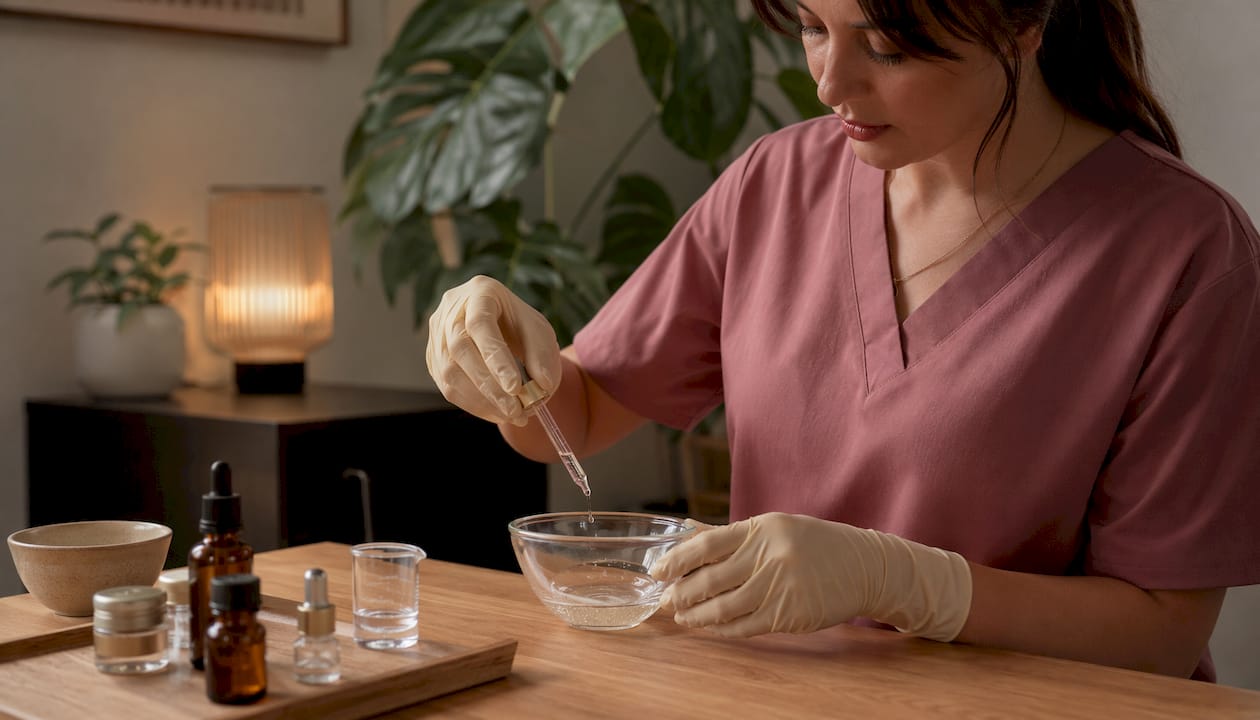
Treatment Format | Natural Actives Used | Who It Suits | What to Expect |
Superficial AHA/glycolic peel | Glycolic acid high concentration ranges | Surface pigmentation, first-time peel clients | Mild flaking; gradual brightening over 2–4 sessions |
Larimedical Biomimetic Peel | Multi-active blend with biomimetic carriers | Mixed-depth pigmentation; sensitive skin | Minimal downtime; progressive tone improvement |
Professional topical program | Kojic, arbutin, azelaic in clinical-grade serums | Maintenance; mild-to-moderate pigmentation | Steady improvement with consistent use |
LED combination therapy | Paired with topical actives post-peel | All skin types; anti-inflammatory support | Reduces PIH risk; supports collagen alongside brightening |
Microneedling + topical delivery | Kojic, arbutin, or G. speciosum infused post-channel | Deeper dermal pigment; scarring | Deeper penetration; requires staged approach |
The multi-pathway clinical strategy is why clinics rarely rely on a single modality. Combining a tyrosinase inhibitor, a signal modulator, and a controlled exfoliant addresses melanin at the production, transfer, and removal stages simultaneously. For a detailed look at how natural actives treat pigmentation through these pathways, the clinical logic is worth understanding before your first appointment.
Pro Tip: Always ask your clinician about patch testing before any peel or active-infusion treatment. Starting at a lower concentration and escalating over sessions is standard practice, not a sign of caution. Pair every treatment with a broad-spectrum SPF 50+ daily, without exception.
What are realistic results and risks with natural actives?
Natural brightening agents are clinically preferred over hydroquinone for long-term use because of their safer biological profile, but they are not without risk. Irritation, contact sensitivity, and PIH can occur, particularly in darker phototypes.
Weeks 1–2: Early brightening signal possible with G. speciosum and glycolic-based treatments; skin may show mild sensitivity.
Weeks 6–8: Measurable melanin reduction typically visible; most clients notice improved evenness.
Months 3–6: Optimal results with consistent treatment and maintenance topicals; hormonal melasma may require longer management.
Ongoing: Maintenance sessions and daily SPF are non-negotiable for preventing recurrence.
Fitzpatrick types III–VI carry a higher PIH risk with any exfoliating or active treatment. For darker phototypes, a clinician should stage concentrations conservatively and consider LED therapy as an anti-inflammatory adjunct. Choosing the right sunscreen for pigmented skin is as important as the treatment itself.
How to choose a clinic and what to ask at your consult
Before booking, verify these credentials and policies:
Clinician holds a recognized dermal therapy or dermal clinician qualification
Clinic provides documented before-and-after photos for pigmentation cases
Written protocols exist for patch testing and staged treatment escalation
Follow-up and maintenance plans are included, not optional add-ons
Ingredient concentrations are disclosed on request
Questions to bring to your consultation:
Which treatment options suit my pigmentation type, and why?
What concentrations will you use, and how will you deliver them?
What is the realistic timeline for my skin type and pigment depth?
How do you manage PIH risk for my Fitzpatrick type?
How many sessions will I need, and what does maintenance look like?
Can I see before-and-after photos from clients with similar pigmentation?
Red flags: promises of instant or guaranteed results, refusal to patch test, undisclosed ingredient concentrations, or no follow-up plan offered. Comparing treatment options before your consult helps you ask sharper questions and recognize a thorough protocol when you see one.
Should you start at home or book a clinic appointment?
Start with a professional-strength at-home routine if:
Your pigmentation is mild, surface-level, and has responded to OTC actives before
You have no history of PIH or adverse reactions to exfoliants
You are willing to patch test, introduce actives gradually, and use SPF daily
Book a clinic appointment directly if:
Your pigmentation is hormonal (melasma), mixed-depth, or has not responded to OTC products
You have a history of PIH, scarring, or sensitivity to actives
Your pigmentation appeared suddenly or has changed in character
You are Fitzpatrick III–VI and have not been assessed by a clinician
Self-assessment prompts: When did the pigmentation start? Does it worsen with sun exposure, hormonal changes, or heat? Have OTC products with kojic acid or glycolic acid helped or caused irritation? Your answers guide whether a supervised clinical protocol is the right starting point. For safe at-home introduction of actives, adjusting your skincare for pigmentation-prone skin covers frequency, layering, and when to escalate.
Key Takeaways
The most effective approach to natural skin brightening combines a tyrosinase inhibitor, a signal modulator, and a controlled exfoliant delivered through clinical-grade systems with staged protocols and consistent sun protection.
Point | Details |
Top natural actives | Kojic acid (1–4%), arbutin, azelaic acid, glycolic acid, α-mangostin, and G. speciosum (0.5% hydrogel shown effective in RCT) are the most evidence-backed options. |
Realistic timeline | Early change at 2 weeks; measurable improvement at 6–8 weeks; optimal results over months with maintenance. |
Safety first | Patch test before any treatment, use SPF 50+ daily, and stage concentrations to reduce PIH risk. |
Multi-pathway strategy | Combining tyrosinase inhibition, signal modulation, and desquamation outperforms any single active or modality. |
Fundamentalskin approach | Chevonne’s clinic uses staged, evidence-led protocols with natural actives and biomimetic delivery for personalized pigmentation care. |
Why a safety-first, ingredient-led strategy is the only approach worth taking
The conversation around brightening has shifted significantly. Clients come in having already tried a dozen products, often with mixed results and sometimes with irritation that made things worse. What I see consistently is that the ingredient is rarely the problem. The delivery, the concentration, and the sequence are where most at-home routines fall short.
The evidence for natural actives is genuinely strong now. The G. speciosum trial, the mechanistic clarity around kojic and arbutin, the growing body of work on α-mangostin — these are not fringe findings. They support what clinicians have been doing with multi-pathway protocols for years. What the research also makes clear is that no single ingredient is a complete solution. Skin brightening is a process, not an event.
What concerns me most is the growing trend of high-concentration DIY peels and unregulated brightening products. Glycolic acid at peel-strength concentrations without clinical supervision, or kojic formulations without stability testing, can trigger the exact PIH they are meant to address. The K-beauty ingredient trends driving consumer demand are often ahead of consumer understanding of how to use those ingredients safely.
A staged, clinician-supervised protocol is not the slow route. It is the route that actually gets you to a healthier, more even complexion without setbacks.
Personalized pigmentation care at Fundamentalskin
If you are ready to move beyond guesswork and into a protocol built around your skin, Fundamentalskin offers in-clinic treatments in Tweed Heads and the Gold Coast that use clinically proven natural actives with professional-grade delivery.

The Larimedical Biomimetic Peel uses a multi-active, biomimetic carrier system designed for mixed-depth pigmentation with minimal downtime. The Biomimetic Peel + LED Therapy combines brightening actives with red light to reduce PIH risk and support skin recovery simultaneously. The Synergie Peel delivers professional-grade actives for clients seeking a controlled, results-focused peel experience.
Every first appointment includes a personalized skin assessment with Chevonne, a documented treatment plan, and patch testing where indicated. Book your consultation today and get a clear, honest picture of what your skin needs and what is realistically achievable.
Useful sources
Source | What It Covers |
Advances in Biomedical Functions of Natural Whitening Substances | Comprehensive review of kojic acid, arbutin, and natural brighteners vs. hydroquinone; concentration and safety data |
Multi-pathway brightening review (PMC) | Clinical rationale for combining tyrosinase inhibition, signal modulation, and melanosome transfer inhibition |
G. speciosum RCT (MDPI, 2022) | Randomized placebo-controlled trial; 8.285% melanin reduction at 56 days with 0.5% hydrogel |
α-Mangostin melanin study | MITF-mediated melanin reduction in UVB-stimulated models |
Mechanism, Formulation, and Efficacy of Natural Products (MDPI) | Delivery systems (liposomes, nanoemulsions, microneedles) and formulation challenges for natural actives |
Kojic acid concentration guidance | Practitioner notes on synergistic combinations and clinical concentration decisions |
These sources underpin the clinical claims in this article. Ask your clinician for the specific protocols and before-and-after images relevant to your skin type before committing to any treatment plan.
This article is general information, not medical or clinical advice. Confirm current treatment options and suitability with a qualified dermal clinician for your individual situation.
Recommended
Comments