.png)
How Sleep Affects Skin Aging: An Evidence-Based Guide
- chevonne stewart
- Jul 28
- 9 min read

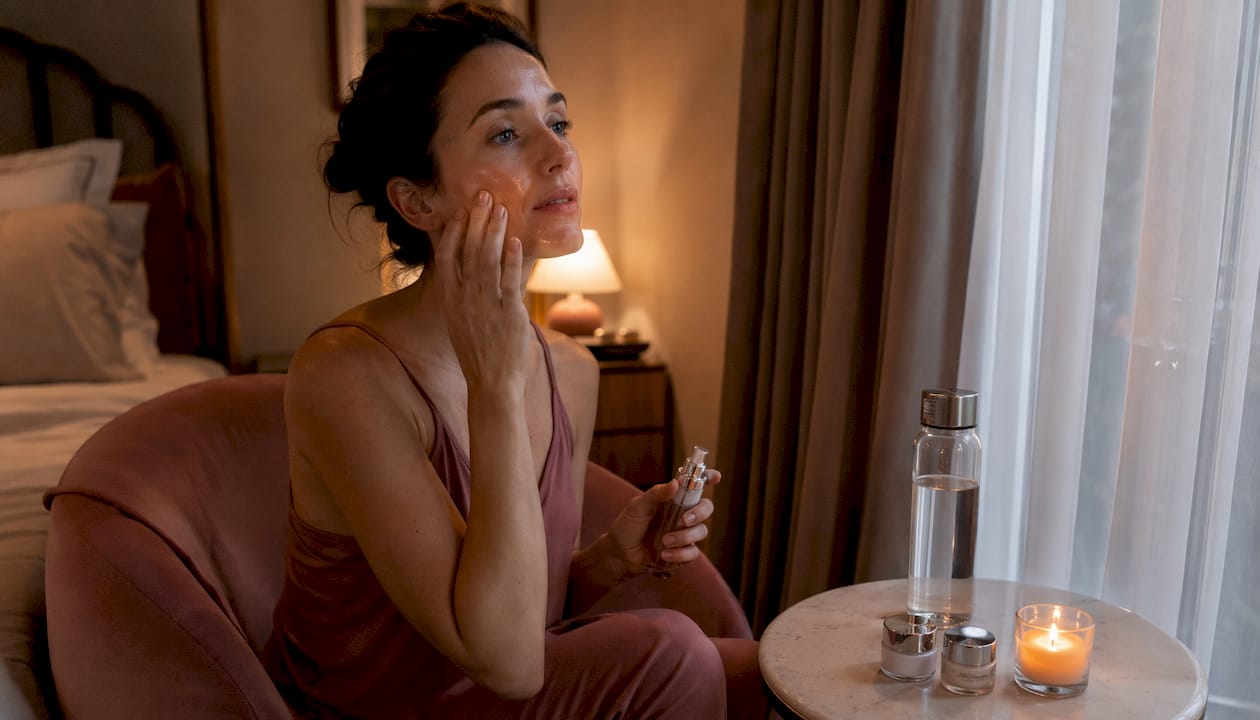
Poor sleep accelerates skin aging, and the science is specific enough to be sobering. Disrupted sleep impairs the skin’s circadian DNA repair cycle, raises cortisol-driven inflammation, and reduces the nocturnal collagen and growth factor activity your skin depends on to stay firm and resilient. A clinical study of 60 women found that good sleepers had markedly greater barrier recovery after skin insult compared to poor sleepers, with measurably better transepidermal water retention. The effects of sleep on skin are not subtle, and they compound over time.
Here is what the evidence points to most clearly:
Circadian DNA repair: The enzyme OGG1, which repairs oxidative DNA damage in skin cells, peaks in the morning and is suppressed in night-shift workers, linking adequate sleep to functional DNA repair.
Barrier integrity: Even short-term sleep restriction causes measurable TEWL increases and drops in stratum corneum hydration.
Collagen protection: Chronic sleep loss is associated with 32% increases in MMP-9, a matrix-degrading enzyme that breaks down collagen and reduces skin density.
Pro Tip: Apply your most reparative skincare, including antioxidants and barrier-support actives, right before bed. Your skin’s repair enzymes are most active at night, so timing your topicals to match that window gives them the best possible environment to work.
Table of Contents
What does your skin actually do while you sleep?
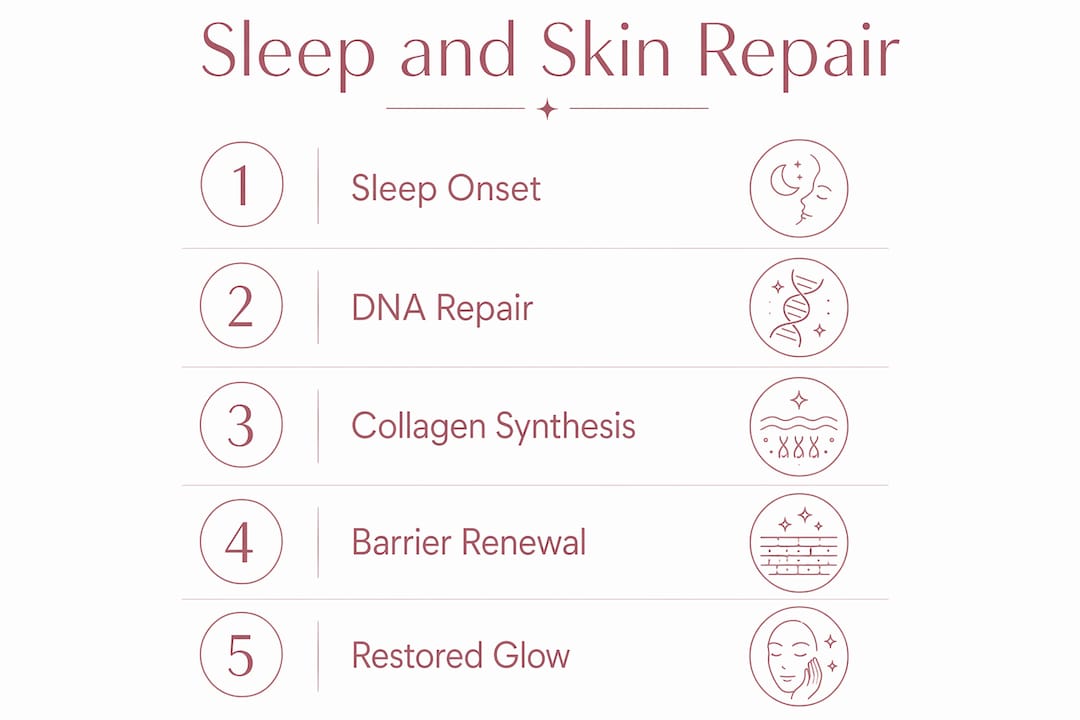
Sleep is not passive recovery for your skin. It is the primary window for active biological repair, and the skin’s peripheral circadian clock runs this process with remarkable precision.
The circadian clock and DNA repair
Your skin has its own peripheral clock, operating partly independently of the brain’s central suprachiasmatic nucleus (SCN). This clock governs keratinocyte turnover, antioxidant defense, and the rhythmic expression of DNA repair enzymes. OGG1, which corrects oxidative DNA lesions caused by UV and environmental stress, peaks in activity during early morning hours. Night-shift workers, whose sleep timing is chronically misaligned, show significantly reduced OGG1 expression, meaning their skin accumulates more unrepaired DNA damage over time.
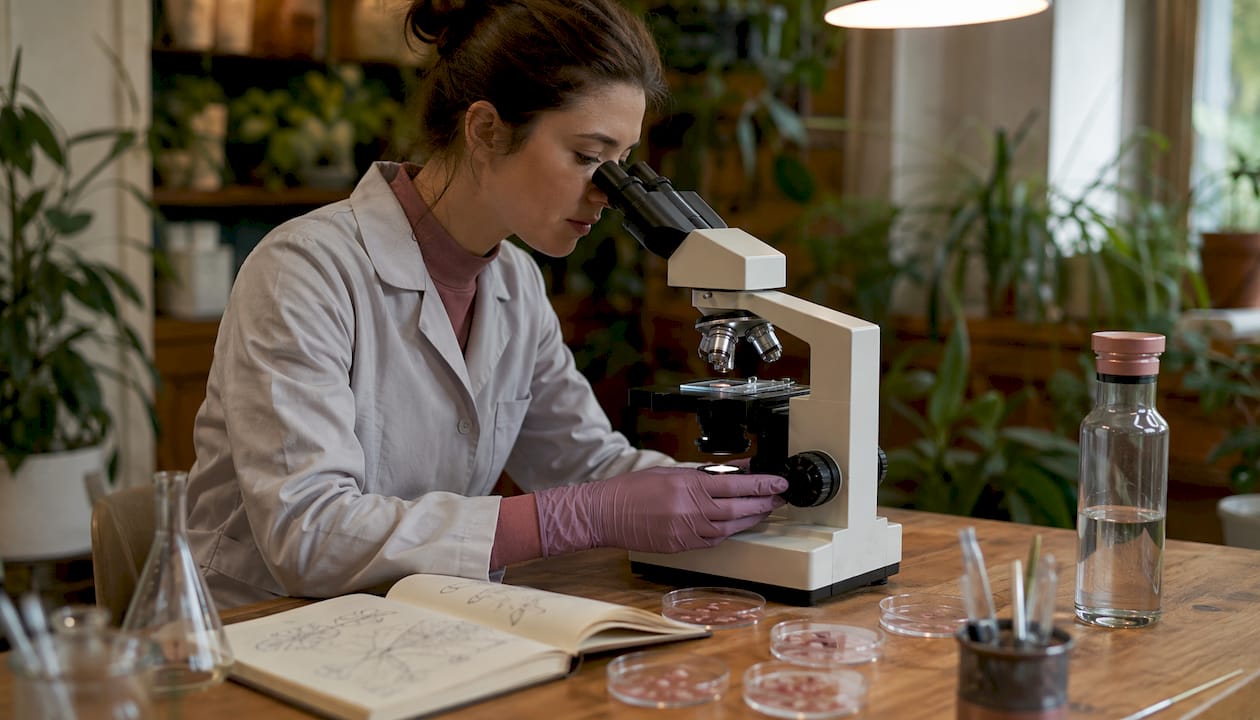
Melatonin plays a parallel role. Beyond its sleep-signaling function, melatonin acts as a direct antioxidant in skin tissue, neutralizing free radicals that would otherwise accelerate matrix degradation. Its concentration rises sharply after dark, which is one reason the hours between roughly 10 PM and 2 AM are so biologically productive for skin.
Barrier restoration and hydration
The stratum corneum, your skin’s outermost protective layer, undergoes active repair during sleep. Lipid synthesis in the epidermis follows a circadian rhythm, with peak activity occurring at night. This is when ceramide production and barrier lipid organization are most efficient, reducing TEWL and restoring the hydration gradient that keeps skin plump and resilient.
Statistic: Good sleepers show approximately 30% faster barrier recovery after tape-stripping insult compared to poor sleepers, a difference large enough to influence how skin responds to both environmental stress and clinical treatments.
Collagen synthesis and growth factors
Deep sleep stages trigger a pulse of human growth hormone (HGH), which drives fibroblast activity and collagen synthesis in the dermis. This is when your skin is actively rebuilding the structural proteins that determine firmness and elasticity. Disrupting deep sleep, whether through fragmented sleep, alcohol, or chronic short sleep, suppresses this HGH pulse and shifts the dermal environment toward net collagen loss rather than gain.

How sleep deprivation shows up on your skin
The visible signs of poor sleep quality are not just cosmetic inconveniences. Each one maps to a specific biological failure.
Fine lines and wrinkles: Elevated cortisol from sleep loss drives proinflammatory signaling that induces MMP-9 and related collagenases. These enzymes degrade the dermal matrix faster than it can be rebuilt, accelerating the formation of lines and reducing skin density over time.
Sagging and reduced elasticity: Chronic collagen degradation, combined with suppressed nocturnal HGH and fibroblast activity, reduces the dermal scaffold. Skin loses its ability to spring back, and the face begins to look drawn rather than lifted.
Dullness and uneven tone: Late sleep schedules destabilize facial microbiome diversity and correlate with reduced facial brightness and hydration. The skin’s water-oil balance weakens, and the light-scattering properties of a healthy stratum corneum diminish.
Dark circles and periorbital puffiness: Poor sleep increases vascular permeability and fluid retention around the eyes. Cortisol-driven inflammation worsens this, and the thin periorbital skin makes the effect immediately visible.
Increased TEWL and dryness: Barrier lipid synthesis slows when sleep is cut short, leaving the skin less able to hold moisture. This is measurable within days of sleep restriction.
Pigmentation and inflammatory skin conditions: HPA-axis activation and elevated cortisol influence melanocyte biology and keratinocyte-mediated inflammation, which can trigger or worsen conditions like melasma and rosacea. Obstructive sleep apnea (OSA) adds a vascular and hypoxic component that compounds pigmentary and inflammatory changes. For readers managing pigmentation-prone skin, sleep quality is a variable that genuinely shifts outcomes.
Delayed wound healing and poorer treatment response: Skin under chronic sleep stress heals more slowly and responds less predictably to both topical treatments and professional procedures.
What does the research actually show?
The evidence linking sleep quality and skin health has grown substantially over the past decade, and the strongest studies are worth knowing.
Key clinical findings
A controlled clinical study published on PubMed examined 60 women and found that poor sleepers showed higher intrinsic aging scores, greater TEWL, and significantly slower barrier recovery after tape-stripping insult. Good sleepers recovered from erythema faster and rated their own skin appearance more positively. This was not a self-report study of feelings about skin, but an objective, measured clinical comparison.
A narrative review covering a decade of evidence (2015–2025) found that MMP-9 activity increases with sleep deprivation, with associated reductions in collagen density. The same review noted that dermatologic treatment efficacy drops by approximately 40% in patients with sleep disturbance, a figure that should change how clinicians sequence care.
The circadian biology literature, anchored by PMC reviews of OGG1 and peripheral clock function, establishes the mechanistic basis: sleep loss is not just correlated with worse skin, it disrupts the specific enzymatic and hormonal processes that maintain skin structure.
A Frontiers narrative review on lifestyle medicine and skin aging links sleep to reduced TEWL, lower cortisol, and better barrier recovery, recommending 7–9 hours of sleep with consistent circadian alignment as a foundational skin-health intervention.
Study limitations worth knowing
Over 80% of studies in this field rely on self-reported sleep measures rather than objective tools like actigraphy or polysomnography. Most clinical studies have also used predominantly female populations, and sample sizes remain modest. The associations are consistent and biologically plausible, but the field needs larger, objectively measured trials to establish dose-response relationships more precisely. Dermatologists evaluating skin aging should factor this in when interpreting individual patient histories.
Can better sleep reverse skin aging?
The honest answer is: some things improve quickly, and some do not.
What recovers fast
Hydration and TEWL: Barrier hydration responds within days of improved sleep. Stratum corneum water content rises and TEWL drops measurably within the first week of consistent, quality sleep.
Puffiness and dark circles: Reduced cortisol and lower vascular permeability show up around the eyes within a few nights of better sleep.
Inflammation markers: Systemic inflammatory signaling, including cortisol and proinflammatory cytokines, begins to normalize within two to four weeks of restored sleep.
Skin tone and brightness: Microbiome stability and improved hydration contribute to visible improvements in radiance within two to four weeks.
What takes longer, or may not fully reverse
Structural collagen loss is the hard reality. A 2026 Frontiers review reports that restored sleep lowers stress signaling and improves immune regulation in weeks, but structural collagen changes from chronic sleep deprivation may be long-lasting. Deep dermal matrix remodeling takes months, and years of accumulated damage may require clinical intervention to meaningfully address.
Even after two weeks of recovery sleep, some barrier parameters may not return fully to baseline, indicating that cumulative deficits leave a residue that short-term recovery cannot erase.
Pro Tip: If you are starting a course of professional skin treatments, prioritize sleep quality in the four weeks before and during the treatment period. Patients with better sleep show measurably stronger responses to dermatologic procedures, so the preparation work pays off in the results you see.
Practical steps to protect your skin and support repair
These recommendations are grounded in the circadian biology and clinical evidence covered above.
Sleep targets and circadian alignment
Aim for 7–9 hours of sleep per night, with a consistent sleep and wake time, including weekends. Circadian alignment matters as much as total duration.
Reduce blue light exposure 60–90 minutes before bed to support melatonin onset and protect the nocturnal repair window.
Keep your bedroom cool and dark. Core body temperature drop is a key trigger for deep sleep stages, which is when HGH and collagen synthesis peak.
If you suspect obstructive sleep apnea, pursue evaluation. OSA creates chronic hypoxic stress that compounds both vascular and pigmentary skin changes.
Skincare timing that works with your biology
At night: Apply DNA-repair supporting actives, antioxidants (vitamin C, niacinamide), and barrier-repair formulations containing ceramides. The skin’s nocturnal repair window means these actives have maximum enzymatic support. For readers focused on aging skin care, this timing shift alone can meaningfully improve results.
In the morning: Prioritize broad-spectrum sunscreen and daytime antioxidants. UV exposure during the day generates the oxidative damage that nighttime OGG1 activity is trying to repair, so photoprotection is the logical daytime complement.
Behavioral fixes with real payoff
Alcohol and caffeine timing: Alcohol suppresses deep sleep stages even when it helps you fall asleep. Caffeine has a half-life of roughly 5–6 hours, so a 3 PM coffee can still be active at 9 PM. Both shift the sleep architecture away from the restorative stages your skin needs.
Pillowcase choice: Silk or satin pillowcases reduce mechanical friction on the face during sleep, which matters for skin that is already managing collagen loss or sensitivity.
Head elevation: Sleeping with your head slightly elevated (10–15 degrees) reduces overnight fluid pooling around the eyes and can visibly reduce morning puffiness.
Pro Tip: For persistent sleep problems, ask your doctor about the Pittsburgh Sleep Quality Index (PSQI), a validated screening tool that takes under five minutes to complete. If your score suggests chronic poor sleep, addressing it with a sleep specialist before investing in aesthetic treatments will make those treatments work significantly better.
Key Takeaways
Poor sleep accelerates skin aging through circadian disruption, elevated MMP-9 activity, impaired barrier repair, and suppressed nocturnal collagen synthesis, with some structural changes requiring months or clinical intervention to address.
Point | Details |
Sleep drives skin repair | Nocturnal OGG1 DNA repair, barrier lipid synthesis, and HGH-driven collagen production all peak during quality sleep. |
Deprivation causes measurable damage | MMP-9 rises by 32% with chronic sleep loss; good sleepers show ~30% faster barrier recovery than poor sleepers. |
Some changes reverse quickly | Hydration, puffiness, and inflammation markers improve within days to weeks of restored sleep. |
Collagen loss is slow to reverse | Structural dermal changes from chronic poor sleep may be long-lasting and often require clinical support to address. |
Time your skincare strategically | Apply reparative actives at night and photoprotective antioxidants in the morning to align with your skin’s circadian rhythm. |
Sleep belongs in every skin care conversation
Most dermatology appointments never ask about sleep. That gap is a missed opportunity, and one I think about often in clinical practice.
When a client comes to Fundamentalskin with persistent pigmentation, fine lines that are not responding to treatment, or a barrier that seems perpetually compromised, sleep is one of the first things I want to understand. Not as a lifestyle lecture, but as a clinical variable. The evidence is clear that treatment efficacy drops by approximately 40% in patients with poor sleep, which means the most carefully chosen peel or topical protocol is working against a biological headwind if the client is sleeping five hours a night.
What I find underappreciated is how quickly some of this can shift. Clients who commit to consistent sleep timing, even before we introduce any new treatment, often report visible changes in skin brightness and puffiness within two weeks. That is not placebo. That is barrier repair and reduced cortisol doing exactly what the research predicts.
The part that takes longer, and that clients deserve honest guidance on, is structural collagen. Years of sleep deprivation leave a dermal deficit that better sleep alone will not fully correct. That is where combining sleep restoration with targeted professional treatments, like the Larimedical Biomimetic Peel available at Fundamentalskin, produces outcomes that neither approach achieves alone. Sleep creates the biological environment for treatments to work. Treatments address the structural changes that sleep alone cannot reverse.
My practical recommendation: before any elective aesthetic procedure, complete a four-week sleep optimization plan. Use the PSQI to screen yourself, set a consistent sleep window, and apply your reparative actives at night. You will arrive at your appointment with a healthier barrier, lower baseline inflammation, and skin that is genuinely ready to respond.
Useful sources
Does poor sleep quality affect skin ageing? (PubMed) — Controlled clinical study of 60 women showing measurably higher TEWL, slower barrier recovery, and higher intrinsic aging scores in poor sleepers. The foundational human clinical evidence in this field.
Circadian Rhythm and the Skin: A Review of the Literature (PMC) — Comprehensive review of the skin’s peripheral circadian clock, OGG1 DNA repair timing, melatonin activity, and the rationale for circadian-aligned topical application.
The Impact of Sleep Quality on Skin Color (PMC) — Covers HPA-axis and cortisol-driven pigmentary mechanisms, microbiome disruption from late sleep, and links to inflammatory skin conditions including melasma and rosacea.
Sleep and Skin: A Decade of Evidence (2015–2025) — Decade-spanning review reporting 32% MMP-9 increases with sleep deprivation, ~40% reduced treatment efficacy in poor sleepers, and the underuse of objective sleep measures in dermatology research.
The Impact of the Six Pillars of Lifestyle Medicine on Skin Aging (Frontiers) — Narrative review positioning sleep as a core lifestyle pillar for skin health, with recommendations for 7–9 hours, circadian alignment, and realistic timelines for structural vs. functional recovery.
PMC: Skin barrier and sleep (NCbi) — Supporting mechanistic literature on barrier function and its relationship to systemic physiological state, useful for understanding TEWL dynamics.
Recommended
Comments