
HIFU and Skin Tightening: How It Works and Who It Suits
16 September 2026 · Chevonne Stewart
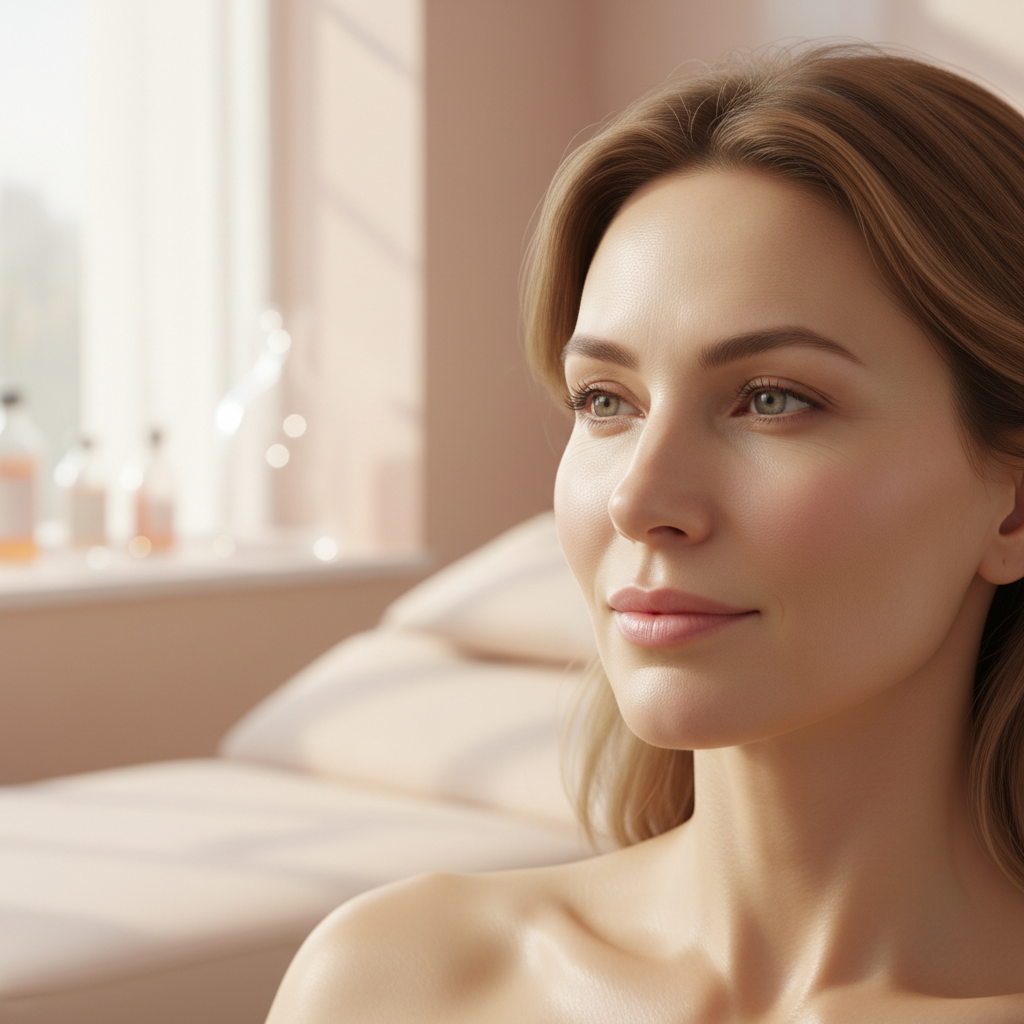
As we move through our 30s, 40s, and 50s, many of us notice a subtle shift in the way our skin sits. It might be a slight softening along the jawline, a bit of extra movement under the chin, or a heaviness around the brow. While these are completely natural parts of the ageing process, technology now allows us to support the skin’s structural integrity in a way that wasn’t possible a decade ago.
One of the most frequent enquiries I receive at Fundamental Skin is about High-Intensity Focused Ultrasound, commonly known as HIFU. Because it is often discussed in the media as a non-surgical alternative to traditional lifting procedures, there is a lot of curiosity—and sometimes a bit of confusion—about what it actually does.
Today, I want to walk you through the science of HIFU, how it interacts with your anatomy, and how we determine if it is the right fit for your unique skin goals.
What is HIFU and How Does It Work?
Unlike lasers or chemical peels that primarily target the surface layers of the skin (the epidermis), HIFU uses ultrasound energy to bypass the surface and reach much deeper.
To understand why this matters, we need to look at the layers of the face. Beneath your skin lies a layer called the Superficial Musculoaponeurotic System (SMAS). This is a fibrous membrane that connects your facial muscles to your skin. In traditional surgical face-lifts, this is the layer that surgeons physically tighten and reposition.
HIFU is unique because it can reach this SMAS layer without a single incision. The device delivers precise, micro-focused ultrasound waves that create thermal coagulation points—essentially tiny spots of heat—at specific depths (usually 1.5mm, 3.0mm, and 4.5mm).
When these tissues are heated to a specific temperature, it triggers a natural healing response. The body recognises this as a cue to repair and revitalise the area by synthesising new collagen and elastin fibres. Over time, this helps to firm the structural scaffold of the face.
The Three-Layer Approach
When we perform a HIFU programme, we aren't just treating one level. We customise the depth based on the area of the face and the thickness of the skin:
- 4.5mm Depth: This reaches the SMAS layer mentioned earlier. This is where we focus on structural support and the foundation of the lower face and neck.
- 3.0mm Depth: This targets the deep dermis, where the majority of our collagen-producing cells live. This helps with overall firmness and density.
- 1.5mm Depth: This targets the upper dermis. It is often used for finer concerns around the eyes or to improve the general texture and tone of the skin.
Who Suits HIFU Best?
In my 15 years as a dermal clinician, I have found that managing expectations is the most important part of any treatment plan. HIFU is an excellent tool, but it is not a 'one-size-fits-all' solution.
The Ideal Candidate
HIFU tends to be most effective for individuals aged 30 to 65 who have mild to moderate skin laxity. This might look like:
- A softening jawline (early jowls).
- Mild sagging under the chin or on the neck.
- Drooping eyelids or a heavy brow.
- Fine lines and wrinkles on the décolletage.
When Might it Not Be Suitable?
If there is significant skin laxity, very thin or fragile skin, or a high degree of sun damage, HIFU alone may not provide the visible results you are looking for. Additionally, if you have very high levels of subcutaneous fat in the area, the ultrasound waves may have difficulty reaching the structural layers effectively.
We also need to consider your general health. Because the results rely entirely on your body’s ability to produce new collagen, factors like smoking, poor nutrition, or certain medications can minimise the outcome.
What to Expect During and After Treatment
One of the reasons our Tweed Heads clients appreciate HIFU is the lack of downtime. Because the energy is focused deep beneath the surface, the outer layer of your skin remains intact. You might experience some slight redness or a mild 'tingling' sensation immediately after the session, but this generally settles within a few hours.
It is important to remember that collagen synthesis is a slow, biological process. You won't walk out of the clinic with an immediate change. Instead, the results develop gradually over 8 to 12 weeks, with improvements often continuing for up to six months as the new collagen matures.
A Clinician’s Perspective on Safety
As a degree-qualified clinician, I must emphasise that while HIFU is non-invasive, it is still a powerful medical-grade treatment. It requires an in-depth understanding of facial anatomy to avoid nerves and ensure the energy is delivered at the correct depth. Always ensure your practitioner is appropriately trained and uses TGA-listed equipment.
Disclaimer: The information provided in this article is for general educational purposes only and does not constitute medical advice. Results vary between individuals and depend on many factors including age, skin condition, and lifestyle.
If you would like to discuss whether HIFU is the right approach for your skin concerns, I invite you to book a personalised consultation at the clinic.
Ready when you are
Not sure what your skin needs? Start with a consultation.
Chevonne will assess your skin, explain your options in plain language, and only recommend what suits your skin and budget.
Book online