.png)
Top Needle-Free Skin Rejuvenation Methods: 6 Options That Work
- chevonne stewart
- Aug 6
- 13 min read


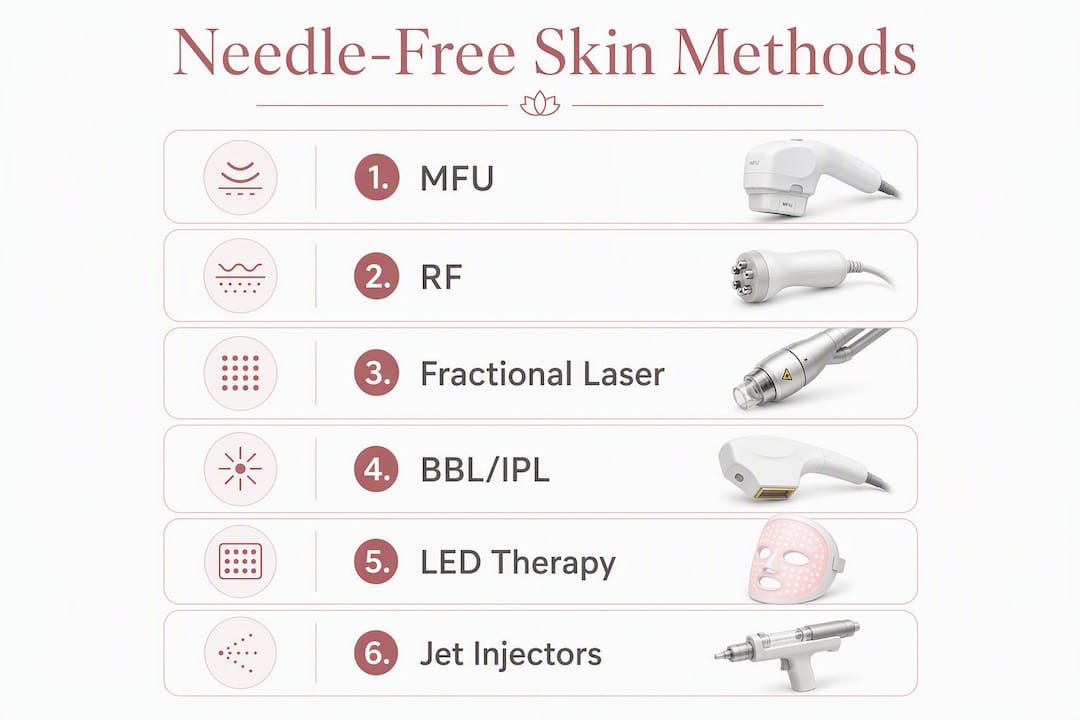
The most effective needle-free skin rejuvenation methods are microfocused ultrasound (MFU, as in Ultherapy-style devices), monopolar radiofrequency (RF, as in Thermage-style devices), fractional non-ablative lasers and hybrid fractional systems (Halo-style), BroadBand Light and IPL-style phototherapy (BBL), red-light and LED photobiomodulation, and needle-free jet injector and electroporation delivery systems. Each targets a distinct layer of the skin and a different concern, so the right choice depends on what you are actually trying to fix.
Here is a quick map to help you orient:
Skin laxity and sagging: Microfocused ultrasound (MFU/Ultherapy-style) or monopolar RF (Thermage-style) for deep collagen stimulation and tissue lifting
Texture, fine lines, and mild scarring: Fractional non-ablative lasers or hybrid fractional systems (Halo-style)
Pigmentation and sun damage: BBL/IPL-style phototherapy or fractional laser
Enlarged pores and overall radiance: Fractional laser, BBL, or needle-free jet delivery of active serums
Glow, inflammation, and recovery support: Red-light/LED photobiomodulation
Hydration and dermal serum delivery without needles: Jet injectors, electroporation, or sonophoresis
TL;DR: If you are unsure which method fits your skin, book a consultation with a board-certified dermatologist or an experienced dermal clinician who can assess your skin tone, laxity, and goals before recommending a device-specific plan.
Table of Contents
What each needle-free skin rejuvenation method does and how it works
Why these methods actually work: the biology behind the results
What to realistically expect: sessions, downtime, costs, and timelines
How to choose the right treatment and what to ask your provider
A clinician’s perspective on combining in-clinic technologies with professional skincare
What I’ve learned about realistic outcomes and why personalization is everything
What each needle-free skin rejuvenation method does and how it works
These six non-invasive skin treatments are not interchangeable. Each one reaches a different depth, triggers a different biological response, and suits a different concern. Understanding the distinctions helps you walk into a consultation knowing the right questions to ask.
Microfocused ultrasound (MFU/Ultherapy-style)
MFU delivers focused ultrasound energy to precise depths in the skin, targeting both mid and deep dermal layers, targeting the superficial muscular aponeurotic system (SMAS) layer that surgeons address in a facelift. The energy creates controlled thermal injury points that trigger collagen and elastin synthesis, gradually lifting and firming tissue over months. Visualization technology in advanced MFU devices, sometimes called the See-Plan-Treat (SPT) protocol, lets the clinician confirm they are targeting the correct anatomical layer before delivering energy, which improves both precision and safety.
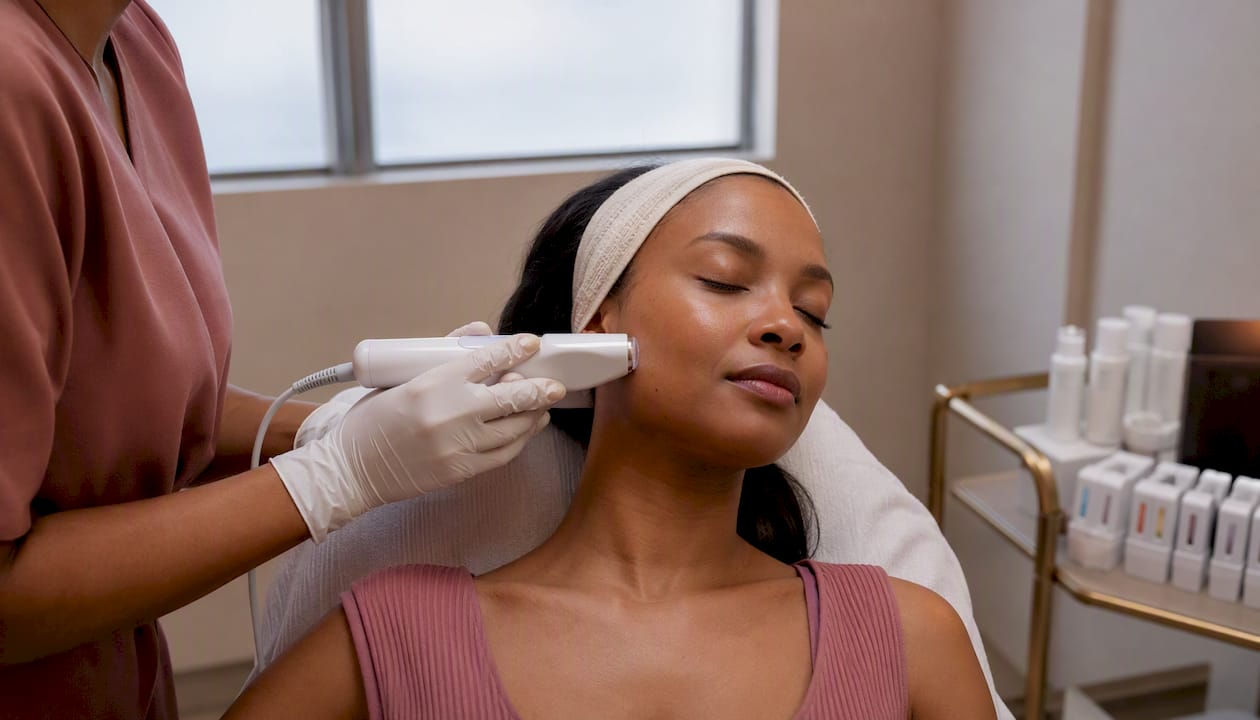
Best for: Jawline laxity, brow lift, neck tightening, and décolletage firming. Pros: Single-session results possible, minimal downtime, targets deep tissue layers. Cons: Moderate discomfort during treatment, higher cost, gradual results over several months.
Monopolar radiofrequency (Thermage-style RF)
RF devices heat the dermis and subdermis using electrical energy, causing immediate collagen contraction and stimulating longer-term neocollagenesis. Thermage-style monopolar RF is particularly well studied for facial and body skin tightening. Results appear gradually, with peak firming typically visible at 3–4 months as collagen remodeling progresses.
Best for: Overall facial tightening, body skin laxity, periorbital area. Pros: Single session often sufficient, minimal downtime, works on all skin tones. Cons: Mild to moderate discomfort, results vary by skin laxity severity.
Fractional non-ablative lasers and hybrid fractional systems (Halo-style)
Non-ablative fractional lasers, including Nd:YAG, diode, and fractional erbium variants, create microscopic thermal zones in the dermis while leaving the surrounding tissue intact. This fractional approach triggers collagen production with significantly less downtime than fully ablative resurfacing. Hybrid fractional systems combine ablative and non-ablative wavelengths in a single pass, targeting both surface texture and deeper dermal remodeling simultaneously. Clinical reviews confirm that parameter adjustments and non-ablative protocols have expanded safe treatment options across a wider range of skin tones.
Best for: Texture, fine lines, mild scarring, pore refinement. Pros: Visible improvement in skin quality, adaptable to multiple skin tones with proper settings. Cons: A few days of redness and peeling possible; multiple sessions often needed; higher hyperpigmentation risk in darker skin tones if parameters are not adjusted.
BBL and IPL-style phototherapy
BroadBand Light (BBL) and intense pulsed light (IPL) devices deliver broad-spectrum light energy that targets chromophores in the skin, primarily melanin and oxyhemoglobin. This makes them particularly effective for pigmentation, sun spots, redness, and vascular lesions. BBL-style devices use filters to select specific wavelengths for targeted concerns, and some protocols have been associated with improvements in skin tone and texture beyond pigment correction alone.
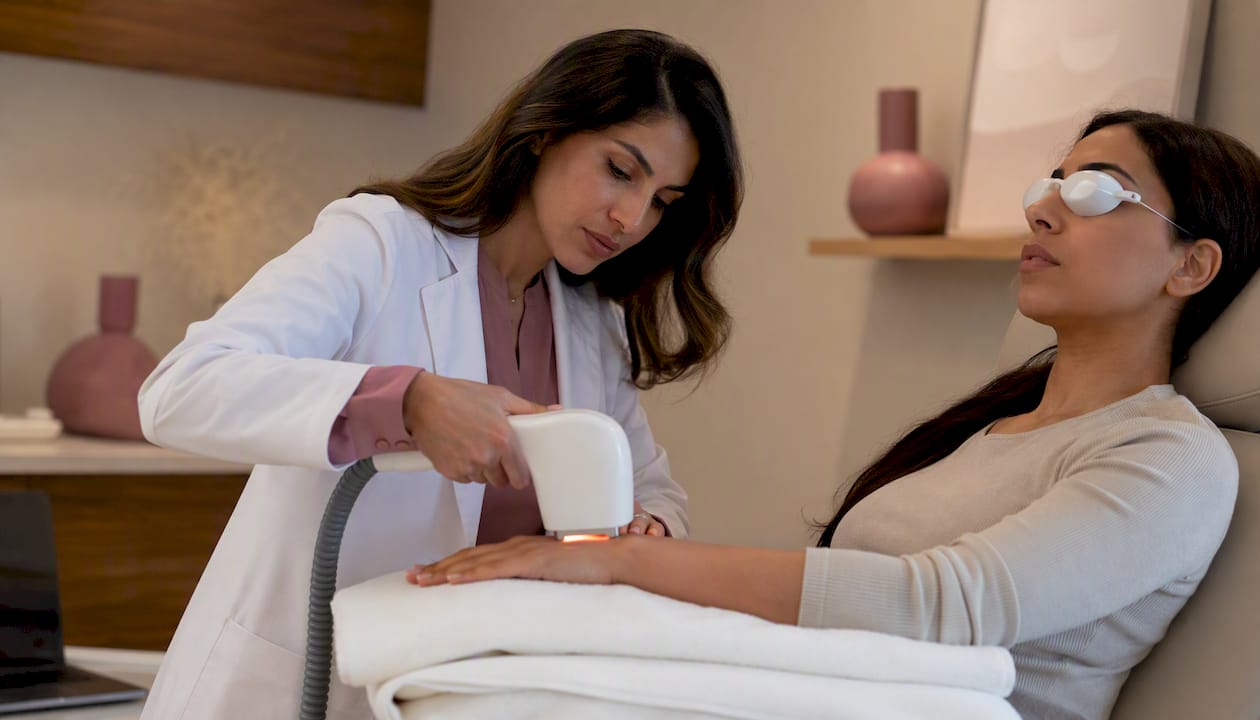
Best for: Sun damage, brown spots, redness, uneven skin tone, rosacea-related flushing. Pros: Minimal downtime (mild redness for 24–48 hours), addresses multiple concerns in one session. Cons: Not suitable for darker skin tones without careful parameter adjustment; multiple sessions typically needed for full correction.
Red-light and LED photobiomodulation
Red-light and LED therapy work through photobiomodulation: specific wavelengths of light, typically in the 630–850 nm range, penetrate the skin and support mitochondrial function, reduce inflammation, and promote cellular repair. Research from Massachusetts General Hospital notes that photobiomodulation can improve skin tone, accelerate recovery after other procedures, and complement energy-based treatments. There is essentially no downtime and no discomfort, making it one of the most accessible options.
Best for: Recovery support after other treatments, reducing redness and inflammation, improving glow and overall skin health. Pros: Safe for all skin tones, zero downtime, comfortable, can be used as a standalone or adjunct. Cons: Modest standalone results for laxity or deep texture; best used as part of a layered protocol.
Needle-free jet injectors, electroporation, and sonophoresis
These delivery systems push active ingredients, such as hyaluronic acid, polynucleotides, peptides, or growth factors, into the skin without a needle. Jet injectors expel fluid at high velocity, creating nearly spherical dispersal in the upper dermis. A randomized split-face clinical trial using the CureJet device found that jet-injected polynucleotide filler produced higher satisfaction scores, lower pain scores, and improved pore and wrinkle indices compared to conventional needle injection. Electroporation uses brief electrical pulses to temporarily open channels in the cell membrane, and sonophoresis uses ultrasound waves to drive topical actives deeper than passive application allows.
Best for: Hydration, skin quality improvement, delivering serums and biostimulators without discomfort. Pros: Comfortable, no puncture marks, even upper-dermal dispersion of actives, may stimulate fibroblasts through micro-trauma. Cons: Delivery depth is shallower than needle injection; not a replacement for deeper filler placement.
Pro Tip: Device brand and model matter as much as the technology category. Ask your clinician which specific device they use, what FDA clearance it holds, and what settings they plan to use for your skin type. Two RF devices from different manufacturers can produce very different results.
Why these methods actually work: the biology behind the results
Understanding the mechanism behind each approach explains why results take time and why some concerns respond faster than others.
Neocollagenesis via controlled thermal injury is the engine behind both MFU and RF. When focused energy heats collagen-rich tissue to a precise temperature threshold, it denatures existing collagen fibers and signals fibroblasts to produce new collagen and elastin. The body’s repair response unfolds over weeks to months, which is why peak results from Ultherapy-style or Thermage-style treatments typically appear at 3–4 months rather than immediately after the session.
Fractional photothermolysis is the principle behind fractional lasers. By treating only a fraction of the skin surface at a time, the laser creates columns of thermal damage surrounded by healthy tissue. Those healthy zones accelerate healing and collagen production, producing improvements in texture and firmness with a recovery window far shorter than full-surface ablation.
Photobiomodulation operates differently. Red and near-infrared light wavelengths are absorbed by cytochrome c oxidase in the mitochondria, boosting cellular energy (ATP) production and reducing oxidative stress. The result is improved cell turnover, reduced inflammation, and a healthier skin environment, which is why LED therapy pairs so well with more intensive treatments as a recovery accelerant.
Transdermal delivery via jet injection, electroporation, or sonophoresis works by temporarily overcoming the skin’s barrier function. Jet injectors create a high-velocity fluid stream that penetrates the stratum corneum without a needle; the dispersal pattern in the upper dermis may also stimulate fibroblasts through the micro-trauma of delivery itself, adding a mild regenerative effect on top of the ingredient benefit.
Collagen remodeling from RF and MFU: visible improvement typically begins at 4–6 weeks, with peak results at 3–4 months
Fractional laser texture improvement: often noticeable after 2–3 sessions, with continued improvement over 3–6 months
LED/red-light glow and inflammation reduction: often visible within a few sessions, with cumulative benefit over consistent use
Jet injector hydration and skin quality: results typically apparent within 1–2 weeks of a session series
The gradual nature of collagen-driven results is not a limitation. It is the biology working as intended. Skin that rebuilds from within tends to look natural and last longer than surface-only interventions.
What to realistically expect: sessions, downtime, costs, and timelines
Setting honest expectations before you book is the most important thing you can do for your experience and your results.
Method | Typical sessions | Downtime | Approximate cost range (US) | Time to visible result |
MFU (Ultherapy-style) | 1–2 per year | None to minimal | — | 4–6 weeks; peak at 3–4 months |
RF (Thermage-style) | 1 per year | None to minimal | — | 4–6 weeks; peak at 3–4 months |
Fractional non-ablative laser | 3–5 sessions, 4 weeks apart | 2–5 days redness/peeling | — | After 2nd–3rd session |
Hybrid fractional (Halo-style) | 1–3 sessions | 3 days | — | 4–6 weeks post-treatment |
BBL/IPL phototherapy | 3–5 sessions, 3–4 weeks apart | 24–48 hours mild redness | — | After 2nd–3rd session |
Red-light/LED therapy | 6 sessions | None | — | 4 weeks of consistent use |
Needle-free jet/electroporation | 3–6 sessions, 2–4 weeks apart | None | — | 1–4 weeks after series |
Key safety notes by skin tone:
MFU and RF are generally safe across all Fitzpatrick skin types because they bypass the epidermis and target deeper tissue layers.
BBL and IPL carry a higher risk of post-inflammatory hyperpigmentation (PIH) in medium to darker skin tones (Fitzpatrick IV–VI). Experienced clinicians use longer wavelengths, lower fluences, and longer pulse durations to reduce this risk.
Fractional non-ablative lasers can be used on darker skin tones, but parameter tailoring by an experienced practitioner is critical. Hybrid fractional systems with careful protocols have expanded safe options for ethnic skin.
LED/red-light therapy is safe for all skin tones with no meaningful risk of PIH.
Cost variation is driven by device model, treatment area size, practitioner credentials, and geographic location. A single Thermage-style full-face session at a board-certified dermatologist’s office in a major US city will cost more than the same technology at a medical spa in a smaller market. That price gap often reflects experience and device maintenance, both of which matter for outcomes.
How to choose the right treatment and what to ask your provider
The best needle-free approach is the one matched to your specific concern, skin tone, and lifestyle. A decision framework helps you walk into a consultation prepared.
Your selection checklist:
Identify your primary concern first. Laxity, texture, pigmentation, and pore size each respond best to different mechanisms. Do not let a provider lead with their most popular device rather than your actual need.
Know your skin tone. Fitzpatrick type IV–VI requires a provider experienced with darker skin protocols. Ask directly whether they have treated your skin tone before and request to see before-and-after photos of similar clients.
Assess your downtime tolerance. If you cannot take 3–5 days away from work or social commitments, fractional laser may not be the right first step. RF or MFU may suit you better.
Set a realistic budget. Factor in the full course of sessions, not just one appointment. A three-session BBL series at $400 per session is $1,200 total, which is a more accurate number to plan around.
Ask about maintenance. Most energy-based results are not permanent. Understand the recommended maintenance interval before committing.
Questions to ask your clinician:
What is your specific credential? (Look for board-certified dermatologist, plastic surgeon, or licensed dermal clinician with documented device training.)
What device model will you use, and what is its FDA clearance status?
What parameters will you use for my skin type and concern?
Can I see before-and-after photos of clients with a similar skin tone and concern?
How many sessions do you recommend, and what is the maintenance plan?
Are there any contraindications for me specifically (medications, conditions, recent procedures)?
Red flags to watch for: A provider who cannot name the specific device model, promises “surgery-like” results from a single short session, has no before-and-after portfolio for your skin tone, or discourages questions about credentials and device settings.
Pro Tip: Layering treatments targeting different tissue depths produces synergistic results. Expert panels recommend sequencing energy-based modalities with professional skincare and biostimulators for longer-lasting outcomes. Ask your clinician whether a combined protocol makes sense for your goals rather than defaulting to a single modality.
Which needle-free method is best for your specific concern?
This is the fastest way to match your concern to the right first-line option.
Skin laxity and sagging (face, neck, jawline): MFU (Ultherapy-style) as the primary option for deeper tissue lifting; monopolar RF as a strong alternative or complement. Both trigger neocollagenesis at depth without touching the epidermis. Timeline: 3–4 months for peak results.
Fine lines and mild wrinkles: Fractional non-ablative laser for surface-to-mid-dermal remodeling; RF as a secondary option for deeper dermal tightening. Combining both addresses different depths simultaneously.
Uneven texture and mild acne scarring: Fractional non-ablative laser or hybrid fractional system as the primary choice. The fractional approach resurfaces texture while preserving surrounding tissue. For darker skin tones, non-ablative protocols with conservative parameters reduce PIH risk.
Pigmentation, sun spots, and redness: BBL/IPL-style phototherapy as the first-line option for lighter skin tones (Fitzpatrick I–III). For medium to darker tones, fractional non-ablative laser with longer wavelengths is safer. Combining BBL with a fractional laser session addresses both pigment and texture in a sequenced protocol.
Enlarged pores: Fractional laser for structural pore tightening; needle-free jet delivery of niacinamide or peptide serums as a supportive adjunct. BBL can also improve the appearance of pores by addressing the underlying skin quality.
Dullness, dehydration, and glow: Needle-free jet injection or electroporation of hydrating actives (hyaluronic acid, polynucleotides) for immediate plumping and radiance. Red-light/LED therapy as a consistent maintenance tool for cellular energy and glow. These two pair naturally because neither requires downtime.
Combination concerns (laxity + texture + pigment): A layered protocol works best. A common sequence is MFU for laxity first, followed 4–6 weeks later by fractional laser for texture, with LED therapy used throughout for recovery support and maintenance. Multimodal treatment combinations consistently outperform single-modality approaches in clinical literature.
For darker skin tones across all concerns, the guiding principle is this: non-ablative and RF/MFU options carry the lowest PIH risk, while any light-based treatment targeting melanin requires an experienced clinician who actively adjusts parameters for your Fitzpatrick type.
A clinician’s perspective on combining in-clinic technologies with professional skincare
The most common mistake people make when exploring needle-free rejuvenation is treating it as a one-and-done decision. Choosing a single device and expecting it to address every concern is like using one brush to paint an entire room. Different tools reach different layers, and the skin responds best when those layers are addressed in a thoughtful sequence.
At Fundamentalskin, the approach starts with a thorough assessment before any device is recommended. Skin tone, laxity grade, pigmentation pattern, and lifestyle factors all shape the protocol. A client with moderate jawline laxity and surface texture concerns, for example, would not start with a fractional laser. The deeper tissue work comes first, typically MFU-style treatment for the laxity, and then 4–6 weeks later, fractional resurfacing addresses the texture layer once the foundational lift is underway. Red-light therapy is woven in throughout, supporting recovery and amplifying the cellular environment for collagen production.
Professional skincare is not optional in this framework. It is part of the protocol. Active ingredients applied between sessions, including vitamin C, retinoids, and peptides, maintain the skin’s regenerative momentum and protect the investment made in each treatment. A well-structured skincare routine between sessions can meaningfully extend how long your results last. For clients who want to support their in-clinic work at home, a topical collagen-lift cream like NuRejuv Collagen Instant Lift can complement the regenerative work happening in the clinic.
Before-and-after documentation is part of every protocol at Fundamentalskin. It creates accountability and helps both the clinician and the client track real progress rather than relying on subjective impressions. Chevonne’s 15 years of experience as a Dermal Clinician means that treatment parameters are not guessed at; they are calibrated to each individual’s skin at every session.
Pro Tip: Ask your clinician to photograph your skin in consistent lighting at each visit. Progress in collagen remodeling is gradual and easy to underestimate without side-by-side comparison. Documentation keeps both of you honest about what is working.
Key Takeaways
The most effective needle-free rejuvenation results come from matching the right mechanism to the right concern, then layering modalities and professional skincare for sustained improvement.
Point | Details |
Match method to concern | MFU and RF address laxity; fractional lasers target texture; BBL/IPL treats pigment; LED supports recovery. |
Results take months, not days | RF and MFU peak after several months as neocollagenesis progresses; set expectations before booking. |
Skin tone safety matters | Non-ablative and RF/MFU options carry the lowest PIH risk; BBL and fractional lasers require parameter adjustment for darker tones. |
Ask about the specific device | FDA clearance, device model, and practitioner experience directly affect your outcome and safety. |
Fundamentalskin’s approach | Chevonne at Fundamentalskin builds sequenced, personalized protocols combining energy-based treatments, clinical peels, and professional skincare for lasting results. |
What I’ve learned about realistic outcomes and why personalization is everything
The gap between what people expect from needle-free treatments and what actually happens is almost always a communication problem, not a technology problem. These methods work. The clinical evidence for MFU, RF, fractional lasers, and even jet-injector delivery is solid and growing. What they cannot do is produce surgical results in a single session, and any provider who implies otherwise is doing you a disservice.
What I find most underestimated is the role of sequencing. People often come in asking for “the best treatment” as if there is one answer. The honest answer is that the best treatment is the one that fits your skin’s current state, your concern hierarchy, and your timeline. A 45-year-old with significant laxity and sun damage needs a different starting point than a 32-year-old with texture and early pigmentation. The technology is only as good as the clinical judgment behind it.
Personalized assessment is not a luxury. It is the mechanism by which good outcomes happen. When you combine the right device, the right parameters, and a professional skincare protocol tailored to your skin, the results compound over time in a way that no single treatment session can replicate. That is the approach Fundamentalskin is built around, and it is the standard you should hold any provider to.
Personalized needle-free treatments at Fundamentalskin
Fundamentalskin gives you something most clinics do not: a genuinely personalized protocol built around your skin, not around which device is most popular that month. Chevonne, a Dermal Clinician with 15 years of experience, assesses your skin tone, laxity, pigmentation, and goals before recommending any treatment. The result is a sequenced plan that combines the right energy-based modalities with clinical peels and professional skincare, so each session builds on the last.

If you are ready to move from researching options to actually seeing results, the Biomimetic Peel + LED Therapy package at $249 is a practical starting point. It pairs a clinical-grade peel with red-light therapy for a no-downtime session that addresses texture, dullness, and skin health in one visit. Book your consultation at Fundamentalskin and get a personalized assessment that tells you exactly which needle-free approach is right for your skin.
Further reading and primary sources
These are the primary sources used to build this article. Each one backs specific claims about mechanism, safety, efficacy, or clinical protocols.
Therapeutic Performance of Needle Injection Versus Needle-Free Jet Injector System for Polynucleotide Filler in Skin Rejuvenation (PMC): Randomized split-face trial supporting claims about jet injector comfort, dispersal patterns, and patient satisfaction versus conventional needle injection.
Non-Surgical Skin Tightening, Massachusetts General Hospital: Authoritative clinical resource backing timeline claims for RF and MFU neocollagenesis and the role of photobiomodulation in recovery.
Advancements in Laser Technologies for Skin Rejuvenation, Journal of Cosmetic Dermatology (Haykal): Comprehensive review supporting mechanism descriptions for non-ablative and hybrid fractional lasers, safety-by-skin-tone guidance, and parameter tailoring for ethnic skin.
Multimodal Treatment Combinations and Layering to Optimize Facial Rejuvenation, Plastic and Reconstructive Surgery Global Open: Expert panel review supporting MFU visualization (SPT protocol) descriptions, treatment sequencing recommendations, and layered multimodal protocol evidence.
Harvard Health: Want to Take Years Off Your Face?: Accessible clinical overview from Harvard Medical School supporting general efficacy claims for non-invasive rejuvenation approaches.
Mount Sinai Non-Invasive Cosmetic Procedures: Institutional overview of non-invasive treatment categories, supporting the framing of needle-free options as clinically recognized alternatives to surgical procedures.
Recommended
Comments