.png)
How LED Light Therapy Works on Your Skin
- chevonne stewart
- Jun 13
- 8 min read

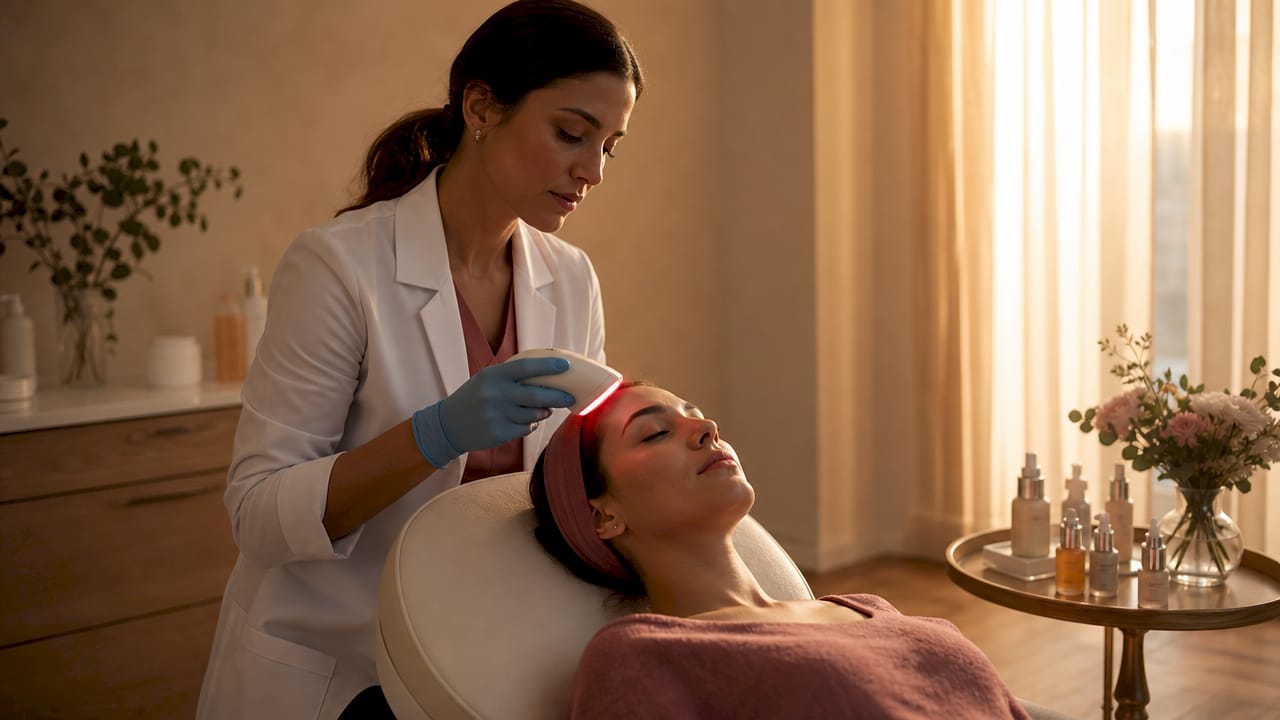
LED light therapy for skin is defined as a non-thermal, non-ablative treatment that delivers specific light wavelengths to skin cells, triggering a biological process called photobiomodulation. This process stimulates mitochondrial function, increases cellular energy production, and activates repair pathways that improve collagen synthesis, reduce inflammation, and support healing. Unlike lasers, LED therapy causes no thermal damage and requires no recovery time. Whether you are dealing with fine lines, acne, or uneven pigmentation, understanding exactly how this technology works helps you set realistic expectations and choose the right treatment path.
How LED light therapy works on skin at a cellular level
The core mechanism behind LED therapy is photobiomodulation, a process where light energy is absorbed by specific molecules inside your skin cells. The primary target is cytochrome c oxidase, an enzyme inside the mitochondria that acts as a chromophore, absorbing red and near-infrared light. When this enzyme absorbs light, it increases ATP production, the energy currency your cells use to carry out repair and regeneration. More ATP means fibroblasts can produce more collagen, inflammatory pathways are modulated, and healing accelerates.
This is fundamentally different from how lasers or chemical peels work. Lasers create controlled thermal damage to force a healing response. LED therapy works with your cells rather than against them, supplying energy that powers natural repair processes. The result is a gentler treatment profile with mild adverse effects and no downtime, making it suitable for regular, ongoing use.
Reactive oxygen species (ROS) also play a role here. At the right dose, LED light modulates ROS levels in a way that signals cells to upregulate protective and regenerative responses. Fibroblasts become more active, collagen and elastin production increases, and the skin’s structural integrity improves over time. This is why results build gradually rather than appearing after a single session.
Cytochrome c oxidase absorbs red and near-infrared light, triggering the ATP increase
Fibroblasts respond by producing more collagen and elastin
Inflammatory mediators are downregulated, reducing redness and sensitivity
Reactive oxygen species are modulated to signal cellular repair without causing oxidative damage
Pro Tip: Apply your LED device to clean, product-free skin. Serums and creams can block light penetration, reducing the energy that actually reaches your mitochondria.
Which wavelengths target which skin concerns?
Not all LED light is the same. The wavelength determines how deep the light penetrates and which biological targets it reaches. This is the most clinically significant variable in any LED treatment protocol.
Wavelength | Color | Penetration depth | Primary target | Common clinical use |
415 nm | Blue | Epidermis | Cutibacterium acnes porphyrins | Acne treatment |
633 nm | Red | Dermis | Fibroblasts, collagen synthesis | Anti-aging, skin rejuvenation |
660 nm | Red | Mid-dermis | Collagen remodeling, elastin | Fine lines, texture improvement |
850 nm | Near-infrared | Deep dermis | Mitochondria, deeper tissue repair | Healing, inflammation reduction |
Red and near-infrared wavelengths between 620 and 1072 nm penetrate into the dermis where collagen-producing fibroblasts live. The 633 nm wavelength is one of the most studied in clinical literature for collagen synthesis and reducing enzyme activity that breaks down existing collagen. Near-infrared light at around 850 nm goes deeper still, reaching tissue layers that benefit from improved circulation and reduced inflammation.
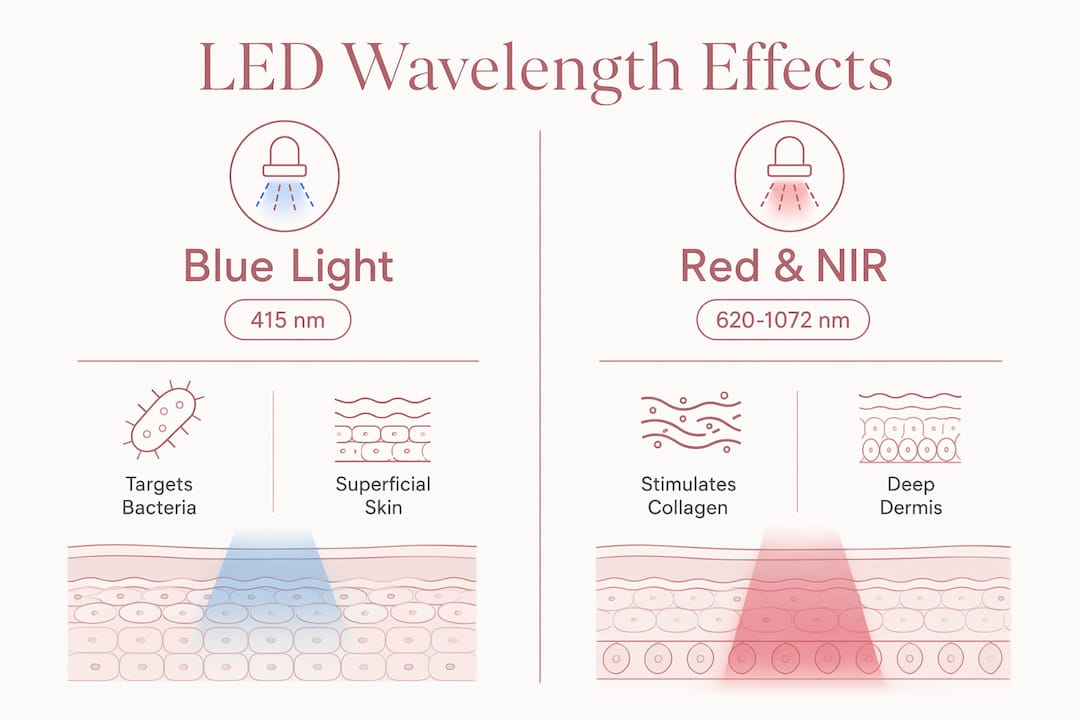
Blue light at 415 nm works differently. It targets Cutibacterium acnes, the bacteria responsible for inflammatory acne, by activating porphyrins inside the bacteria. These porphyrins absorb the blue light and generate singlet oxygen, which disrupts the bacteria at a cellular level. Clinical trials show measurable reductions in acne lesion counts over 4 to 12 weeks of consistent use. Blue light does not penetrate as deeply as red, so its primary benefit is at the skin’s surface where acne bacteria thrive.
Combination devices using both 660 nm red and 850 nm near-infrared light address multiple tissue depths in a single session, which is why professional protocols often use multi-wavelength devices rather than single-color panels.
How effective is LED therapy for aging, acne, and pigmentation?
The clinical evidence for LED light therapy is strongest for acne and superficial signs of aging. For fine lines, improved skin texture, and increased elasticity, studies consistently show positive outcomes when treatment is consistent over several months with multiple sessions per week. This is not a quick fix. Collagen remodeling is a biological process that takes time, and the improvements you see at week eight are built on the cellular changes that started in week one.
For acne, blue light therapy reduces lesion counts and targets the bacterial cause rather than just suppressing symptoms. This makes it a useful adjunct to topical treatments, particularly for clients who want to reduce antibiotic dependence. The anti-inflammatory effects of red light also help calm post-acne redness and support faster healing of existing lesions.
Pigmentation is where you need to be most careful. Visible light exposure can provoke prolonged hyperpigmentation in darker skin types, particularly those with Fitzpatrick skin types IV through VI. Melasma in particular requires professional supervision because the wrong wavelength or dose can worsen the condition rather than improve it. This is not a reason to avoid LED therapy if you have pigmentation concerns. It is a reason to seek professional guidance before starting.
Key outcomes supported by clinical evidence:
Fine lines and texture: Measurable improvement with consistent red light use over 8 to 12 weeks
Acne lesion count: Reduction documented in clinical trials using 415 nm blue light over 4 to 12 weeks
Skin elasticity: Improved with regular red and near-infrared protocols targeting fibroblast activity
Redness and inflammation: Reduced through anti-inflammatory effects of near-infrared wavelengths
Pigmentation: Requires caution and professional oversight, particularly for darker skin tones
Clinical expert Dr. Elma Baron notes that red light therapy helps with fine lines and superficial skin changes but is not a substitute for aggressive in-office treatments when deeper structural repair is needed. That is an honest and useful benchmark for setting your expectations.
What you need to know before choosing a device or starting treatment
The gap between professional and consumer LED devices is significant. Professional systems deliver higher irradiance, meaning more light energy per unit area per second. Consumer-grade LED masks often lack independent validation and deliver lower power density, which may require longer or more frequent sessions to achieve comparable results. Some consumer devices simply do not deliver enough energy to trigger meaningful photobiomodulation at all.
Here is a practical framework for getting the most from LED therapy:
Start with a professional assessment. A qualified Dermal Clinician can identify your skin type, concerns, and the wavelengths most likely to benefit you. This is especially important if you have pigmentation, rosacea, or a history of photosensitivity.
Commit to a consistent schedule. Sessions several times a week over multiple months are what the evidence supports. Sporadic use produces minimal results.
Respect the biphasic dose-response. LED therapy follows a clear principle: too little energy produces no effect, and excessive energy can actually inhibit the beneficial cellular responses you are trying to trigger. More is not better.
Pair LED therapy with photoprotection. Combining red and near-infrared light with broad-spectrum sunscreens and antioxidant topicals optimizes anti-aging results and protects against photodamage. LED therapy opens a window of cellular activity that good skincare can support.
Track your results. Photograph your skin in consistent lighting every two to four weeks. Collagen changes are gradual and easy to underestimate without a visual record.
Pro Tip: If you are using a consumer LED device, look for one that specifies its irradiance in mW/cm² and has published clinical data. Marketing claims alone are not a reliable guide to efficacy.
How LED therapy compares to lasers and chemical peels
LED therapy occupies a specific and valuable position in the skin treatment spectrum. It is not trying to do what lasers do, and understanding that distinction helps you use it correctly.
Ablative lasers like CO2 and Erbium remove layers of skin to force deep collagen remodeling. They produce dramatic results for deep wrinkles and significant texture issues, but require significant downtime and carry higher risk.
Non-ablative lasers like Fraxel create controlled micro-injuries in the dermis without removing the surface. Results are strong but recovery is still needed.
Chemical peels exfoliate the epidermis and upper dermis, improving texture, tone, and pigmentation. The Larimedical Biomimetic Peel used at Fundamentalskin works at this level, with the advantage of no downtime.
LED therapy does none of the above. It does not remove tissue, create injury, or exfoliate. It works by energizing cells that are already there, making it ideal for maintenance, recovery support, and gradual improvement of superficial concerns.
The most powerful application of LED therapy is often post-procedure. After a laser treatment or chemical peel, red and near-infrared light accelerates healing, reduces inflammation, and supports the collagen remodeling that the procedure initiated. Used this way, LED therapy does not compete with more aggressive treatments. It amplifies them.
Key takeaways
LED light therapy works by delivering specific wavelengths to skin cells, triggering photobiomodulation that increases ATP production, stimulates collagen synthesis, and reduces inflammation without thermal damage.
Point | Details |
Core mechanism | Photobiomodulation increases ATP via cytochrome c oxidase, powering collagen and repair processes. |
Wavelength specificity | Red and near-infrared light target aging; blue light at 415 nm targets acne bacteria directly. |
Realistic timelines | Visible improvements in fine lines and texture require consistent sessions over several months. |
Device quality matters | Professional systems deliver higher irradiance than most consumer masks; validation data is key. |
Pigmentation caution | Visible light can worsen hyperpigmentation in darker skin types; professional guidance is non-negotiable. |
What I’ve learned after 15 years of treating skin with light
After more than a decade working with clients on pigmentation, aging, and acne, the thing I see most often is impatience. People try LED therapy for two or three weeks, see nothing dramatic, and conclude it does not work. That is not a failure of the technology. It is a mismatch between expectation and biology.
Collagen remodeling does not happen on a two-week timeline. The cellular changes that LED therapy triggers are real and measurable, but they accumulate. The clients I see who get the best results are the ones who treat it like a skincare routine rather than a one-off procedure. They show up consistently, they protect their skin with sunscreen, and they pair their LED sessions with well-formulated antioxidant serums.
The other thing I want to be honest about is pigmentation. If you have melasma or post-inflammatory hyperpigmentation, please do not self-treat with a consumer LED mask without professional guidance. Visible light can make pigmentation worse, and I have seen this happen. A professional assessment before you start is not overcautious. It is the difference between progress and a setback.
For aging and acne, the evidence is genuinely encouraging. LED therapy is not a replacement for professional treatments when deeper repair is needed, but as part of a well-designed skin health protocol, it delivers real, cumulative benefits. The key word is protocol. Light alone is not enough. It works best when it is one well-chosen tool among several.
— chevonne
Glow from the inside out with Fundamentalskin
If you are ready to experience LED therapy with professional-grade results, Fundamentalskin combines the Larimedical Biomimetic Peel with targeted LED light treatment in one powerful session. This pairing accelerates skin renewal, supports collagen production, and addresses pigmentation and fine lines without any downtime.

Chevonne and the Fundamentalskin team work with you to build a treatment plan tailored to your skin’s specific needs, using clinically validated protocols and Australia-sourced ingredients. The Biomimetic Peel + LED Therapy package is available now for $249. Book your session and start seeing the difference that professional light therapy makes.
FAQ
What does LED light therapy actually do to skin cells?
LED light therapy stimulates cytochrome c oxidase in the mitochondria, increasing ATP production that powers collagen synthesis, reduces inflammation, and accelerates cellular repair. The process is called photobiomodulation and causes no thermal damage.
How long does it take to see results from LED therapy?
Consistent sessions several times a week over multiple months are required for visible improvements in fine lines and skin texture. Single or sporadic sessions do not produce meaningful results.
Is LED therapy safe for pigmentation and darker skin tones?
Visible light can induce hyperpigmentation in darker skin types, so professional assessment before treatment is strongly recommended. Strict photoprotection during and after LED therapy is non-negotiable for these skin types.
What is the difference between red and blue LED light for skin?
Red light at 633 to 660 nm targets fibroblasts in the dermis to stimulate collagen production and reduce aging signs. Blue light at 415 nm targets acne-causing bacteria at the skin’s surface, making it the preferred wavelength for LED therapy for acne.
Can I use LED therapy at home instead of seeing a professional?
Home devices can be effective, but most deliver lower irradiance than professional systems and lack independent validation. For concerns like pigmentation or significant aging, professional treatment delivers more reliable, clinically supported outcomes.
Recommended
Comments